




19 Oct 2026

Most book launches don’t fail loudly. They just fade out. If you want to know how to launch a book that doesn’t, here’s the short version: find your first readers early, give them a reason to talk, and spend money only after your book page has some proof on it.
That sounds almost too plain, I know. But after a year of writing, most authors would rather polish one more chapter than make a launch calendar. So let’s make the calendar part as painless as possible.

The Quiet Launch Problem
Picture the day after publishing. You’ve posted the announcement, your cousin has bought a copy, and your mum has told her entire street. Then you refresh the sales page. Then you refresh it again.
Here’s what’s going on. A stranger can’t buy a book they’ve never heard of, and your friends will only buy it once. So the book isn’t bad. It’s just invisible.
Say two authors publish similar memoirs on the same day. One has spent three months sharing short pieces and collecting emails. The other has a lovely cover and a hopeful heart. By week two, they’re living in different worlds.
Wondering what a normal first month looks like? Author and coach Susanne Dunlap explains why launch day is only one data point, and why there is no universal first-month benchmark, in Launch Day Is Not Judgment Day.
How to Launch a Book in Six Months: A Plain-English Timeline
A realistic self-publishing launch plan runs about six months. Got less? Fine. Shrink each stage, but don’t throw one away. A clear book launch timeline mostly protects you from yourself, because panic decisions are rarely good ones.
Pick One Number First
Before anything goes on a calendar, choose one target. Maybe it’s 100 sales in week one, or 25 honest reviews, or 300 new email subscribers. Not all three. Launches with five goals usually hit none.
Once you’ve got your number, a book launch checklist stops being homework and starts being useful. Each task either moves the number or it doesn’t. Cross off the ones that don’t. If you’d rather not build the plan alone, our book marketing and launch planning services can map it out with you.
Months Six to Three: Pre-Launch Book Marketing
This is the slow, unexciting stretch, and it matters most. Pre-launch book marketing is really just talking to the people who’d like your book before it exists. To build an author platform, pick one place you own (an email list is the classic) and one place your readers already gather.
Then try a small experiment. Describe your book in a single sentence to ten people who haven’t read it, and ask what they think it’s about. If you get ten different answers, your pitch is fuzzy. Better to learn that now.
Give people a real reason to sign up, too. “Join my newsletter” is a shrug, but a free bonus chapter or a reader guide is an invitation. Oddly enough, writing that freebie often sharpens your blurb and subtitle as well.

How to Launch a Book With a Team Behind You
Your book launch team is a small crew, about 20 to 50 readers, who agree to read an advance copy and help spread the word. Find them among your subscribers, past readers, and genre communities where you’re already a regular face. Be blunt about the ask.
Here’s all it needs to say:
- Read the advance copy before release.
- Post an honest review when the book goes live.
- Tell one person about it.
Keep in touch every week or two, even if it’s just a short email. People stay involved when they feel like insiders. They drift when they feel like a marketing channel. For tools to deliver your advance copies and track who has reviewed, see this guide to running an ARC campaign and choosing a platform.
The Final Month
Nobody posts photos of this part. It’s files, metadata, preorder settings, and scheduled emails. Check everything twice.
Why bother? Launch week is a blur of messages, graphs, and self-doubt. Anything you’ve already decided is one less thing to wrestle with at 11 p.m.
How to Promote a Book in Three Waves
Many authors announce the book everywhere on day one and then run out of steam by day four. A better way to think about how to promote a book is to release the news in waves. Each wave reaches people who know you a bit less than the last.
- Wave One (Days 1 to 3): your launch team, close friends, and most loyal subscribers. They bring the first sales and reviews.
- Wave Two (Days 4 to 10): the rest of your list, your followers, and podcast hosts or newsletter writers in your niche.
- Wave Three (Days 11 to 30): paid ads, promo newsletters, and outreach to complete strangers.
The logic is simple. A cold reader landing on a page with no reviews is like walking into an empty restaurant. You’d leave, right? Wait until there’s a crowd inside, and any book marketing strategy you run works harder.
Take a fantasy author with a $200 budget. She’s desperate to spend it on launch day. Instead, she waits until twenty reviews are showing, then runs her ads in week three, and her clicks start turning into sales.
Your Amazon Book Launch Page: A Ten-Minute Audit
An Amazon book launch depends heavily on one page. Shoppers decide quickly, so every element should reduce doubt. Platform rules change, so check the current guidelines in KDP’s help pages on keywords and metadata before you finalize anything.
Go through these four items:
- Categories and keywords: pick shelves where readers really browse, and use phrases a real person would type.
- Description: start with the reader’s problem or your story’s hook. Save the biography for later.
- Price: stay near your genre’s norm, then decide if a short intro price suits your goal.
- Cover and sample: set yours next to the bestsellers in your category and look honestly.
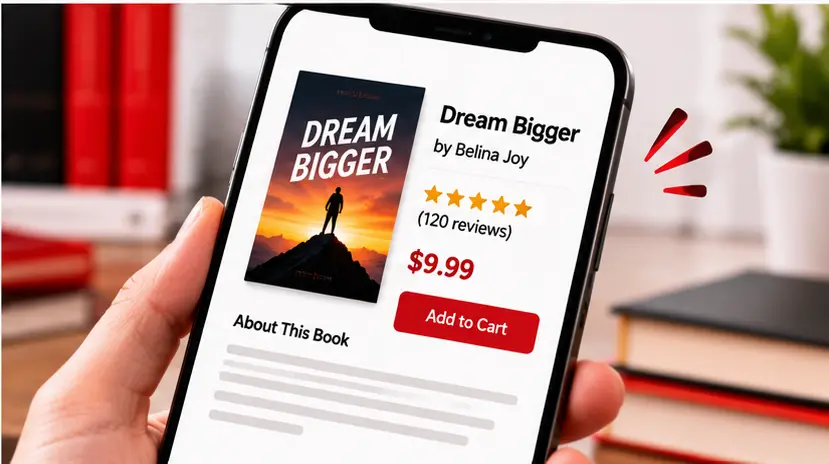
Finish by opening the page on your phone. That’s where most people will meet it. If the description looks like a brick, break it into small paragraphs.
How to Get Book Reviews Without Getting Into Trouble
If you’re wondering how to get book reviews, the answer is to ask early and ask politely. Never pay for positive reviews, and never offer a free copy in exchange for a good rating. Each retailer has strict rules, so read them first, starting with Amazon’s own statement on customer reviews and incentives.
A few safe routes:
- Send advance copies to your launch team and tell them honest feedback is all you want.
- Contact bloggers and newsletter writers who cover your exact genre.
- Add a short, friendly review request at the end of your book.
Personal beats generic every time. If a reviewer wrote about grief memoirs and yours is one, mention that post. One specific sentence shows you actually read their work, and that’s often what gets a reply.
Three Mistakes I’d Gladly Save You From
Some errors are so common they feel inevitable. They aren’t.
Launching with no list. Without any email list, day one starts at zero. A hundred people who open your emails can beat 5,000 followers who scroll past.
Being on ten channels. It’s tempting. But two channels done well will outperform six done halfway.
Treating launch day like a finish line. It’s really the starting whistle. The books that keep selling usually belong to authors who keep showing up.
After Launch Day: Keep the Momentum
Plenty of authors vanish after week one. That’s a shame, because the next few weeks teach you what works. Keep a simple ledger with one row per channel: hours spent, money spent, and what came back.
After a month, look at it with a clear head. Which channel brought actual readers? Which one just felt busy? Keep the first and quietly drop the second.
Then plan a “second wind.” Add a fresh review quote to your description, email your list again, or pitch a guest interview. A few small pushes spread over weeks usually beat one big splash. For more ideas, read our guide to book promotion ideas that increase sales.
Your Next Step: Plan Your Launch This Week
Knowing how to launch a book isn’t about secret tactics. It’s a few habits: one goal, a timeline, a team of early readers, and proof on the page before you pay for ads. None of it is hard, but it does need a spot on your calendar.
Give it 30 minutes today:
- Write your launch goal at the top of a blank page.
- Count back from your release date and mark where each wave falls.
- List ten people who might join your launch team, then message the first one.
Send that message before you close this tab.