





16 Oct 2026

Most of the time, you can’t write because something is jamming the works. The ideas haven’t dried up. Writer’s block usually turns out to be fear, a vague plan, a tired brain, or too much friction, all wearing a trench coat. Once you figure out which one it is, the whole thing feels a lot less like a curse. I’ve put together the tricks I actually use below, along with a way of sorting your blocks that most articles never mention.
You know the moment. Blank page, cursor blinking at you, and all of a sudden your inbox needs a serious clean-out. Last month I rearranged a whole bookshelf rather than write a single paragraph. The shelf looks great, by the way. The paragraph didn’t get written until the next day.

So What Is Writer’s Block, Really?
Ask a working journalist about being stuck and you’ll probably get a shrug. There’s a deadline, so there’s no room to treat it as a mood. It’s a problem, and problems get solved.
That’s the whole mindset shift. If you decide the block is some mysterious force, all you can do is wait for it to wear off, and that might take a week. If you decide it’s a symptom, you get to investigate it, the same way you’d chase down a spreadsheet that keeps throwing the same error.
So change the question. “Why can’t I write?” leads nowhere. “What exactly is stuck?” gives you something to check. Meta-analytic research on procrastination points the same way, since task aversiveness and low self-efficacy rank among the strongest predictors of putting things off, and both are things you can actually diagnose.
What Professionals Do Differently
From the outside, the habits of professional writers look pretty boring. No candles, no waiting around for a muse. What they have is structure, and two of their habits work for almost any kind of writing.
They Clock In Like It’s a Shift
Picture a barista, or a nurse on the morning rota. Neither of them wakes up wondering whether they’re in the mood to work. They show up at a set time, and the day carries them along.
Borrow that. Choose a time slot. Twenty-five minutes is plenty. Then park yourself in the same chair each day so your body learns what’s coming. Decide on your first task before you sit down, and the daily debate about whether you feel like writing never gets a chance to start.
They Quit Mid-Sentence on Purpose
I know, it sounds backwards. But plenty of writers stop in the middle of a thought instead of at a tidy ending. Tomorrow they open the file and a half-finished sentence is waiting, which is much easier to face than an empty page.
Yeah, it feels odd the first couple of times. But it takes care of the worst bit of starting, which is facing that first line cold. Hemingway described a close cousin of this habit in his Paris Review interview: he stopped for the day while he still knew what came next.
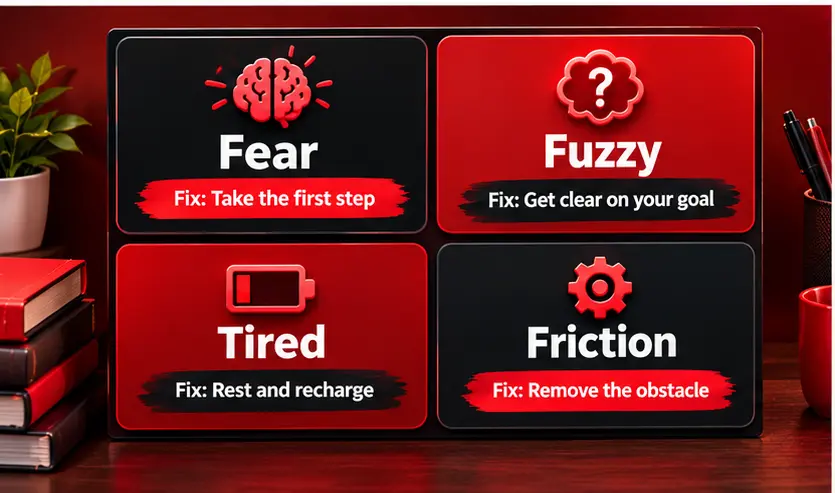
Four Kinds of Stuck (and What Each One Needs)
Creative blocks aren’t all the same. A cure that rescues one writer can make another feel worse, which is why guessing wastes so much time. If you want to beat writer’s block without trial and error, match the fix to the cause.
The Fear Block
You type an opening line, wince, delete it, and try again. An hour goes by, the page is still blank, and somehow you’re exhausted.
What helps is lowering the stakes. Open a throwaway file, name it “garbage draft,” and give yourself ten minutes to be terrible on purpose. Once the words don’t count, fear has nothing left to hold onto.
The Fuzzy Block
Here you know the topic, but if someone asked you to state your point, you couldn’t. Every sentence you start seems to wander off somewhere.
Try finishing this line on paper: “After reading this, my reader will be able to…” Then jot down three bullets that back it up. A surprising number of “blank page” days are really “missing outline” days.
The Tired Block
Words do show up, but each one costs you. You reread the same paragraph three times and it still won’t stick.
Stop forcing it. Switch to lighter jobs like tightening headings, collecting sources, or fixing formatting. Some days are just editing days, and that’s perfectly fine.
The Friction Block
You spend twenty minutes finding your notes, logging into things, and hunting for your phone so you can silence it. By the time you’re ready, your focus has already left the building.
The fix is dull, but it works. Get tomorrow’s workspace ready tonight. Leave one document open, keep your notes in a single place, and put your phone in a different room.
Keep a Simple Block Log
After each stall, write a quick line with the date, how it felt, what you think caused it, and whatever finally got you going again. A notes app is plenty. Give it two weeks and patterns start poking out.
Maybe every Monday is a tired block. That says more about your weekend than your talent.
How to Start Writing When the Page Is Blank
Most people don’t actually struggle with writing. They struggle with starting. So drop the goal of writing well and aim for something you can fix later.
Writer’s Block Exercises That Actually Work
Here are four to try when your brain refuses to cooperate:
- The ten-minute ugly draft. Set a timer and don’t touch the backspace key. One rule only: keep the words coming, however bad they are.
- The voice memo. Ramble your idea into your phone like you’re explaining it to a friend, then transcribe it. Most of us sound clearer out loud than we do on a keyboard.
- The worst opening line. Write the most awful first sentence you can think of. It’s usually funny, and the pressure drains away.
- The container swap. Try a paper notebook, or write the piece as an email to yourself. A change of format is sometimes all it takes to shake things loose.
Two Quick Scenarios
Say Maya is a freelance blogger with a 1,200-word post due at noon. The intro just won’t come, and a quick gut check tells her it’s a fuzzy block. So she leaves it alone for the moment. She writes a single line promising the reader something concrete, puts three bullets underneath, drafts the body, and goes back to the intro at the end.
Now picture Daniel, a student who keeps rewriting his essay’s first paragraph. That’s a fear block. He skips ahead and writes a body paragraph badly on purpose, then loops back to the opening once he’s built a little momentum.
Neither Maya nor Daniel waited around for inspiration. They each figured out what the problem was first, and only then changed what they were doing.
Habits That Keep You Stuck
Some habits feel productive but quietly make things worse. Three of them trip me up more than any others.
Waiting to Feel Ready
Motivation usually shows up once you’ve started, not before. Write one clumsy sentence and your brain sees that it can be done, and that’s often enough to keep going. Psychologists lean on a similar idea in behavioral activation, where doing the activity comes first and waiting for the right mood doesn’t.
Editing as You Go
Stopping to polish every sentence lets the critic barge into a room where the creator is still working. The draft crawls, and the dread creeps back in. If something nags at you, type [FIX] beside it and carry on.
Using Research as Procrastination
Research feels responsible, which is exactly why it’s so sneaky. Cap it at roughly 20 minutes per 500 words. When the timer’s up, draft with gaps marked and fill them in during your edit.
Building a Writing Routine That Survives Bad Days
More hours won’t fix your productivity. Making the start cheaper will.
The best routine expects some rough days and leaves room for them.
The Minimum Viable Session
Set a minimum you can manage even on your worst day, say 100 words or ten minutes. Anything beyond that is a bonus. It’s also the simplest answer to staying consistent, because a tiny habit survives a chaotic week while an ambitious plan usually doesn’t.
The Two-Pass Rule
Draft first. Edit later. Writing and judging run on different gears, and swapping between them every sentence is exhausting. If you can manage it, save the edit for the next morning, or bring in a professional book editing service when you want a fresh pair of eyes.
Leave a Note for Tomorrow’s You
Spend the last two minutes of each session writing half of tomorrow’s opening sentence, plus a quick line about what comes next. Your next session then starts with a push instead of a blank stare.
Your Next Step: Beat Writer’s Block One Small Fix at a Time
Choose the piece you’ve been dodging. Take one minute to decide whether you’re scared, confused, drained, or distracted. Then run the matching fix for ten minutes and stop.
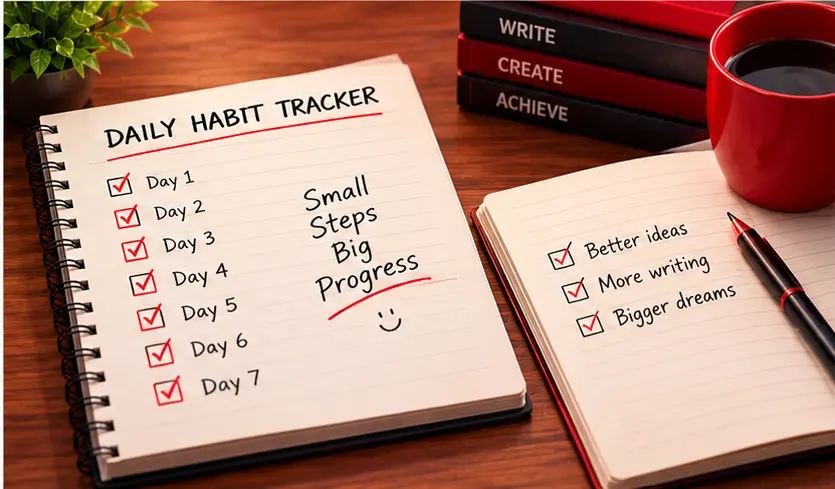
Before you close the document, write half of tomorrow’s first sentence. Try it for seven days and keep a short log. That’s really what getting past writer’s block looks like day to day: figure out the cause, make one small fix, and turn up again tomorrow. Want a starting line for each day? Browse the writing tips on our blog for fresh ideas.