



14 Oct 2026
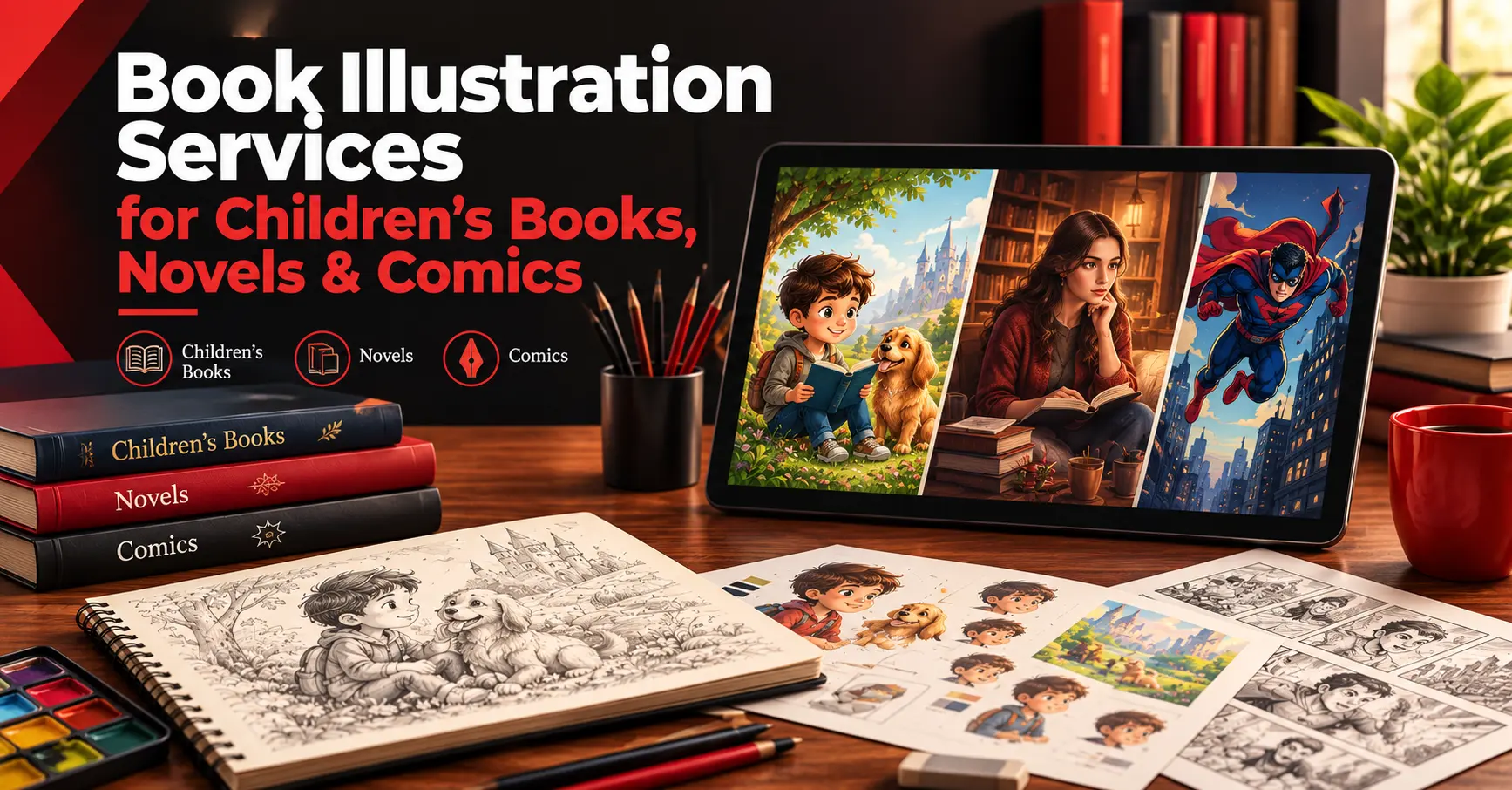
You finished the story, and now there’s a big empty space where the pictures should go. Maybe it’s a picture book with sixteen spreads, a novel that needs a cover, or a comic with a hundred panels. Book illustration services can fill that gap, but there are so many kinds that choosing one feels like a coin toss.
I’ve watched a lot of authors wrestle with this, so here’s what I’d tell you if we were sitting across from each other. We’ll look at your options, what moves the price, and how to find an artist you’ll enjoy working with. You’ll know what to ask for and what to skip.
Why Every Book Needs a Different Kind of Artist
A picture book, a novel cover, and a comic each ask for a different set of skills. Hire the wrong type of artist and the book feels off, even when every single drawing is beautiful.
Hannah learned this the hard way. Her rhyming story about a sleepy fox went to an artist best known for brooding fantasy scenes. The art was stunning, but far too dark for a bedtime read, and she wound up starting over with someone who paints in soft, warm colors.
So before you start searching, decide what you’re actually buying. It’ll save you money and a few headaches.
Children’s Books
Children’s book illustration services usually mean a full set of images that have to match. The artist draws the same character dozens of times, and that character can’t change shape from page to page. They also have to leave room for your words.
Ask to see character sheets. If the same fox appears happy, sleepy, and grumpy, you’re in good hands.
Novels and Book Covers
Most novels need one strong image. Book cover illustration services are about catching an eye in a tiny thumbnail, so the art has to announce your genre in about a second. Readers judge covers quickly, and they don’t apologize for it.
Want chapter art or a map too? Bring that up early, since extras change the quote.
Comics and Graphic Novels
Comics are their own beast. Comic book illustration services often split the work into pencils, inks, colors, and lettering, and those steps don’t always belong to the same person. Some artists take on the whole chain, while others only ink.
Find out who handles what. Otherwise you could end up with finished art and nobody to letter the speech bubbles.
What You Usually Get From an Illustrator
Most artists work in a similar order, so once you know it, it’s easier to tell who’s done this before. You start with a brief covering your story, your readers, and any art you admire. Then come rough sketches, a round of changes, and finally the finished pieces.
Before you sign, ask about files. What formats will you receive, and are they sharp enough for print? Don’t guess on this one.
Here’s something that surprises people. Most artists cap the number of revisions. Change your mind about a character’s hairstyle after the final art is done, and you’ll probably pay extra for it.
How Much Does Book Illustration Cost?
Let’s get to the question that probably brought you here. How much does book illustration cost? I won’t throw out numbers, because rates vary a lot between artists and change over time. Any figure from me might already be stale when you read it.
What I can do is show you what makes a price go up or down. Once you see that, quotes stop looking like random figures.
What Affects the Price
Page count is the big one, since more images take more hours. Style counts too. A richly painted scene takes far longer than a clean, flat design.
Rights matter as well. Full ownership of the art usually costs more than a limited license. And if you need it fast, rush fees are common.
Whatever the artist charges, get a written quote that lists exactly what’s covered. It protects both of you.
A Budget Scenario That Worked
Omar wrote a 24-page picture book with very little money to spend. Full color on every page wasn’t realistic. So he simply asked his illustrator what could be simplified.
They agreed on a limited palette and plainer backgrounds. The book still looked charming, and his budget held. Which parts of your own project could be simpler?
Where to Find an Illustrator
You’ve got three main paths: freelancers, agencies, and online marketplaces. Each fits a different type of author. Think about your budget and how much of the managing you want to take on. That will point you to the right one.
Freelancers
Hire a book illustrator directly, and you’ll be talking to the person who actually draws your pages. That’s a big plus. Many freelancers have a look that’s unmistakably theirs, so you can hunt for someone whose style matches the book you picture in your head.
The downside is scheduling. Popular artists often have waiting lists, and you’re the only one vetting their reliability. Ask for references, and check out finished books rather than just polished samples.
Agencies and Studios
Agencies bring a full team, which is a real help on bigger projects. Some cover illustration, design, and formatting together, so you only have one person to email. That’s handy.
But you may not choose your artist, and prices tend to run higher. Ask to see work from the specific person who’d draw your book.
Online Marketplaces
On a marketplace you can browse loads of artists and compare them in a single afternoon. Prices can suit a smaller budget, and plenty of self-published authors begin here. Quality varies a lot, though, so lean on portfolios and reviews more than you would anywhere else.
Ever gone with something just because it was the cheapest? With art, that often comes back to bite you. An illustration that doesn’t suit your story means paying for redos.
Copyright and Licensing Basics
It sounds dull, but this one matters. Before you pay anyone, find out who will own the finished art. In many cases the artist keeps the copyright and you get a license to use it. That license might be limited by format, region, or time.
I’m not a lawyer, and rules differ from country to country. Go through your contract slowly. Planning merchandise, or thinking you might license the book down the road? See a legal professional first. If any clause confuses you, ask the artist to explain it in plain words.
At a minimum, confirm you’re allowed to use the art in print, in ebooks, and in your marketing.
How to Choose the Right Artist
Price isn’t the whole story. Style and communication matter just as much. Here’s how I’d decide.
Begin with the portfolio, and ask yourself whether the mood fits your book. Then request a small test piece, like a sketch of your main character. Many artists charge a modest fee for this, and it shows how they read your ideas.
After that, talk about timing. Got a launch date? Count backward from it and leave time for revisions. Then get a contract that spells out the scope, the deadline, the payment schedule, and the rights you’re getting.
Here’s how it can go wrong. Lena fell for one gorgeous sample and skipped the test sketch. The first character drawings arrived looking nothing like that sample. Worse, she’d already paid half upfront. A quick test would have caught it.
Your Next Step
You don’t need a perfect plan to begin. Start by figuring out what your book actually needs, then talk to a few artists. Put together a short brief: a story summary, page count, audience, and a few images you love.
This week, send it to three artists and ask each for a quote and a sample sketch. Notice how they answer, what their styles look like, and how easy they are to talk to. The one who understands your story and respects your budget is the right pick among the book illustration services you’ve looked at, so send that first message today.