



07 Sep 2026
Every author I know hits this same wall eventually. The book’s done, it’s live, and then… nothing. Silence. This is exactly why book promotion ideas come up in literally every writers’ group I’ve ever joined, because apparently finishing the manuscript was the easy part all along.
I published my first book years ago genuinely thinking it would just find readers on its own somehow. It didn’t. Sold maybe twelve copies that first month, and most of those were family members who probably felt a little guilty saying no. Took me embarrassingly long to figure out that writing a book and selling one are basically two unrelated skills, and nobody warns you about that second part in any writing class ever.
So here’s what’s actually worked, based on stuff I’ve tried myself plus things I’ve watched other authors pull off, sometimes only after failing pretty badly first.
Why Most Authors Struggle With Promotion
Here’s the annoying truth nobody likes hearing. Writing a book needs quiet. Solitude, focus, a decent amount of isolation just to get a draft finished at all. Promotion wants the exact opposite from you. Loud, visible, constantly putting yourself in front of strangers who mostly don’t care yet.
That mismatch is probably why so many genuinely talented writers end up with books nobody’s ever heard of. It’s rarely about bad writing. It’s that marketing gets treated as an afterthought, something to scramble together in a rushed week right before launch, instead of something built in from way earlier.
I know authors who spent three years polishing a manuscript and then gave promotion maybe three days of real thought total. The math just doesn’t work out that way, ever. Book promotion ideas need almost as much planning as the actual writing, arguably more, because marketing doesn’t reward raw talent the way writing sometimes can. It rewards showing up again and again even when nothing seems to be happening yet.
Building Buzz Before Launch Day
Biggest mistake I made early on? Waiting until publication day to even start talking about the book. By then it’s honestly too late for real momentum. Readers, reviewers, even the algorithms all need lead time to notice you exist at all.
Start talking about the book months out. Share a paragraph you’re proud of, or just the messy story behind why you wrote it in the first place. People connect way more with process than with some polished final thing they’ve never watched come together.
Building an email list before launch might be the single most underrated move a new author can make, honestly. Skipped this entirely with book one and regretted it badly. Second time around, I started collecting emails about four months ahead. I offered a free short story to sweeten the deal. By launch day, roughly 400 people were already waiting to buy the second it went live. That early sales bump matters more than people realize too. It can shove your book up bestseller categories on places like Amazon. That then puts you in front of a whole new wave of readers you never directly reached yourself.
Practical Book Promotion Ideas That Actually Move The Needle
Okay, specifics now, because vague stuff like “build your platform” doesn’t help anyone stuck at two in the morning wondering what to actually do next.
Reach out to book bloggers and reviewers in your genre, well before launch ideally. Skip the massive ones with a million followers who ignore ninety percent of what lands in their inbox. Smaller, mid sized reviewers who genuinely engage with their readers often move more books than one huge name mentioning yours once and vanishing. Send something real and personal too. Don’t copy paste the same generic message to fifty people, it’s obvious every single time and it just doesn’t land.
Try a small ad campaign, even a tiny one. I started with about fifty dollars myself on a targeted ad once. I learned more from that one small test than from any marketing course I’d paid actual money for. You don’t need thousands sitting around. You need a real sense of who your reader is. That way the ad lands in front of the right people instead of just anyone scrolling by half asleep.
Get into genre specific online spaces, a subreddit, a Facebook group, some Discord server. But don’t just show up to pitch yourself constantly. People spot that instantly and it tends to backfire hard. Actually participate. Comment on other people’s stuff, be a real presence there, and mention your own book only when it genuinely fits. This is one of those book promotion ideas that takes real patience but builds trust in a way that a straight sales pitch never quite manages.
A limited discount window or a short free promotional stretch can help too, if your platform allows it. A few days of free or discounted pricing often produces a nice burst of downloads, and more downloads usually mean more reviews, which then helps convince the readers still sitting on the fence.
Leveraging Reviews And Word Of Mouth
Reviews genuinely make or break a book long term, and I badly underestimated this with my first release. A book sitting at twenty reviews gets treated completely differently than one at two hundred, by readers and by algorithms both, even when the actual writing quality hasn’t changed one bit.
Just ask your early readers for reviews directly. Not pushy, just honest. Something like, “if you liked it, a quick review would genuinely mean a lot.” Most people are happy to help, they just need the reminder because it’s so easy to forget once you’ve closed the book and moved on with your day.
Look into setting up an advance reader copy team too, usually called an ARC team. These are readers who get the book free before launch in exchange for an honest review once it’s out in the world. Built a small one, about thirty people, for my second book, and having those reviews sitting there ready on launch day made a real, noticeable difference in how that first week went.
Word of mouth is still probably the single most underrated force in book sales, honestly. People trust another reader’s recommendation way more than they trust an author talking up their own work, which, fair enough, makes total sense. Encourage happy readers to talk about it, pass it along, gift it. Even something small, a line at the very end of the book asking readers to tell a friend if they enjoyed it, sometimes works better than you’d expect it to.
Using Social Media Without Losing Your Mind
Social media can feel like a lot, especially if constant posting isn’t naturally your thing. Good news though, you really don’t need to be everywhere at once. Pick one or two platforms where your actual readers already hang out, and put your energy there instead of spreading thin across five different apps you barely check.
Write romance? TikTok and Instagram tend to do well, since that crowd responds strongly to visual, short form stuff. More literary or nonfiction? Something like Twitter, or honestly just a solid newsletter, might serve you better. Match the platform to your actual reader, not whatever happens to be trending this particular month.
Share behind the scenes stuff. Your messy writing desk, research notes, even rejection letters if you’re comfortable being that open. It humanizes you, and people tend to buy from authors they feel even a small connection to.
Just don’t post nonstop about buying the book either. Gets exhausting fast, for you and for anyone following along. Mix in stuff that’s genuinely useful or entertaining related to your genre or your writing life in general, and let the promotion happen more naturally inside that, rather than being the only thing you ever talk about.
Don’t Underestimate Your Local Community
Easy to get so wrapped up in the digital side of things that you forget your actual physical community can be a real goldmine too. Local bookstores, libraries, community centers, they’re often way more open to hosting new authors than people assume, especially if you’re polite, come prepared, and don’t expect them to handle everything for you.
Did a small signing once at a local bookstore, maybe fifteen people showed up, and honestly I felt a bit embarrassed by the turnout at first. But four of those fifteen left glowing reviews online afterward, and one of them turned out to run a decent sized book club that picked my book for their monthly read about three months later. Small events create ripple effects you genuinely can’t predict in the moment.
Local newspapers and radio stations cover local authors more than you’d think too, and they’re usually a lot easier to reach than the big national outlets everyone chases. A short, friendly pitch about your book and your connection to the area can sometimes land coverage reaching way more people than your own social accounts ever would alone.
Consistency Beats Intensity Every Time
If there’s one thing I wish someone had told me sooner, it’s that promotion isn’t some one time event you finish and check off a list somewhere. It’s ongoing, kind of tedious honestly, and it keeps going well past launch week whether you’re ready for that or not.
Books still selling months or years later are usually backed by authors who just kept showing up, even in small ways. A monthly newsletter, an occasional post, a seasonal book fair or genre event once or twice a year. None of it feels dramatic while you’re doing it, but stacked up over time, it genuinely adds up.
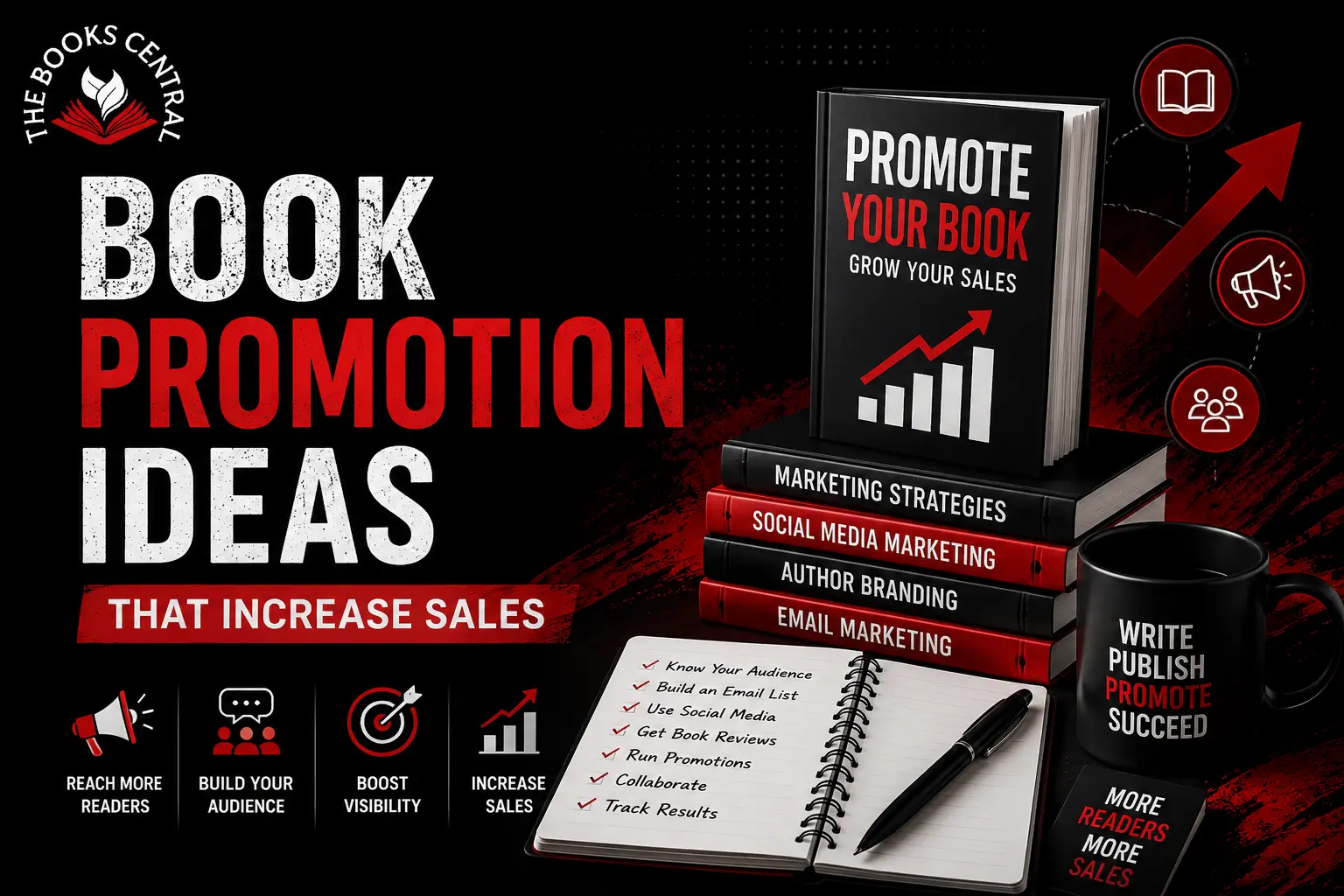
Don’t burn yourself out trying to do all of it at once either. Pick two or three book promotion ideas out of everything here, commit properly, and actually give them a few months before deciding whether they’re working. Bouncing between ten strategies without giving any of them real time rarely produces much, and it’s just exhausting on top of that.
Wrapping It Up
At the end of the day, solid book promotion ideas aren’t really about tricks or shortcuts. They come down to actually connecting with the readers who’d genuinely enjoy your book, and doing that consistently enough that momentum gets a real chance to build. Some approaches will fit your genre and audience better than others, and that’s fine, that’s normal even. Test things, notice what’s actually moving the needle for you specifically, and don’t be afraid to drop what isn’t working once you’ve given it a fair shot.
Your book deserves readers. Getting it in front of them just takes some patience, a bit of strategy, and honestly, a willingness to put yourself out there even when it feels a little uncomfortable at first.