



07 Sep 2026
When I published my first book, I genuinely had no idea what an ISBN was. ISBN explained simply, at least the way I finally figured it out after a lot of confused late night Googling, comes down to this: it’s a unique identification number that lets bookstores, libraries, and retailers track and sell your book properly. Back then I just kept seeing the term everywhere in publishing guides, nodding along like I understood, then quietly searching for it around midnight when I really should’ve been asleep.
If you’re a first time author sitting in the same confusion I was a couple years ago, this post is for you. I want to walk through everything I wish someone had explained plainly from the start. No jargon, no making it sound harder than it is. Because once it clicks, honestly, it’s not that complicated.
What an ISBN Actually Is
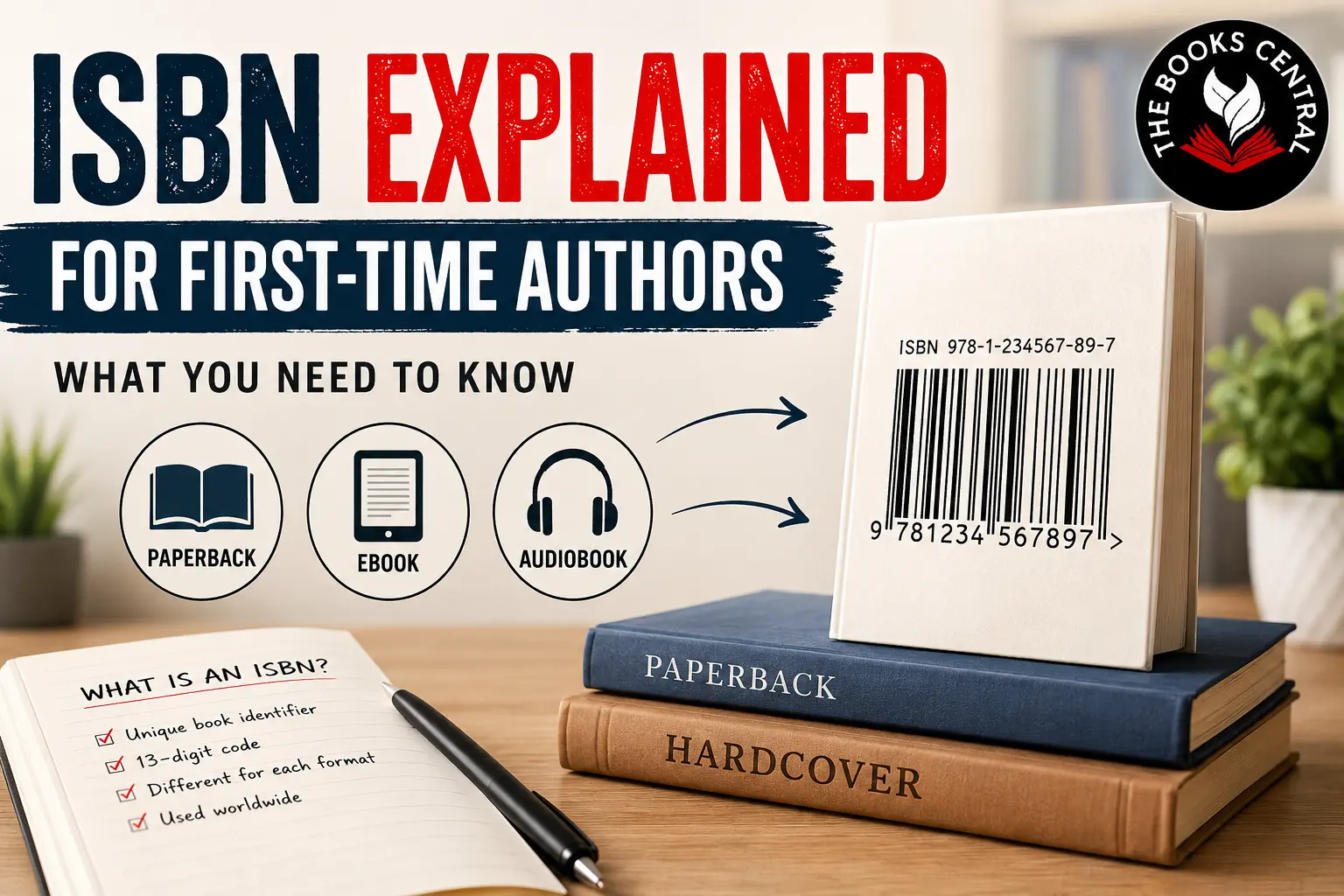
Let’s start with the basics, since that’s where I tripped up first. ISBN stands for International Standard Book Number. It’s a thirteen digit code, though older books sometimes carried a ten digit version before the industry standardized things. Picture it like a fingerprint for your book. No two books, not even different editions of the exact same title, share one.
That last part genuinely surprised me. I’d assumed one book meant one ISBN, forever, full stop. Nope. Publish a paperback, an ebook, and an audiobook of the same story, and each format technically needs its own number. Even a second edition with real changes usually needs a fresh one too, which felt excessive to me at first, until I understood the reasoning behind it.
Once someone in a publishing forum finally walked me through ISBN explained properly, late one night when I was deep in a research rabbit hole, it clicked. The number itself doesn’t do much sitting on its own. What matters is what it connects to.
Bookstores use it to check inventory. Libraries use it for cataloging. Distributors use it to track sales across different channels. Skip it, and your book basically becomes invisible to a huge chunk of the traditional book selling world, everything outside of just Amazon.
Why Every Digit in the Code Actually Means Something
Here’s a small detail most people never bother learning, myself included until fairly recently. Those thirteen digits aren’t random. They break into distinct sections, each carrying its own piece of information. A prefix marking it as a book product. A group identifier for country or language. A publisher code. A title code. And a check digit at the end that confirms the whole number is valid.
I don’t sit around memorizing this breakdown every time I pick up a book. Nobody does. But knowing it exists helped me see that ISBNs aren’t just some random sticker slapped on a cover for decoration. There’s real structure behind the system, even if it stays completely invisible to anyone just browsing a shelf.
Do You Actually Need One as a Self Published Author
This is probably the question other new authors asked me most, once they found out I’d actually gone through the process myself. And the honest answer depends a fair bit on what you’re trying to do with your book.
Planning to sell exclusively through Amazon KDP as an ebook? You technically don’t need to buy your own ISBN at all. Amazon hands you a free identifier for exactly that purpose, and it works fine as long as ebooks through their platform is the whole plan.
Here’s where it gets messier though, and where I personally hit a wall. That free identifier ties your book to Amazon specifically. Want to distribute through other retailers later, get into libraries, or list with a distributor like IngramSpark? You’ll likely need your own ISBN, one you actually own and control. When I decided to expand past just Amazon for my second book, I ran straight into this problem and had to backtrack to fix it, which cost me more time than I care to admit.
Print books work differently. Most platforms require an ISBN no matter where you’re selling. So if paperback or hardcover is anywhere in your plans, this stops being optional pretty quickly.
Where to Actually Buy One Without Overpaying
This part confused me most when I first started digging into it. In the US, ISBNs are managed by a company called Bowker. Other countries run their own official agencies for this, so it’s worth checking what applies wherever you actually live.
You can buy a single ISBN, sure, but it’s rarely worth it once you compare the numbers side by side. Buying in bundles of ten usually works out far cheaper per unit, and if you’re planning more than one book or format down the road, which most authors end up doing whether they planned for it or not, that bundle pays for itself fast.
I bought a single ISBN for my first book without thinking ahead at all. By the time my second book came around a year later, I ended up buying a bundle anyway. Looking back, I paid more overall than if I’d just planned properly from day one instead of being shortsighted about the whole thing.
One more thing worth flagging. Be a little cautious with services offering free ISBNs outside platforms like KDP. Sometimes there are strings attached, like the distributing service getting listed as publisher of record instead of you. Not necessarily a dealbreaker for everyone, but something you want to know upfront rather than discover later.
Common Mistakes First Time Authors Make With ISBNs
Let me save you a few of the headaches I went through myself.
One mistake, assuming a single ISBN covers every format of your book. It doesn’t work that way. Paperback, hardcover, ebook, audiobook, each typically needs its own distinct number if you want them tracked and sold separately across platforms.
Another one, not registering the ISBN with correct metadata once you’ve bought it. Title, author name, publication date, a solid description, all of it needs filling out accurately wherever your ISBN gets registered. I skipped this step at first, assuming it happened automatically. My book sat with incomplete info on a few retailer sites for way longer than I’d like to admit.
People also mix up ISBNs with copyright registration, assuming one covers the other. It doesn’t, not even close. An ISBN is purely for identification and tracking within the book industry. Copyright is a totally separate legal process, and you need both handled properly if you want your book actually protected.
One more thing that tripped up a friend of mine recently. Some authors assume an ISBN automatically transfers if they switch publishing platforms or distributors down the line. It doesn’t always move that smoothly. Depending on how you registered it initially, you might hit extra steps trying to shift things around. Worth checking before assuming it’ll just carry over without a hitch.
Practical Advice Based on What I Learned
If I could go back and coach myself before publishing that first book, here’s roughly what I’d say.
Buy a bundle of ISBNs upfront if you’re even remotely considering publishing more than once. It saves money long term, and you’ll probably need more of them than you’d guess once you start experimenting with different formats.
Register your ISBN with complete, accurate metadata right after buying it. Don’t assume it happens automatically just because you own the number. It doesn’t. I learned that one the hard way.
Decide early whether you want to be listed as your own publisher or lean on a platform’s free option. This affects your control over distribution more than you’d expect, and it’s far easier to set up right from the start than untangle later once your book is already live and selling.
And don’t panic if this all feels confusing at first, because it genuinely was for me too, more than once. Most of it eventually made sense just from going through the process one time and learning by doing, rather than trying to understand every detail perfectly before I even started.
Conclusion
Looking back, having ISBN explained clearly at the very start would’ve saved me a fair bit of unnecessary confusion and a few genuinely costly mistakes along the way. It’s not complicated once you understand what it actually does. But it’s exactly the kind of thing that trips up nearly every first time author, simply because nobody explains it plainly before you actually need to know it yourself.
If you’re just starting your own publishing journey, take a little time upfront to understand how ISBNs work for your specific situation before diving in headfirst. It’s a small detail in the bigger picture of writing and publishing a book, but getting it right from the start will save you time, money, and a fair bit of frustration down the road.