



07 Sep 2026
When I published my first book back in 2021, I spent an embarrassing amount of time flipping between two browser tabs, one for each platform, trying to figure out which one actually made sense for someone who’d never done this before. The IngramSpark vs Amazon KDP question isn’t some abstract thing you read about and forget. It’s a decision that shapes how much money ends up in your pocket, where your book physically ends up, and honestly, how much of a headache the whole process becomes for you. I wish someone had just sat me down over coffee and explained the real, messy differences instead of the polished marketing language both platforms use on their websites.
So that’s basically what I’m attempting here. Not a spec sheet you could find in thirty seconds on Google, but the stuff I actually learned from using both platforms across four books now, including one that flopped pretty hard and one that somehow ended up sitting on shelves in three independent bookstores I never expected to see it in.
What These Platforms Actually Do Differently
Before getting into the nitty gritty, it helps to understand what each platform was actually built to do, because they’re not really fighting for the same job, even though people talk about them like they’re twins wearing different shirts.
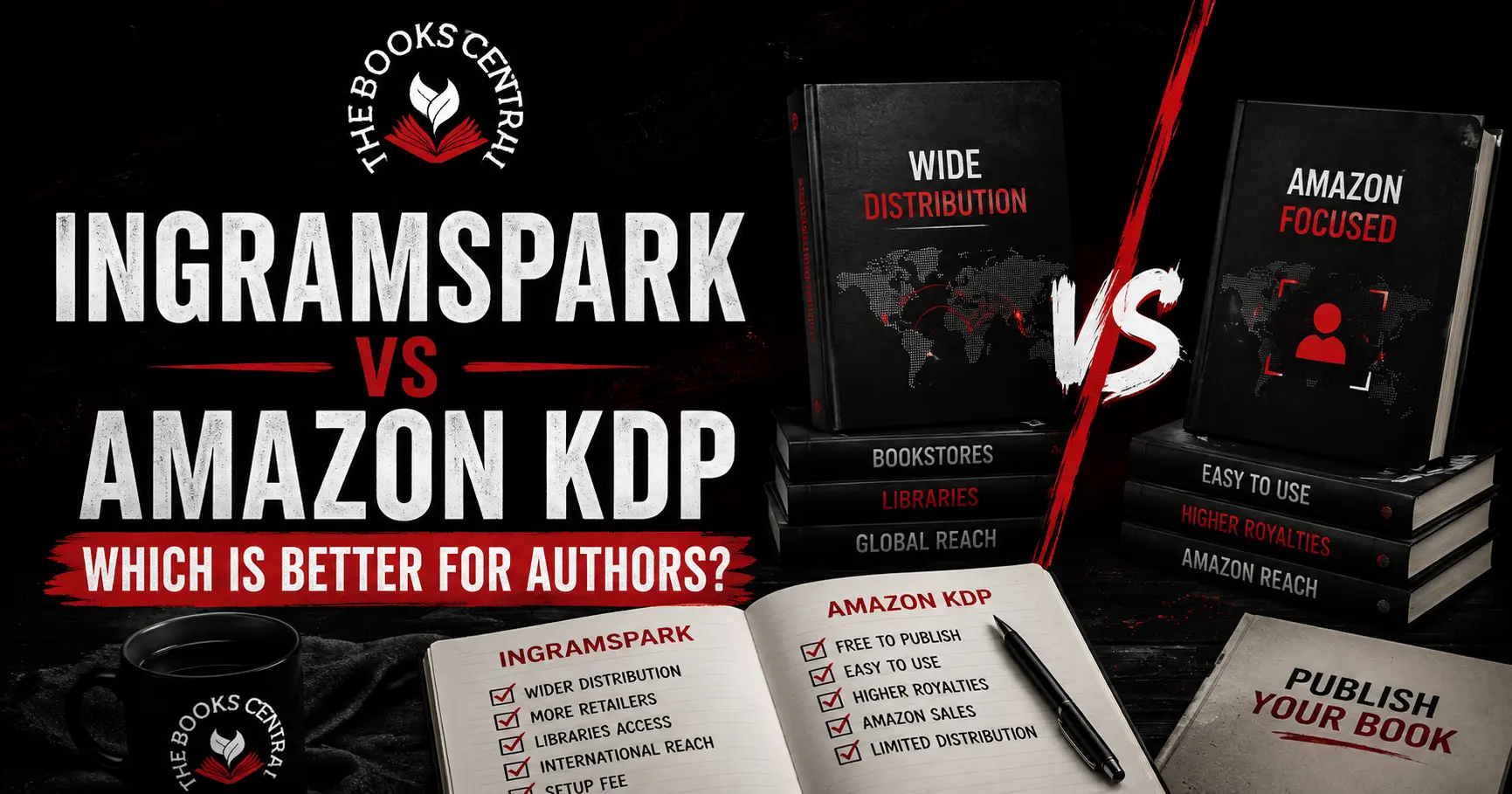
Amazon KDP exists primarily to sell books through Amazon. That’s it, that’s the whole point. It’s fast, free, and plugged directly into the biggest online bookstore on the planet. IngramSpark works differently. It’s built around wide distribution, meaning it gets your book into a huge network of bookstores, libraries, and other retailers that have nothing to do with Amazon at all. That one difference explains almost everything else about how these platforms behave once you start using them.
Why This Distinction Trips Up New Authors
A lot of first time authors assume both services basically do the same thing under different names. That assumption causes real problems down the road. I made this exact mistake myself. I expected IngramSpark’s dashboard and pricing to feel roughly similar to KDP’s. Instead, the setup fees and entire workflow turned out to be completely different animals wearing similar looking clothes. These platforms solve different problems rather than the same problem dressed up differently. Once you understand that, the whole decision gets a lot clearer.
Cost Differences That Actually Matter
This is usually the first question authors ask me, and honestly, it’s where the two platforms pull apart the most.
Setup and Upload Costs
KDP charges nothing to upload your book. Zero setup fees, no charge for tweaking things, no charge if you catch a typo two weeks after publishing and need to reupload the file. IngramSpark works the opposite way. It charges a setup fee per title, usually landing somewhere around forty five to fifty dollars for print and ebook combined, and then hits you with additional fees if you need to make revisions after that initial upload goes through. For a first time author just testing the waters, that gap can feel like a real deterrent.
Printing Costs and Royalties
This part gets more complicated, and I definitely didn’t understand it well the first time around. IngramSpark’s print costs run slightly lower per unit for certain trim sizes and page counts, which actually matters quite a bit if you’re ordering author copies in bulk to sell at events or hand out to reviewers. KDP’s printing runs through Amazon’s own print on demand system, and while it’s convenient, it’s not always the cheapest route depending on your book’s exact specs, trim size, page count, all of that.
Royalties differ too, and this tripped me up on an actual royalty statement once. On KDP, your royalty percentage depends on where the sale happens and which pricing tier you land in, but sales made directly through KDP on Amazon tend to pay out reasonably well since there’s no middleman skimming a cut. IngramSpark sales that happen through Amazon actually pay you less than a direct KDP sale would, because Ingram takes its own distribution cut on top of whatever margin the retailer is already taking. I remember staring at that number thinking I’d made some kind of mistake, but no, that’s just how the math works out.
Distribution Reach and Why It Matters
This is genuinely the deciding factor for a lot of authors weighing IngramSpark vs Amazon KDP, and it deserves real attention rather than a quick summary.
KDP gets your book onto Amazon, period, unless you turn on KDP’s expanded distribution option, which is fairly limited and doesn’t reach nearly as many outlets as people tend to assume it does. If your whole sales strategy revolves around Amazon shoppers, and for plenty of genre fiction authors it genuinely does and works great, KDP by itself might be completely sufficient for your goals.
IngramSpark opens doors that KDP simply can’t touch. Independent bookstores are far more willing to order through Ingram, mostly because that’s the distributor they already use for everything else sitting on their shelves. It’s easier for them, so they default to it. Libraries operate the exact same way, sticking to the systems they already have accounts set up with. If you want any realistic shot at your book being stocked somewhere besides an Amazon warehouse, IngramSpark is really the only practical path for a self published author to take.
My Own Experience With Bookstore Orders
I found this out firsthand when a local independent bookstore reached out asking to stock my second book. They told me straight up they only order through Ingram because that’s their existing account, their existing workflow, and they weren’t about to set up something new just for one small press title. If I’d only published through KDP, that whole conversation simply wouldn’t have happened, and my book would’ve stayed invisible to them entirely. Wasn’t a huge financial win, honestly the numbers were modest, but seeing my book on an actual shelf in an actual store felt like a milestone that Amazon sales figures on a screen never quite matched, if I’m being completely honest about it.
Ease of Use and the Learning Curve
This part isn’t even close, not really. KDP’s interface is built for beginners, and it shows in every corner of the dashboard. Uploading a manuscript, setting your price, hitting publish, all of it can genuinely happen in a single afternoon if your files are properly formatted going in.
IngramSpark feels more like it was designed for publishing professionals than for someone self publishing their first novel from a laptop at the kitchen table, and honestly, in a lot of ways it was. The file requirements are stricter, the interface is a lot less forgiving, and mistakes during upload can cost you actual money in revision fees that KDP wouldn’t ever charge you for. It’s not impossible to learn, not at all, but expect a steeper curve, especially your first time through the whole process.
Which One Should You Actually Choose
Here’s my honest take after going back and forth on this question more times than I’d like to admit publicly. This isn’t really an either or decision for most authors. Framing IngramSpark vs Amazon KDP as a single winner takes all choice completely misses how a lot of successful indie authors actually run their publishing.
Use KDP for your ebook and for print copies sold directly through Amazon. The royalty structure favors you there, and the process stays simple the whole way through. Use IngramSpark specifically for wider print distribution. This gets you into bookstores, libraries, and international markets that KDP’s expanded distribution just doesn’t reach in any meaningful way. Plenty of experienced self published authors run both platforms at the same time. They treat them as complementary tools rather than competing options fighting for the same job.
If you’re brand new to this and just want to get one book out into the world, start with KDP alone. Keep the upfront cost and complexity low. Seriously, don’t overcomplicate your first launch. You can always add IngramSpark later once you understand your book’s audience. That’s when you’ll know whether wider distribution is actually worth pursuing for your specific genre and goals.
Maybe you’re already thinking about bookstore visibility or library placement. Or maybe you’re building something closer to a long term publishing career rather than a single one off book project. Either way, factor IngramSpark into your plan from the start. Yes, even with the added setup costs and learning curve that comes attached to it.
A Practical Middle Ground Worth Considering
Some authors split the difference here. They publish ebooks exclusively through KDP, since ebook distribution through Ingram doesn’t offer much real advantage anyway. Then they use IngramSpark specifically for the print edition of the same book. This gives you Amazon’s ebook reach combined with IngramSpark’s print distribution network. You also avoid paying setup fees twice for formats where it doesn’t actually benefit you much. It’s the approach I settled into after my second book, mostly out of trial and error. It’s worked well for every title I’ve released since then.
Final Thoughts
There’s no single correct answer in the IngramSpark vs Amazon KDP comparison. Anyone who tells you otherwise is probably speaking from narrow experience with just one genre or book type. What actually matters is understanding what each platform does well. KDP offers simplicity and solid Amazon royalties. IngramSpark offers real distribution reach beyond Amazon’s ecosystem. Match that against what you’re actually trying to accomplish as an author.
My honest advice comes from years of trial and error across both platforms, plus a few frustrating royalty statements along the way. Stop hunting for the single right answer. Start thinking harder about what you actually want from this particular book. A quick genre fiction release aimed at Amazon readers has very different needs than a literary novel. Maybe you’re hoping to see that novel on a bookstore shelf someday. Match the platform, or the combination of platforms, to that specific goal. The decision becomes a lot less overwhelming once you do.