



05 Oct 2026
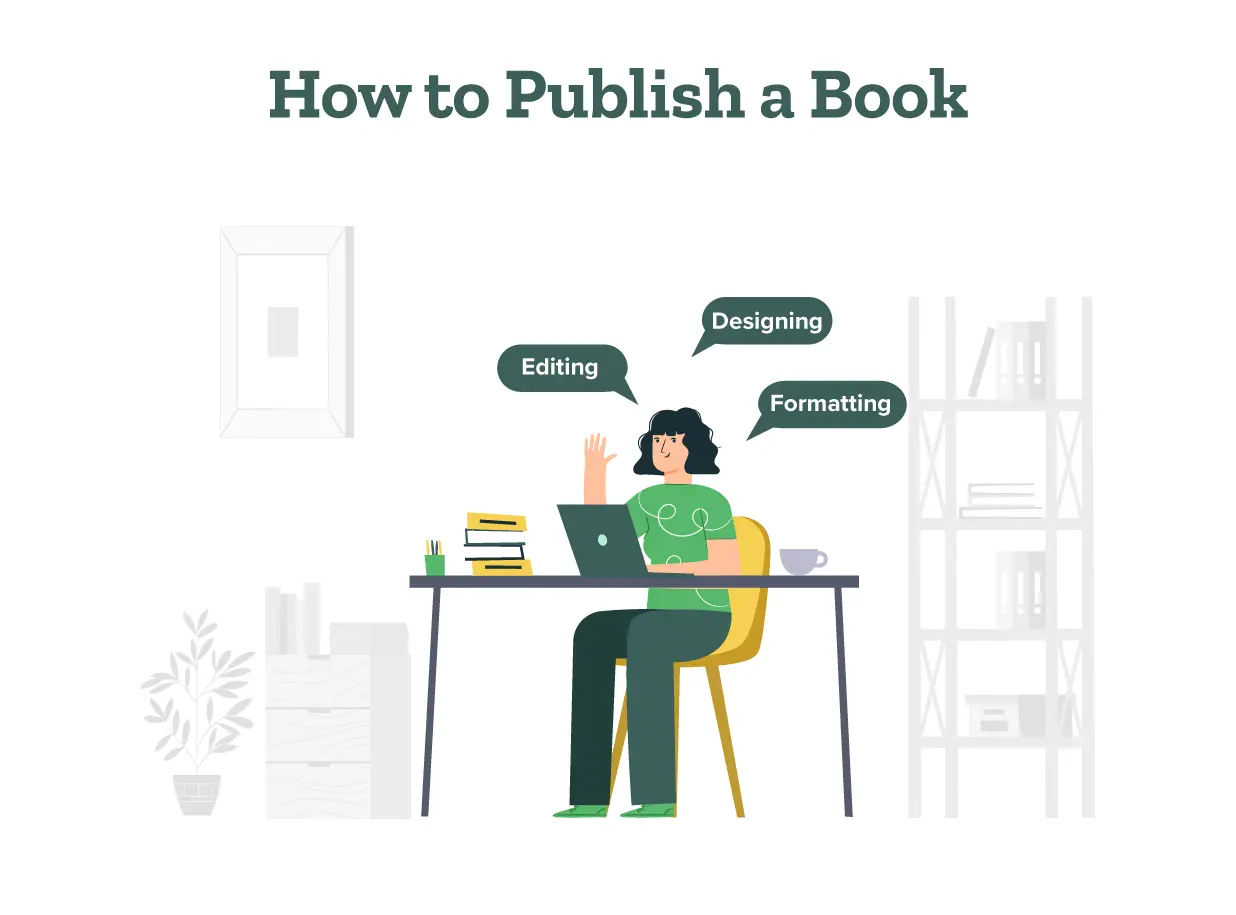
So you wrote a book. Or you’re almost there and already dreading the part after “the end,” because nobody really tells you what comes next. Fair enough. Publishing today doesn’t look anything like it did even five years ago. Self publishing has grown up a lot in that time, readers find books through completely different channels now, and honestly, the tools sitting in front of an independent author would have seemed unreal a decade back.
This guide covers the whole path. Editing, formatting, ISBNs, copyright, which platforms are actually worth your time, and the mistakes almost every first time author makes at least once. Read through it and you’ll know what to do next, and just as importantly, when it makes more sense to hand something off to someone who does it for a living instead of white knuckling it yourself.
Finish the Manuscript First
Obvious advice, sure. But a lot of writers get stuck rewriting chapter one for the fifth month straight instead of pushing through to something resembling a finished draft. Perfectionism this early is usually just fear wearing a productive looking outfit.
A few things that actually help:
Pick a word count goal you can hit on a normal day, not your best day. Write forward and fix things later, don’t stop to polish sentence three while chapter nine is still a blank page. Keep a loose outline nearby so you don’t wander too far off your own story. And set a real deadline, even a soft one, and tell somebody about it so you feel a little accountable.
Once the draft’s done, walk away from it. A week, maybe two. You genuinely can’t see your own manuscript clearly right after finishing it. Everyone thinks it’s either brilliant or trash the day they type the last word, and it’s almost always neither.
Editing and Proofreading Are Not the Same Thing
This is where self published books either hold their own next to traditionally published ones, or fall apart by page three. Readers notice fast, whether they can articulate why or not.
There isn’t just one kind of editing, and skipping any of the three tends to show.
Developmental editing deals with the big picture stuff, story structure, pacing, whether your argument in a nonfiction book actually builds logically from one chapter to the next.
Line editing works at the sentence level. Voice, rhythm, clarity, trimming the fat that snuck in during drafting.
Proofreading is the last pass before anything goes live, catching stray typos and formatting slips that everyone somehow misses the first four times through.
A grammar app isn’t an editor, no matter how good the marketing copy sounds. It’ll flag a comma splice fine. It has zero idea your protagonist’s motivation quietly disappears halfway through chapter nine, or that your third act rushes because you got bored of your own book.
Book Formatting, Which Matters More Than People Think
Formatting is what turns a Word document into something that actually reads like a book. Margins, chapter breaks, front matter, a table of contents that works, all of it follows conventions readers expect without consciously realizing they expect them. Get it wrong and something feels “off” even to readers who couldn’t tell you why.
Print and ebook formatting are genuinely different jobs, not the same file exported twice. Print needs correct bleed and trim size or your cover art gets sliced wrong at the printer. Ebook files need to reflow cleanly whether someone’s reading on a phone at 2am, a Kindle, or a tablet propped against a pillow.
This is honestly one of the steps where a professional book formatting service earns its fee fast. Get it wrong and readers hit weird page breaks, broken chapter headers, or a table of contents that doesn’t link anywhere, and that’s exactly the kind of thing that shows up in a one star review. Our [Book Formatting Guide] covers trim sizes, fonts, and file specs in more detail if you want to go deeper.
Getting an ISBN
An ISBN is how your book gets tracked across the publishing world, by retailers, libraries, distributors, the whole system. Without one, anything outside Amazon has no clean way to identify your title as yours.
You don’t strictly need one for a Kindle ebook since Amazon hands out a free ASIN automatically. But want your book on other retail platforms, in libraries, or listed with your own name as the publisher instead of Amazon? Then you’ll need to buy your own.
And here’s the part people forget: each format needs its own separate number. Paperback, hardcover, and ebook are three different ISBNs, not one shared across the board. Our [ISBN Guide] walks through where to buy them and how registration actually works.
Copyright Basics, Quickly
Your writing is protected the second you write it. That part’s automatic, no paperwork involved. Formal registration is a separate step, and it mostly matters if you ever need to take legal action against someone who’s lifted your work.
A few basics worth knowing here. Copyright exists from the moment you create the work, full stop. Registering it creates an official public record, and most countries require that record before you can actually sue for infringement. A copyright page inside the book itself, name, year, rights statement, is just standard practice at this point. And dropping in copyrighted images, song lyrics, or lengthy quotes without permission can genuinely cause legal headaches, even for a small self published title nobody’s heard of yet.
Your Cover Is Doing More Work Than You Realize
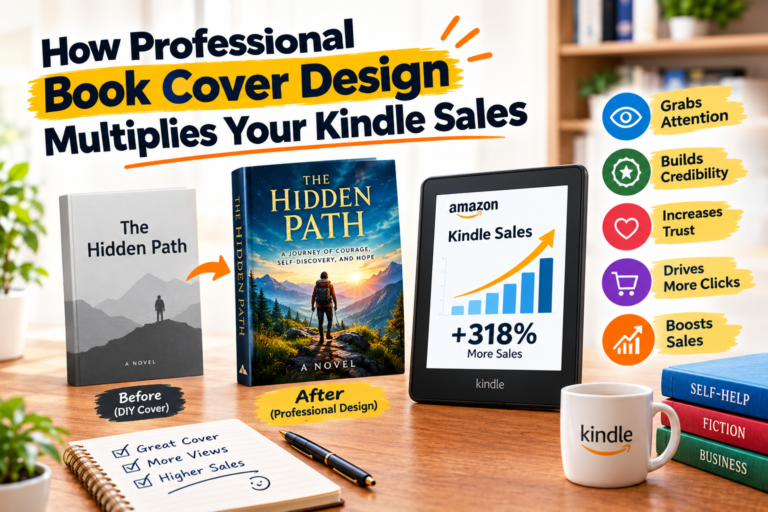
Readers judge a book by its cover. So does every recommendation algorithm Amazon runs. A cover that looks homemade signals low quality before anyone’s even read your first sentence, no matter how strong the writing actually is underneath it.
It has to hold up as a thumbnail, because that’s usually the size readers see it first, scrolling on a phone. It also needs to look like it belongs in its genre. A thriller cover and a cozy romance cover use completely different visual language, and that’s not an accident, that’s readers scanning fast and relying on those cues without thinking about it.
Picking Your Publishing Path
There are three real routes into print, and honestly, which one fits you depends a lot on how much control you want versus how much time you’re willing to spend learning things you’ve never done before.
Traditional Publishing
You query agents, and if one signs you, a publisher eventually takes over editing, design, printing, and distribution. You give up a lot of creative control and most of your royalties, but you get industry credibility and shelf space you probably couldn’t land on your own. It’s also slow. One to three years between a signed deal and an actual release isn’t unusual.
Self Publishing
You’re in charge of everything, which means you keep most of the royalties and publish whenever you’re actually ready. The catch, obviously, is you’re also on the hook for hiring editors, designers, and formatters yourself, or teaching yourself enough to fake it.
Hybrid Publishing
You pay for professional services, editing, design, formatting, distribution setup, while keeping your rights and a bigger royalty cut than a traditional deal would give you. This path’s picked up a lot of steam lately, mostly because it gets authors professional level quality without sitting around waiting for an agent to say yes.
Publishing on Amazon KDP
Kindle Direct Publishing is the biggest self publishing platform out there, and it costs nothing to use. You can publish ebooks and print on demand paperbacks with zero upfront printing cost.
KDP only prints a copy once someone actually orders it, so you’re never sitting on boxes of unsold inventory in your garage. Royalties get paid out monthly, and you keep full rights to your own work the whole time, nobody’s taking that from you.
Our [KDP Guide] walks through account setup, formatting requirements, category selection, and how the royalty math shakes out in practice.
IngramSpark, for Going Beyond Amazon
KDP is great specifically for Amazon sales. IngramSpark opens doors that KDP mostly doesn’t touch, bookstores, libraries, and international retailers.
There are small setup fees per title, worth knowing upfront, but it gets your book into catalogs that independent bookstores actually pull from when customers order something they don’t stock. A lot of experienced self published authors run both platforms at once rather than picking a lane. Our [IngramSpark Guide] covers setup and how it stacks up next to KDP.
Ebook, Paperback, or Hardcover
Most authors who do well don’t lock themselves into just one format. They release across a few.
| Format | Best For | Typical Reader Cost | Production Effort |
| Ebook | Fast reach, lower price, instantly available everywhere | Low | Low |
| Paperback | Everyday readers, book clubs, casual gifting | Medium | Medium |
| Hardcover | Collectors, premium positioning, special editions | High | Higher |
If budget or time only allows for one launch format, ebook paired with paperback covers the widest range of reader preference for the least amount of production effort.
Pricing Your Book
Price shapes both how many copies sell and how readers judge quality before they even open the thing. Too low and people assume it can’t be very good. Too high without an existing audience and casual browsers just scroll right past.
A rough starting range, and this genuinely varies by genre so treat it as a starting point, not gospel: ebooks tend to sit around 2.99 to 5.99 for fiction, a touch higher for nonfiction. Paperbacks usually land somewhere between 9.99 and 16.99 depending on length and trim size. Hardcovers generally run 19.99 to 29.99.
Printing costs, royalty splits, and what your specific genre typically charges all factor into the right number for your book. Our [Publishing Costs breakdown] has actual figures for editing, design, formatting, and ISBN fees so you can budget realistically before committing to anything.
Getting Your Book Into Readers’ Hands
Distribution is really just the mechanics of how your book physically or digitally reaches a buyer. Amazon, IngramSpark’s retail and library network, direct sales off your own website, consignment at a local shop, take your pick, or use several at once.
Most authors start with Amazon KDP alone and expand into IngramSpark once the book’s finished, polished, and they actually want a wider retail footprint worth the extra setup.
Writing a Description That Actually Sells
Your book description is the pitch. It’s got maybe two lines to hook someone before they decide whether to tap “read more” or keep scrolling past your book entirely.
What tends to work: opening with a hook, a question, or something with real stakes attached. Setting up the core conflict or promise of the book without over explaining every detail. Never, ever spoiling the ending, which sounds obvious but people do it constantly. Closing on a line that creates some urgency or curiosity. And naturally including the words readers are actually typing into search bars, not just words that sound impressive to you.
Build an Author Platform Before You Actually Need One
Your platform is everything readers can find about you outside the book itself. An email list, some social presence, a personal site, whatever existing audience you can reach directly without paying for an ad every time.
Authors who build this before launch tend to genuinely outsell the ones who wait until publication day to start introducing themselves to the world. Even a small list, a few hundred genuinely engaged people, can move the needle noticeably in that first week.
Getting Ready for Launch Day
A good launch gets planned weeks ahead, not thrown together the night before in a panic with a glass of wine and a prayer.
Line up advance reader copies early enough that reviews actually exist by launch day. Schedule your social posts ahead of time instead of scrambling. Lock in your description and keywords well before release, not the morning of. Have a pricing and promo plan ready to go, not something you’re figuring out in real time. Early reviews in that first week carry more weight than most new authors realize, since they quietly shape how retail algorithms decide whether to recommend your book to anyone else.
Marketing Doesn’t Stop at Launch, It Kind of Starts There
Publication day is a starting line, not a finish line, even though it feels like the finish line when you’re standing at it. Whatever momentum you build at launch fades fast without continued effort behind it, sometimes within a couple weeks.
Keep things moving with targeted ads on Amazon or social platforms, guest spots on podcasts in your genre, relationships with bloggers and reviewers who actually cover your category, and an email list you keep growing so you have someone to tell when the next book’s ready.
Mistakes New Authors Make, Over and Over
Watching where other authors trip up is a cheap way to skip the same mistakes yourself.
Skipping professional editing to save a few hundred dollars, and then wondering why reviews mention pacing problems. Picking a cover that doesn’t match what readers expect from the genre, so nobody who’d actually love the book even clicks on it. Hitting publish with zero marketing plan in place and hoping Amazon’s algorithm does the work for free. Setting a price with no idea what similar books in the category actually charge. Ignoring formatting standards and handing readers a genuinely messy reading experience. And rushing to publish out of pure excitement before the book’s actually ready, which is maybe the most common one of all.
When It’s Actually Worth Hiring a Professional
You don’t need outside help for every single step, and plenty of authors handle parts of this fine on their own. But some tasks genuinely benefit from someone who does this constantly for a living, editing, cover design, and formatting especially, since these are exactly what shape how readers and retailers judge your book in the first few seconds.
If the number of moving parts here feels like a lot, and it usually does the first time around, a full service book publishing service can take on editing, design, formatting, and distribution setup so you can get back to actually writing the next book instead of untangling file specs. Take a look at [The Books Central Publishing service] to see what a guided, professional path looks like from manuscript to market.
DIY Publishing vs Working With Professionals
| Factor | DIY Publishing | Professional Services |
| Cost | Lower upfront | Higher upfront |
| Time investment | High, you’re doing everything yourself | Low, experts handle production |
| Quality control | Depends entirely on your own skills | Consistent, industry standard |
| Learning curve | Steep for a first time author | Minimal, someone guides you through it |
| Best fit | Authors with design or editing skills and a tight budget | Authors who want a polished result without learning every step from scratch |
How Long Does This Whole Thing Actually Take
Depends a lot on which path you’re on. A basic self published ebook can go live within a few weeks of a finished, edited manuscript, sometimes faster if you’re not fussy about the cover. A fully polished paperback and hardcover release, with professional editing, design, and formatting, usually runs two to four months start to finish. Traditional publishing can stretch one to three years between a signed deal and books actually landing on shelves.
Our [Publishing Timeline guide] breaks this down week by week if you want something more concrete to plan around than “it depends.”
Final Thoughts
Publishing a book in 2026 is more within reach than it’s ever been, but reach and easy aren’t the same thing. Every stage, editing, cover design, distribution, quietly shapes how readers and retailers perceive your finished book once it’s actually out in the world. Taking each step seriously instead of rushing straight to publish is usually what separates books people actually buy from books that vanish quietly a week after launch, and nobody sets out to write a book that vanishes.
If you’d rather have experienced hands guiding your manuscript through editing, formatting, cover design, and distribution setup, our book publishing service and book formatting service at [The Books Central] are ready to help turn your finished draft into a properly published book.
About the Author This guide comes from the editorial team at The Books Central, a publishing services company that’s worked with authors across fiction and nonfiction to move manuscripts into finished, published books. Our team works directly with editors, designers, and formatting specialists on every project we take on, not a template pulled off a shelf.
Sources and References
- United States Copyright Office, copyright.gov
- Amazon Kindle Direct Publishing, kdp.amazon.com
- IngramSpark, ingramspark.com
- International ISBN Agency, isbn-international.org
Last updated: 2026