



07 Sep 2026
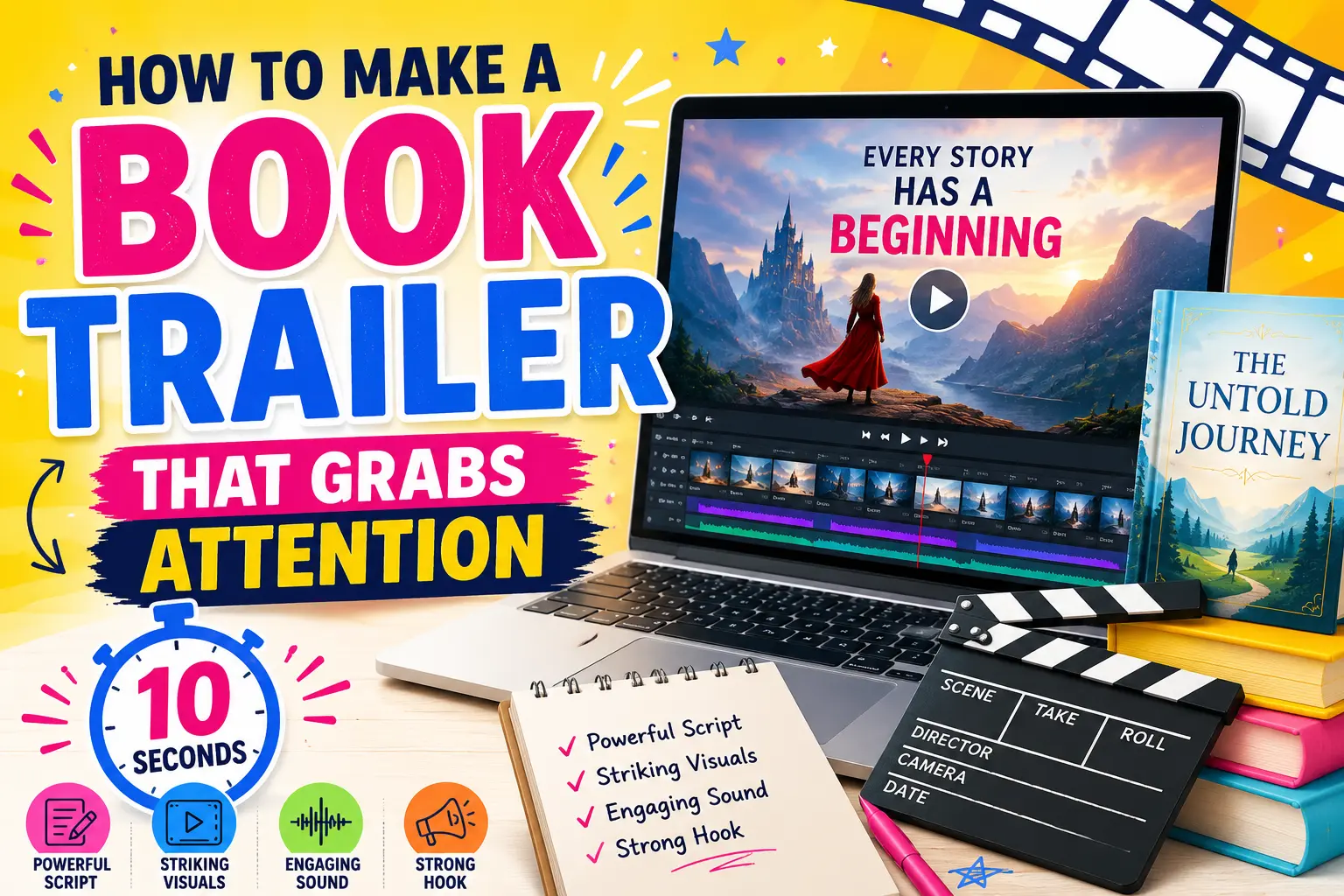
So I figured out the hard way that creating a great trailer isn’t as simple as it looks. Learning how to make a book trailer turned what I thought would be a weekend project into almost two weeks of work, three script rewrites, and a stupid amount of trial and error before I finally understood why most book trailers lose people in the first ten seconds. That’s really the whole battle, honestly. Lose someone in those opening seconds and it doesn’t matter how good your book is. They’re gone.
I’m writing this as someone who’s made a handful of these now, mine and a couple for friends who write fiction and nonfiction. None of us touched a film school. We just learned by watching what worked and, more often, what completely flopped. So don’t expect a textbook here. Think more like notes scribbled by someone who’s had iMovie open at 1am wondering why a thirty second clip felt like it lasted an hour.
Why The First 10 Seconds Decide Everything
Before getting into the actual steps, here’s why this window matters so much. Social platforms, even YouTube thumbnails, are basically built around impatience. People scroll fast, their thumb’s already moving before your video even loads properly. Open with a slow logo animation or a quiet fade in or some long establishing shot and you’ve already lost half the room.
Learned this one the hard way. My first trailer opened with moody piano and a slow zoom into a forest, felt right for my fantasy novel at the time. The retention graph disagreed pretty loudly. Almost 40% of viewers were gone before the five second mark. One stat, and it changed how I do every trailer after that.
The Psychology Behind Quick Attention Grabs
There’s a reason movie trailers, ads, basically anything competing for attention online relies on quick cuts and a strong opening line. Attention online just doesn’t behave like attention in a theater. In a theater you’re stuck once the lights go down. Online you’re one tap from leaving, always. So the opening of your trailer has to work like the first line of a good novel, it needs to promise something specific, not just vibe set a mood.
When I rewrote that forest opening, I swapped it for one line of dialogue over a black screen, then cut hard into the most visually striking moment from the book. Retention jumped. People stuck around because the opening made them want an answer to something.
How To Make A Book Trailer, Step By Step
This is probably what you actually clicked for, so here’s how I do it now, after all those early mistakes.
Step One: Find The One Emotional Beat
Before touching any editing software, I sit with the book and ask one question. What’s the single feeling that captures this whole story? Not the plot, not the blurb. Just one feeling. Thriller, maybe it’s dread. Romance, maybe longing. My fantasy book, it was that feeling of being an outsider who finally finds where they belong.
A lot of writers skip this and jump straight to stock footage and music, and honestly it shows. A trailer with no emotional core just feels like a slideshow. Once you’ve nailed the feeling, everything after gets easier, because you’re filtering choices through one question: does this support the feeling, or does it pull away from it.
Step Two: Write A Script That Front Loads The Hook
This is where the real difference shows between someone who knows how to make a book trailer that converts and someone who’s just throwing clips together. Even a fifteen word script needs to open with the strongest line you’ve got. Not the title. Not your name. Definitely not a publisher logo up front.
I keep a notes app full of lines pulled straight out of my manuscripts, because the best hook is usually already sitting in your book somewhere. A bit of internal monologue, a line of dialogue that raises a question, something that hints at danger, all of that beats a generic “in a world where magic is forbidden” type line. Specific always wins over vague.
Quick note though, the “10 seconds” in the title is really about the hook portion, the bit that stops the scroll. The whole trailer should still stay short. My best performing ones run fifteen to thirty seconds total. Nobody’s looking for a short film, they just want a reason to tap the buy link or save it for later.
Step Three: Match Visuals To Tone, Not Just Genre
Mistake I made early: picking stock footage based on genre clichés instead of the actual tone of the book. Fantasy doesn’t have to mean dragons and castles every time. Sometimes it’s quiet, unsettling stillness. Thriller doesn’t have to mean fast city night shots. Sometimes the scariest thing is silence.
When picking footage, whether it’s stock, your own phone clips, or AI generated stuff, ask if it actually matches the feeling from step one. Claustrophobic, tense book? Wide open beautiful landscape shots will undercut that even if they look great on their own.
Step Four: Sound Design Matters More Than People Realize
I underrated audio for way too long. Everyone obsesses over visuals when thinking about how to make a book trailer, but sound is doing half the emotional lifting and most viewers don’t even notice it consciously. A heartbeat under a tense beat, dead silence right before a reveal, one sustained note instead of a full score, small choices, big difference.
Now I spend almost as much time on sound as visuals. Royalty free libraries are genuinely good these days, no excuse to default to generic dramatic stings anymore. Subtle usually beats loud, especially in that opening window where you’re trying to earn attention, not blast people with it.
One thing, if you’re using voiceover or on screen text with narration, duck the music way down during spoken lines. Sounds obvious but I’ve seen so many indie trailers where the music drowns out the one line that was supposed to hook people. Easy mistake, ruins everything else you did right.
Common Mistakes Writers Keep Making
After watching way too many indie author trailers, including my own early disasters, some patterns just keep repeating.
Opening With Branding Instead Of Story
Logo first, publisher name, slow cover fade in, feels natural because that’s how old movie trailers used to open. But attention spans and algorithms don’t work that way anymore. Save the branding for the last two or three seconds, after you’ve already earned the view.
Trying To Cram In The Whole Plot
A trailer isn’t a synopsis. I’ve seen people try to explain the setting, three characters, and the main conflict in twenty seconds flat. Always feels rushed, always forgettable. Pick one moment, one feeling, one question. Let that carry the whole thing.
Forgetting Mobile Viewing Habits
Most people watch on a phone, sound off, at least at first. If your hook is purely spoken dialogue with no captions or bold text on screen, you’re losing a big chunk of viewers before they’ve even unmuted. I caption everything now. No exceptions, learned that one too.
Tools That Actually Make This Easier
You don’t need expensive software to pull this off. I’ve made trailers on CapCut on my phone, Canva on a laptop, and occasionally DaVinci Resolve when I wanted more control over color. Honestly the tool matters way less than the script and that emotional core from step one.
For music and sound effects, the free libraries baked into CapCut or Canva are usually enough. For voiceover, even recording your own voice in a quiet closet on your phone can sound surprisingly decent once you add a touch of compression and reverb.
Putting It All Together
Once you’ve got the hook line, visuals that match, sound that supports it, and branding tucked at the very end instead of the front, last step is just testing it. Upload as unlisted first, check the retention graph if the platform gives you one, see exactly where people drop off. That data teaches you more about your specific readers than any guide, this one included, ever could.
Making a book trailer that grabs attention in the first ten seconds isn’t really about gear or budget. It’s about understanding what your reader needs to feel before they even know what the book’s about. Once that part clicks, the rest is just execution.