




07 Sep 2026
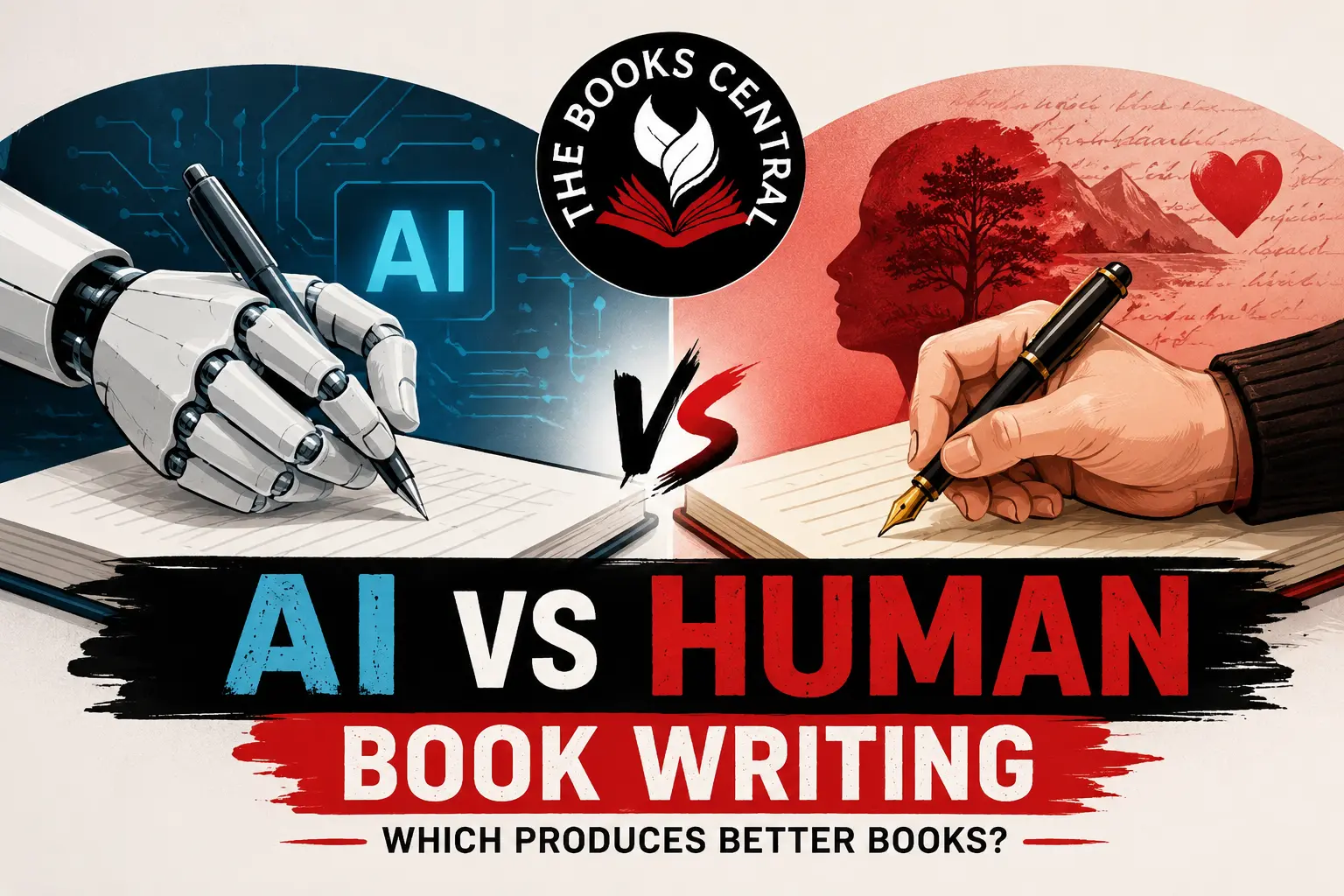
I’ve spent the better part of a year flip flopping on this, more than I’d like to admit. AI vs human book writing stopped being some abstract debate for me a while back. It turned into something I actually had to sit with, because writing books is how I pay my bills, and at some point curiosity just won out. I stopped forming opinions from a distance and started testing things myself instead.
Fair warning, this isn’t a neutral, sit on the fence kind of post. I’ve landed on some fairly strong opinions by now. They came from doing the actual work, not from skimming hot takes online. Let me walk you through what I found, including a few things that caught me off guard.
Why This Question Even Matters Right Now
A few years back this whole conversation would’ve sounded almost silly. Early AI writing tools spit out stiff, obviously robotic text. Nobody would’ve mistaken it for real prose. That’s changed though, faster than I expected honestly. Tools like ChatGPT, Claude, and a handful of specialized writing platforms now produce paragraphs that read smoothly, hold together structurally, and every so often land a sentence clever enough to make you pause.
That shift is why so many authors, me included, started taking the AI vs human book writing question seriously instead of just brushing it off as a fad. If the quality gap is shrinking, what does that actually mean for people who write books for a living? Are human writers becoming less necessary? Or is the real picture messier than that, where each approach is simply good at different things?
I didn’t want to guess my way through it. I wanted to write using both methods and compare what came out, without letting my ego get in the way of what I actually found.
My Experiment Writing the Same Chapter Two Ways
Here’s what I did. I grabbed a chapter from a novel I’d already been outlining. Mid book, some tension building, a bit of dialogue, one emotional turning point for the main character. I wrote it myself first, the old fashioned way. Sentence by sentence, staring at the screen, getting up every so often for coffee I didn’t need but made anyway out of pure habit.
Then I handed an AI tool a detailed outline of that same chapter. Character motivations, setting, the emotional beat I wanted it to hit. Let it generate a complete draft from there.
What came back genuinely surprised me, though maybe not the way I expected. The AI version read fine. Clean grammar, decent pacing, structurally sound start to finish. But something felt hollow around that emotional turning point specifically. It hit the right beats without earning any of them. My version was messier in places. A couple sentences I rewrote three, four times before they sat right. But the emotional weight landed harder, because I actually knew what that character was feeling and why, something closer to lived experience than pattern matching pulled from a training set.
Where AI Actually Wins in the AI vs Human Book Writing Debate
I want to be fair here. AI isn’t useless in this process, not even close. There are specific spots where it beats what most human writers manage alone, especially under real time pressure.
Speed’s the obvious one, and it’s not a small advantage either. AI generates a full length draft in a fraction of the time a human writer needs for the same word count. Working on something research heavy, say a nonfiction book pulling together complicated information, AI helps organize and structure ideas fast.
Consistency’s another real strength. AI doesn’t get tired at two in the morning and start churning out sloppy sentences the way I sometimes do. It doesn’t forget some minor detail from three chapters back the way human writers occasionally do juggling a long manuscript over months. For consistent formatting, tracking small continuity details, generating a few versions of a scene to compare side by side, it’s a genuinely handy tool.
Brainstorming surprised me too. When I got stuck on how a scene should open, bouncing rough ideas off an AI tool sometimes unstuck me faster than staring at a blank page hoping inspiration would just show up.
Where Human Writing Still Has the Edge
Here’s where this conversation gets more honest though. For anything needing real emotional depth, lived experience, or a voice that actually feels like a specific person wrote it, human writers still win. And it isn’t close, even now.
AI generated prose, even the good stuff, tends to smooth everything out in a way that quietly flattens emotional complexity. Real grief doesn’t read cleanly on a page. Real joy isn’t always articulate. Human writers bring contradictions, weirdly specific details, messy imperfect moments that come from actually living through something similar, or empathizing deeply enough to imagine it convincingly.
Then there’s originality, which I think gets underrated in this whole debate. AI tools train on existing text, so at their core they’re remixing patterns they’ve already seen. A human writer can break structural rules on purpose. Take a risk that shouldn’t work but somehow does. Write one strange sentence that feels genuinely new. I’ve read plenty of AI generated chapters that were fine, readable enough. I’ve rarely read one that actually surprised me the way a great human written passage still can.
What This Means for Authors Right Now
So where does that leave things practically? If you’re trying to figure out your own approach to AI vs human book writing, I don’t think the answer is picking one side and ignoring the other entirely.
I’ve settled into using AI as a tool, not a replacement. I use it to brainstorm plot alternatives when I’m stuck, organize research for nonfiction projects with a lot of moving pieces, occasionally generate a rough first pass of a scene I then rewrite almost entirely in my own voice. What I don’t do, and probably never will, is let it write my emotional climaxes or character defining moments. Those need to come from me. That’s where a book actually lives or dies for readers.
I’ve talked to other authors who handle it differently. Some lean on it heavily for full first drafts, then spend most of their editing time reworking the prose until it sounds like them again. Others avoid it almost entirely, worried leaning on it too much might dull their own instincts over time, kind of like how relying on autocomplete too much makes you forget how to spell. Both feel valid, honestly, depending on your goals and genre.
Writing something that depends heavily on voice, literary fiction, memoir, poetry, I’d lean hard toward human writing, keeping AI in a supporting role at most. Producing something more formulaic or research driven instead, AI can save real time without sacrificing much quality.
Practical Advice If You’re Weighing This for Your Own Book
If you’re trying to decide how to approach your next project, here’s what I’d actually suggest, based on my own trial and error this past year.
Test both methods on a small scale first, the way I did with that single chapter. Don’t commit your whole manuscript to one approach before comparing results honestly for your specific voice and genre. A short experiment costs you almost nothing and tells you plenty.
Use AI for parts of the process that genuinely benefit from speed and structure. Early brainstorming, rough outlining, organizing complicated research. Save the emotionally significant scenes for yourself though, since that’s usually where the quality gap shows up most, even to readers who couldn’t tell you exactly why something feels off.
Read your AI generated content out loud before deciding whether to keep any of it. Hearing it spoken often reveals a hollowness that’s harder to catch reading silently on your own.
And be honest with yourself about why you’re using AI in the first place. Saving time on genuinely tedious parts of the process, that’s reasonable. Quietly replacing the parts of writing that make your book yours, that’s worth stepping back and reconsidering.
Conclusion
After testing both sides myself, my honest take on AI vs human book writing is that neither fully replaces the other, at least not yet, and maybe not ever, depending how things develop. AI is a genuinely useful tool for speed, structure, and pushing past writer’s block when you’re stuck on a rough first pass. But human writing still carries something AI can’t fully replicate. The lived experience, the imperfections, the emotional honesty that actually makes readers care about a story in the first place.
If you’re an author figuring out where you stand on AI vs human book writing, my honest advice is to stop treating it like some all or nothing decision. Test it yourself. Figure out where it genuinely helps your process, and protect the parts of your writing that make your voice worth reading, because that’s the part no tool can do for you.