



07 Sep 2026
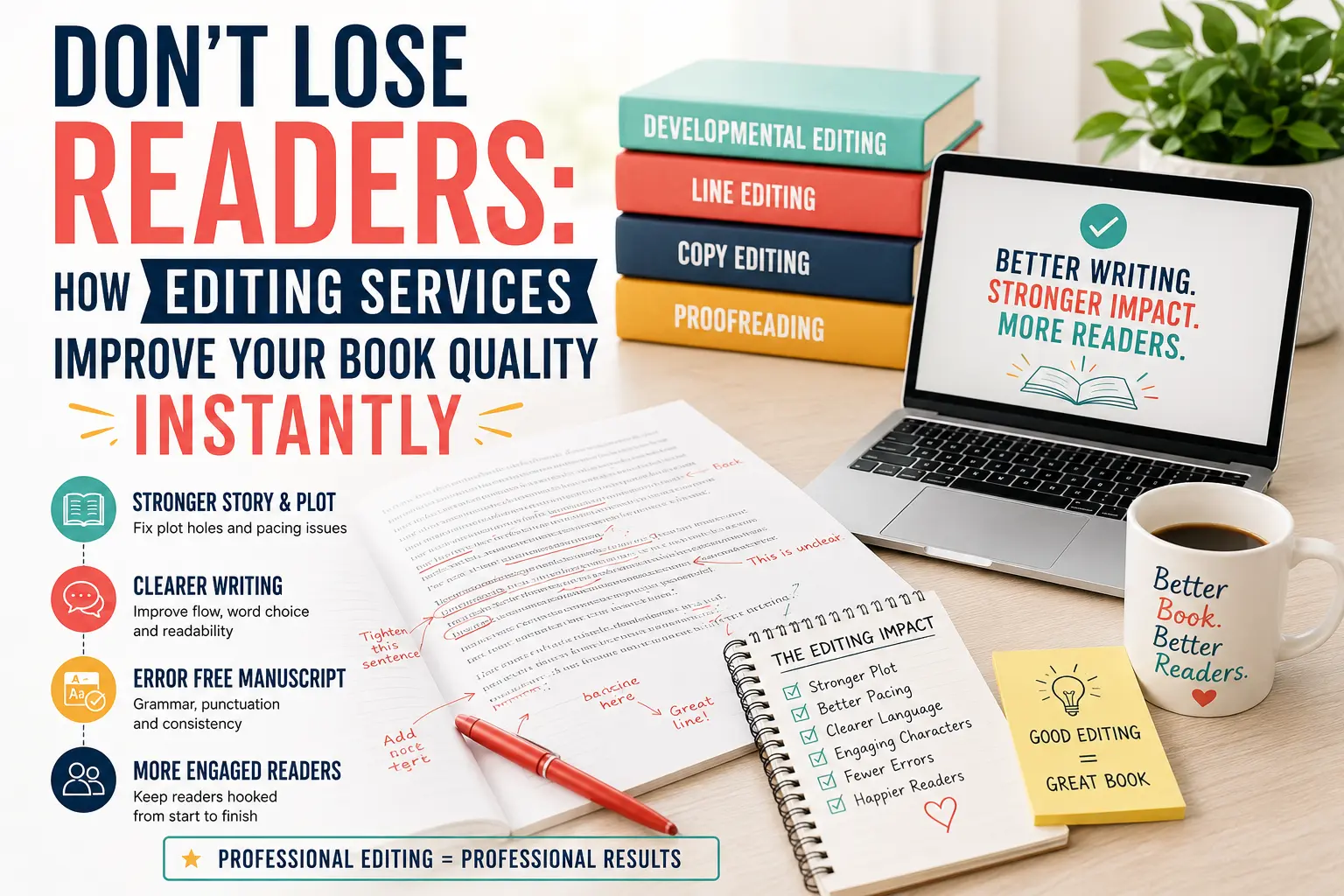
Okay so I genuinely thought writing the book was the hard part and everything after was just, you know, formality. Wrong, completely wrong. Book editing services taught me that the hard way, after watching my first manuscript get torn apart, in the best possible sense though. Turns out the difference between a book people finish and one they just abandon halfway through usually comes down to editing, not even the story idea itself. Took me a few embarrassing drafts to actually get this.
Not some polished marketing thing for an editing company, by the way. Just an author telling you what happened once I finally stopped editing my own stuff and let someone who actually knew what they were doing take over.
Why I Avoided Getting My Book Edited For So Long
Honestly, ego, mostly ego. Spent months writing this thing, felt like nobody could understand it better than me. Why pay someone to point out problems in something I made. That thinking cost me more than I want to admit.
Also I just assumed editing meant fixing typos here and there, basic grammar stuff. Yeah no, that’s barely scratching the surface of what real book editing services actually do. There’s so much more going on underneath that I had zero clue about.
The Moment I Realized I Actually Needed Help
Sent my manuscript to some beta readers before even considering a professional editor, and the feedback was just confusing honestly. Some people loved certain chapters, others said pacing dragged in the exact same spots. I had no clue how to fix problems I couldn’t even properly point out myself. That’s when it hit me, I was too close to my own writing to see what was actually wrong with it.
What Changed After Getting My First Real Edit Back
First time I got my manuscript back from an actual editor, weird mix of embarrassed and relieved honestly. Embarrassed because of how many issues I never even noticed were there. Relieved because finally someone explained why parts weren’t working, not just that they weren’t.
What Book Editing Services Actually Cover
This confused me a lot at first, same as probably most new authors. Editing isn’t just one thing, it’s actually several different stages that happen one after another.
Developmental Editing Comes First
This is the big stuff. Plot holes, pacing problems, whether characters stay consistent, does the story structure even make sense start to finish. My editor pointed out an entire subplot that added nothing and just slowed everything down. Cutting it hurt in the moment, book read way better after though.
Then Line Editing
Once the bigger structural mess gets sorted, line editing’s about how each sentence actually reads. Word choice, flow, cutting repetitive phrases I didn’t even realize I kept using over and over throughout the whole thing.
Copy Editing Handles The Technical Stuff
Grammar, punctuation, spelling consistency, this is what most people picture when they hear editing. Matters sure, but honestly it’s the smallest part compared to developmental and line work.
Proofreading Is The Last Step
Happens right before publishing, catching whatever small stuff slipped through earlier. I used to think proofreading and copy editing were basically the same, they’re related but not really the same thing at all.
Quick takeaway: Editing isn’t one task. It moves through developmental editing, then line editing, then copy editing, and finally proofreading. Skipping the earlier stages to save money usually costs more later.
How Editing Actually Changed My Book
Gonna get specific here because vague claims about editing “improving quality” don’t really mean much without examples.
People Stopped Quitting Around Chapter Seven
Before editing, multiple beta readers admitted they stalled out around chapter seven, every single time. After developmental editing fixed the pacing there, later readers just finished the whole book, didn’t even bring that issue up anymore.
Dialogue Stopped Sounding The Same For Every Character
Editor pointed out my characters basically all sounded identical when talking. Fixing that through line editing made each one feel distinct, which honestly made the whole story way more believable.
My Opening Chapter Finally Hooked People
This one genuinely surprised me. My original opening took forever to actually get going. A good editor helped restructure those first pages so readers got pulled in right away instead of needing patience to reach the good part.
Why Editing Your Own Work Isn’t Enough
Not saying self editing’s useless, I still do plenty before sending anything off. But there’s real limits to what you catch on your own, no matter how careful you think you’re being.
You Know What You Meant, Not What You Wrote
Sounds obvious but it’s actually a huge problem. Reading your own stuff, your brain fills gaps based on what you meant rather than what’s literally there on the page. Outside editor doesn’t have that bias, they only see what’s actually written.
You Get Tired After Enough Drafts
By draft ten, I was basically skimming without even realizing it. Fresh eyes catch stuff that exhausted, overly familiar eyes just miss completely.
Picking The Right Book Editing Services For Your Book
Not every editor fits every book, learned this through trial and error more than I’d like honestly.
Genre Experience Actually Matters
Worked with someone once who was technically great but had zero experience in my genre. Feedback felt slightly off, just didn’t fully get reader expectations for that space. Now I always check this before hiring anyone.
Always Ask For A Sample Edit First
Most decent editors will do a sample chapter before you commit fully. This saved me from at least one bad mismatch, where the style just didn’t fit what my book actually needed.
Get Pricing And Timeline Clear Upfront
Costs swing a lot depending on editing type and manuscript length. Learned to ask for clear numbers and realistic timelines before starting, instead of getting blindsided halfway through.
Worth remembering: A sample edit and a clear pricing breakdown upfront can save you from a bad fit later. Always check genre experience before committing to a full manuscript.
Mistakes I Made Along The Way
Skipping Developmental Editing To Save A Bit Of Money
On book two, tried jumping straight to line editing to cut costs. Bad call. Structural stuff I should’ve caught earlier ended up needing expensive rewrites anyway later on.
Not Explaining My Vision Clearly Enough
Early on I just assumed editors would somehow know what I was going for without me saying anything. Actually giving context about my intentions helped them give way more useful feedback honestly.
Taking Feedback Way Too Personally
Took a while to get past this one. Criticism about something you spent months on feels personal even when it’s not at all. Separating ego from actual quality made the whole process so much smoother.
Final Thoughts
Looking back at this whole journey, book editing services genuinely changed how people experienced my work. Not in some vague way either, concrete stuff like actually finishing the book, connecting with characters, getting hooked from page one instead of page fifty. The story idea alone never guaranteed any of that on its own.
If you’re an author hesitating like I was, honestly just swallow your pride earlier than I did. Good editing doesn’t replace your voice or vision, it sharpens both until readers experience the book the way you actually meant for it to read all along.