




07 Sep 2026
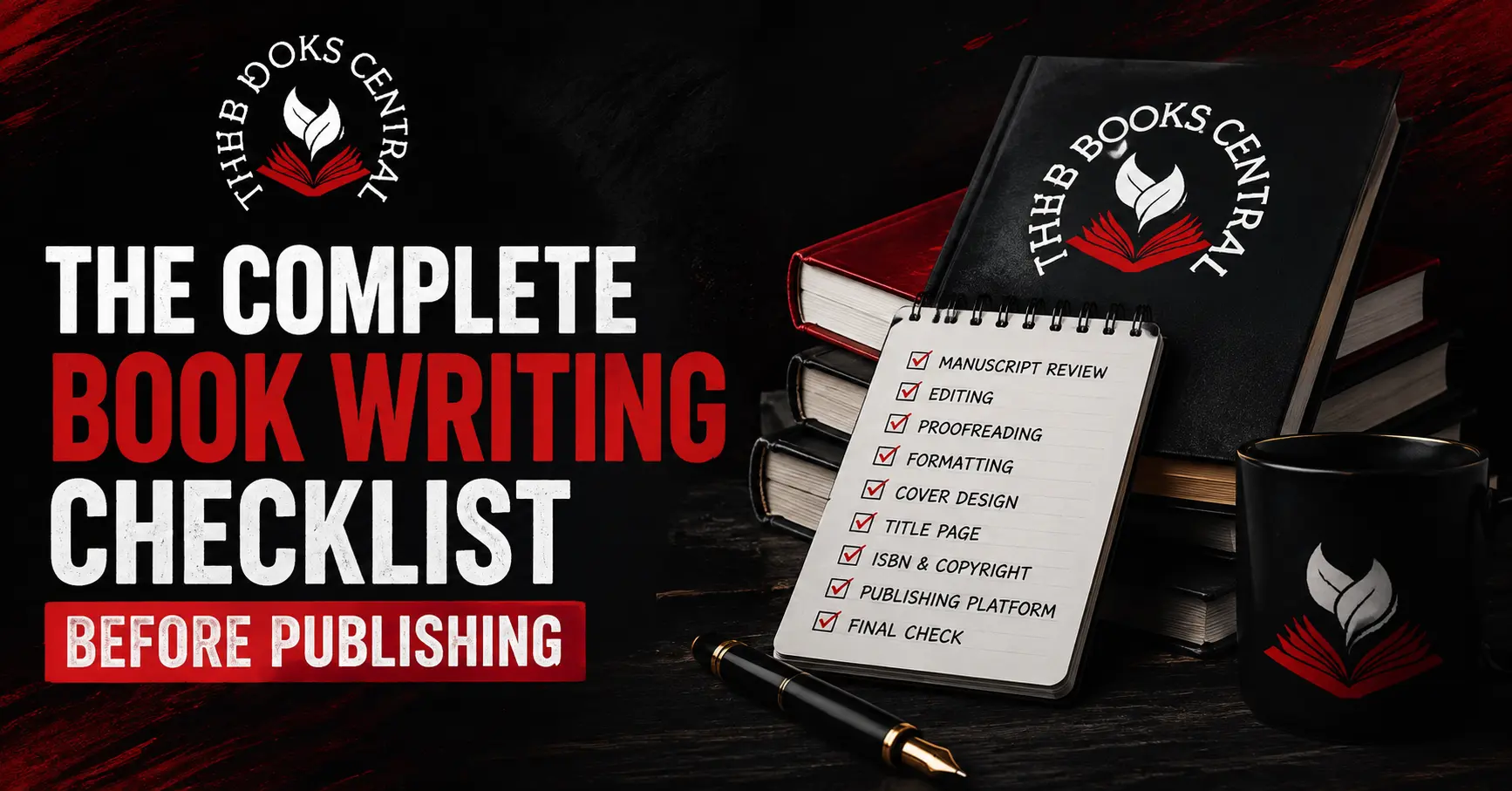
I finished my first manuscript on a Tuesday night. Closed the laptop, sat back, thought, okay, that’s it, I’m done. That feeling lasted maybe twelve hours before reality set in. Turns out I hadn’t even thought about formatting, let alone a proper title page, and I spent that entire weekend scrambling to fix things I should’ve handled weeks earlier. A book writing checklist would’ve spared me all of that. So if you’re sitting there right now with a finished draft and that weird cocktail of relief and dread, yeah, this one’s for you.
Writing the book itself is the hard part. I stand by that. Anyone who tells you publishing is harder probably never sat down and dragged a full manuscript out of nothing. But there’s a real, honest gap between “I wrote a book” and “this thing is actually ready for readers,” and it’s bigger than most first timers think going in. I learned this the slow way, across three self published books, way more mistakes than I’d like to admit to out loud. One time I uploaded a file to Amazon with an entire chapter duplicated. Didn’t notice until a reader emailed me, confused, asking why chapter nine happened twice.
Why a Checklist Actually Matters Here
Here’s the thing nobody really warns you about. Spend months, sometimes years, inside your own story, and your brain just stops seeing it. You know what you meant to say, so your eyes slide right past the sentence that doesn’t actually say it. This isn’t a personal failing, by the way. It happens to nearly every writer I know, including a few who’ve published a dozen books and still pay someone else to catch what they can’t see anymore.
A real book writing checklist forces you to look at the manuscript like a stranger would. Section by section. No leaning on memory, no coasting on the high of just finishing. It catches the stuff your exhausted brain waves through at two in the morning when all you want is to be done with the chapter.
The Mistake Most First Time Authors Make
I’ve watched this play out more times than I can count, in myself and in writer friends both. Someone finishes a draft, feels that rush, and within a day or two they’re already browsing cover designers, hovering over the upload button. Meanwhile the manuscript sits there, barely touched a second time. I did exactly this with my first book. Pulled it down within a week because readers had already left reviews pointing out typos I should’ve caught myself. Not the debut I wanted, put it that way.
The Manuscript Stage
Finish the Full Draft First
Obvious when you write it out like that. But plenty of writers try editing while they’re still drafting, and it kills momentum nearly every time it happens. Get the whole thing down first, messy middle chapters included, before circling back to fix anything at all. Trying to edit a half finished book is a bit like redoing the plumbing while the walls are still going up around you.
Take a Real Break Before Editing
Step away for two weeks, minimum, before touching revisions. I know that feels painfully slow when you’re itching to keep going. But that distance is exactly what lets you spot the weak spots instead of just remembering what you meant that scene to accomplish. Writers who skip this end up editing their memory of the book, not the actual words sitting there on the page.
Do a Structural Edit Before a Line Edit
Fix the big stuff first, always. Does the plot actually hold together? Do the characters behave like real people given what you’ve set up for them? Any chapters dragging, subplots that just quietly fizzle and go nowhere? Sort that out before you start polishing sentences. No point making a paragraph gorgeous if you’re cutting the whole scene in two weeks.
Get Beta Readers Who’ll Actually Tell You the Truth
Friends and family are going to say the book is great. That’s usually love talking, not honest critique. Find a few beta readers outside your circle, ideally people who read your genre for fun, and ask them pointed questions. Where’d they get confused. Where did their attention start drifting. Which character felt flat. “I liked it” gives you nothing to actually work with.
The Editing Stage
Hire a Developmental Editor If You Can Swing It
A developmental editor handles the big picture stuff, pacing, structure, character arcs, plot holes you never even noticed were sitting wide open. This step gets skipped the most, mostly because it’s usually the priciest part of the whole thing. But it also tends to make the biggest difference in how professional the finished book actually feels once someone’s holding it.
Don’t Skip Line Editing
Once the structure’s solid, a line editor works on sentence level clarity, rhythm, keeping your voice consistent throughout. Not the same thing as proofreading. Honestly, a lot of new authors blur these two together without even realizing it. Line editing shapes how the writing reads. Proofreading just cleans up after that shaping’s already done.
Proofread Last, Always Last
The final sweep. Typos, punctuation, formatting slips. Do this too early and you’re wasting energy, fixing lines that’ll just get rewritten or cut later anyway. Save it for once everything else has settled into place.
Why Self Editing Alone Isn’t Enough
I’ll be blunt here. No matter how many passes you make on your own manuscript, you’re going to miss things, and that’s not a knock on your ability. Your brain autocorrects your own writing without asking permission first, filling in words that aren’t actually there, smoothing over gaps a fresh reader would trip on immediately. Even professional editors hire other editors for their own books. Says something about how much objectivity really matters in all of this.
The Technical and Publishing Prep Stage
Format Your Manuscript Properly
Print and ebook formatting aren’t the same animal, and getting this wrong makes even solid writing feel amateurish. Check margins, fonts, chapter breaks, front matter, against whatever platform you’re using, KDP, IngramSpark, or a traditional publisher’s own style sheet, whatever applies to you.
Write Your Back Cover Copy Early
Don’t leave this for the last minute. It deserves better. Your back cover description is often the actual thing that convinces a stranger to buy the book, so give it real time, several drafts, not something rushed out the night before launch. Look at successful books in your genre. Notice what their copy’s actually doing, the hooks, the questions raised on purpose and left dangling.
Choose the Right Cover Design
People judge books by their covers, constantly, no matter what anyone tells you. Your cover needs to fit genre expectations while still standing out in a scroll full of thumbnails on someone’s phone. If design isn’t your thing, and for most writers it genuinely isn’t, hire it out rather than forcing a template that ends up looking like everybody else’s.
Secure Your ISBN and Copyright Details
Depending where you’re publishing, you might need one ISBN or several, one per format sometimes. Register your copyright properly, and double check your copyright page has accurate info, publication year included, plus whatever disclaimers your fiction or nonfiction might actually need.
The Final Review Before You Hit Publish
Read the Entire Book Aloud
Tedious. I won’t pretend it isn’t. But reading aloud catches awkward phrasing, repeated words, clunky dialogue, all the stuff your eyes just glide past on a silent read. I do this every single time now, even though it costs me days I don’t always have. It’s one of the more reliable steps on any book writing checklist, because your ear picks up what your eyes have gone completely blind to.
Check Your Front and Back Matter
Title page, copyright page, dedication, table of contents if you’ve got one, author bio, acknowledgments. These small pieces get forgotten way more than you’d think, and a missing or wrong detail here looks sloppy even when the story underneath is genuinely strong.
Test Your Formatting on Multiple Devices
For ebooks, check how the file actually displays across different screens and reading apps before it goes live. Looks fine on your laptop, sure, but it might have broken spacing or ugly page breaks on a Kindle or someone’s phone. This gets overlooked all the time, and readers notice the second it happens to them.
Do One Final Proofread Pass
Even after all that, do one more slow read through. Ideally in a different format than you’ve been using this whole time, print it out, switch to a tablet, whatever changes things up. Switching formats genuinely helps your brain catch what it’s gone numb to after months of staring at the same screen.
Bringing It All Together
If this feels like a lot, it is. And that’s fine, honestly. Publishing a book properly involves more moving parts than most people expect walking in, and rushing through any of these stages tends to show up later as quiet regret, usually in the shape of a review mentioning typos or pacing you could’ve caught with a bit more patience and a couple extra weeks.
Keep your book writing checklist somewhere you’ll actually see it. Taped to a wall, pinned in a doc, wherever works for you. Work through it stage by stage instead of trying to hold the whole thing in your head at once, because that’s exactly how things slip through the cracks. Your future self, the one holding their finished book for the first time, will thank you for those extra weeks spent getting it right instead of rushing toward a publish date that never needed to be that tight in the first place.
A solid book writing checklist won’t make the actual writing any easier. Nothing really does that part. But it will make sure the story you worked so hard on gets the polished presentation it deserves once it finally lands in front of readers.