




07 Sep 2026
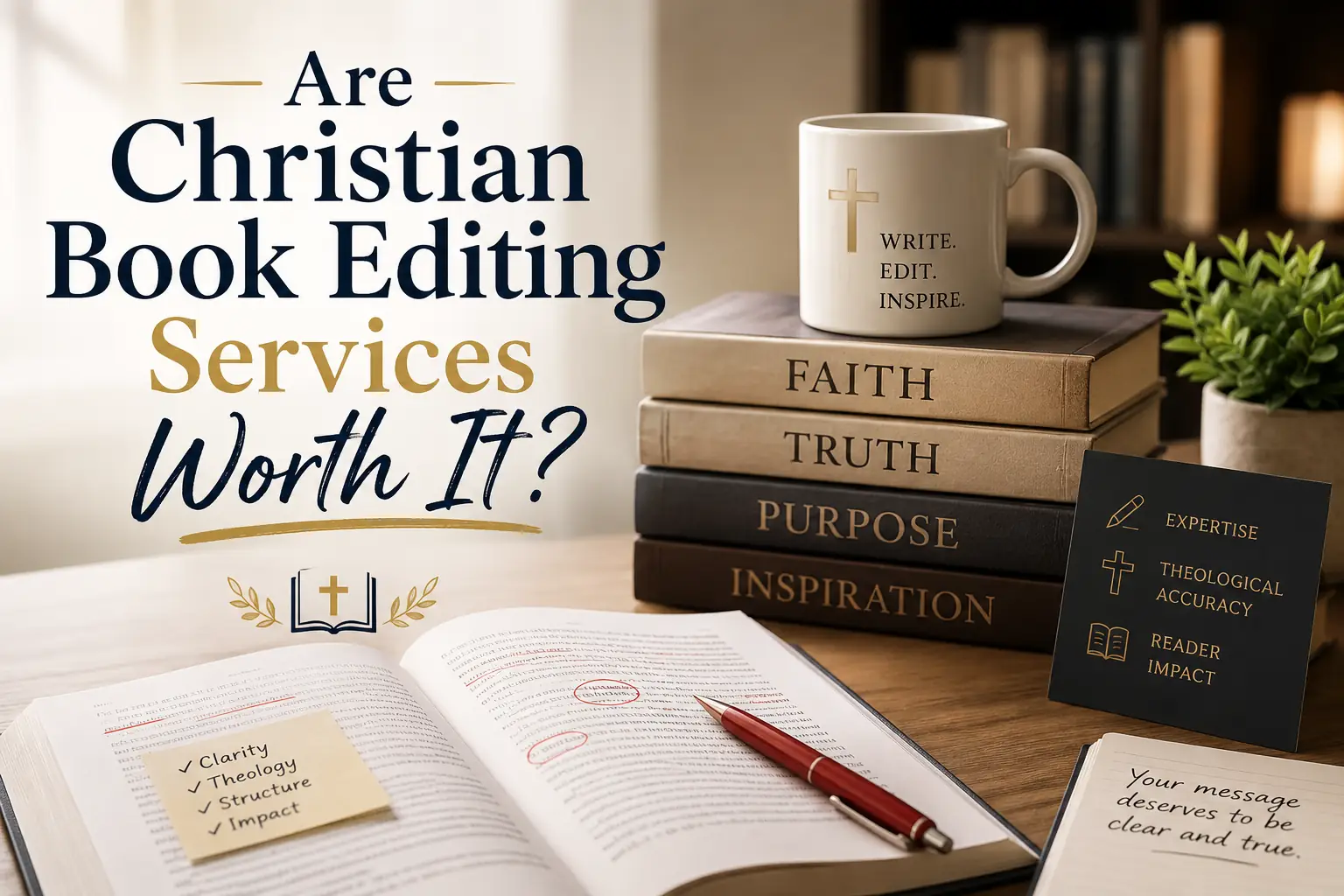
I almost self published my first manuscript without ever touching an editor. Still makes me cringe a little thinking about it now. A friend who’d already gone through the whole process pulled me aside one day and just asked, did you even look into christian book editing services for this thing. I hadn’t. Honestly I figured editing was editing, and paying extra for something faith specific felt like a waste of money for a first time author on a tight budget. That one conversation ended up changing everything about how my book turned out, and looking back, it’s probably one of the only early decisions I’d never undo.
This isn’t a sales pitch, by the way. I’m not tied to any editing company, got nothing to gain by convincing you either way. What I’m sharing here just comes from going through this myself, watching other writers in my faith based writing group go through it too, some good experiences, some pretty rough ones, and forming an opinion from all of that mess.
What Makes Faith Based Editing Different From General Editing
Before getting into whether it’s worth the cost, it helps to understand what actually separates faith based editing from some general editor you’d find through a quick Google search. A general editor, even a really skilled one, might not get why certain phrases carry theological weight. They might flag a line about grace or covenant as redundant when really that repetition is doing something intentional.
Learned this the hard way actually. An early general editor I hired wanted to cut a passage about redemption because it felt repetitive to her. And honestly, from a pure craft standpoint, she wasn’t wrong, the rhythm did echo something a few paragraphs back. But theologically that repetition was the whole point. It was echoing scripture on purpose. She just couldn’t see that, not because she lacked skill, just a different lens, that’s all.
The Difference Between Craft And Doctrine
Good editing always involves craft stuff, pacing, sentence variety, clarity, structure, all that. Christian book editing services add this other layer on top though, doctrinal awareness. Someone familiar with Christian publishing will catch things like inconsistent theology between chapters, or a reference that accidentally contradicts denominational teaching, or wording that could get misread in a way you never meant.
I remember writing a chapter where I described forgiveness in a way that, without even realizing it, leaned slightly into a theological position I didn’t actually hold. My editor caught it right away, asked if that was on purpose. It wasn’t. That one catch probably saved me from putting out something that misrepresented my own beliefs to a lot of readers.
Is The Cost Actually Worth It
This is really the question everyone wants answered, so let me just be honest, the cost can feel steep at first. When I got quotes from a few christian book editing services early on, the numbers made me pause. I remember sitting there with my laptop open staring at an estimate, wondering if I should just lean on beta readers from church instead.
Tried that route for a bit actually. My beta readers were wonderful, genuinely faithful people, generous with their time, but completely unequipped to catch structural problems or pacing issues or a character arc that fell apart halfway through. They could tell me whether something felt spiritually true. They couldn’t tell me why a scene dragged or why my second act lost all its momentum. That’s where the professional editing actually earns its price tag.
What You’re Actually Paying For
When you hire someone who specializes in faith based manuscripts, you’re not just paying for grammar fixes. You’re paying for someone who gets both the craft of storytelling and the weight of representing faith accurately on the page. That combination is rare, and rare things, well, they cost more.
I ended up working with an editor who had a background in both publishing and seminary education, which honestly showed up everywhere in her notes. She caught a pacing issue in my third chapter at the exact same time she flagged a verse I’d slightly misquoted from memory. Most general editors just couldn’t catch both of those in one pass.
My Personal Experience Working With An Editor
Want to walk through what the actual process looked like, because the idea of editing sounds intimidating in theory until you see what it really involves day to day.
First round was a developmental edit, focused on structure, pacing, overall clarity of the message. This was honestly the most humbling part of the whole thing. My editor sent back almost twelve pages of notes on a manuscript I genuinely thought was close to done. Reading through those notes felt uncomfortable at first, almost like someone criticizing something deeply personal, since the book touched on my own faith journey directly.
Handling Feedback Without Losing Your Voice
One fear a lot of writers have when looking into christian book editing services is losing their voice somewhere in the process. I worried about this too, honestly a lot. Would an editor smooth out my writing until it sounded like every other devotional on the shelf.
Didn’t happen, at least not with the editor I worked with. She made it clear early on her job was to sharpen my voice, not replace it with something safer. A few times she left comments like, this phrasing is uniquely yours, don’t touch it, even while suggesting bigger structural changes elsewhere. That balance mattered to me more than almost anything else in the whole process.
When Christian Book Editing Services Might Not Be Necessary
Want to be fair here too, not every writer needs the same level of support. If you’re writing a short devotional for a small church group with no real plans for wide distribution, hiring a full developmental and theological editor might honestly be overkill. A trusted pastor or a well read friend in your congregation could genuinely be enough for something that size.
That math changes once you’re planning to publish widely though, whether through traditional Christian publishers or self publishing aimed at a broader audience. At that point the stakes of getting theology slightly wrong, or having pacing problems that make readers put the book down, get a lot higher.
Self Publishing Versus Traditional Publishing Considerations
If you’re going the traditional route through a Christian press, a lot of publishers already have their own theological review built into the process, which might lower how much you personally need to invest beforehand. That said, a polished, professionally edited manuscript still massively improves your odds of even getting picked up, since acquisitions editors get buried in submissions and rarely have time to look past a rough early draft.
Self publishing just doesn’t have that safety net at all. No in house theological reviewer checking things before it reaches readers. Everything rests on you and whoever you pick to edit it. Honestly this is where I think paying for good editing matters most, because once that book is live, any doctrinal misstep or obvious structural problem is just permanently stuck to your name.
How To Know If An Editing Service Is Actually Right For Your Project
Not every service marketing itself toward Christian authors is actually qualified for it. Made this mistake early on myself, assumed any editor mentioning faith based experience in their bio would automatically get my specific theological background. That assumption cost me a bit of time and a little money on a trial chapter that just wasn’t a good fit in the end.
What I’d suggest now, after going through all this, is asking pretty specific questions before committing to anyone. Ask what denominational background they’re most familiar with. Request examples of past projects similar to yours. It’s also worth finding out how they handle disagreements over theological interpretation in the text, because that situation will probably come up eventually.
Red Flags Worth Watching For
A few warning signs became obvious after talking to multiple editors. If someone can’t clearly explain their process beyond vague phrases like being faith friendly, that’s worth questioning further. If pricing seems suspiciously low compared to general market rates for developmental editing, that usually points to a lack of real specialized experience rather than some generous discount.
Also got wary of editors who agreed with literally every theological point I made without ever pushing back or asking a clarifying question. A good editor, even a faith aligned one, should occasionally challenge your phrasing or ask why you framed something a certain way. Total agreement on everything usually means less real engagement with the text, not more expertise.
Final Thoughts From Someone Who’s Been Through It
Looking back at the whole journey, I do think that for most writers serious about putting faith centered work in front of a wider audience, investing in christian book editing services pays for itself many times over. Not just financially through better sales or reviews either, but through the simple confidence of knowing your message actually reaches readers the way you meant it to.
That said, it only pays off if you pick the right editor for your specific project and stay open to feedback without losing the voice that made your story worth telling in the first place. The cost is real. The discomfort of hearing honest feedback is real too. But for me, publishing something half finished or theologically muddled would’ve cost a whole lot more in the long run.