



09 Sep 2026
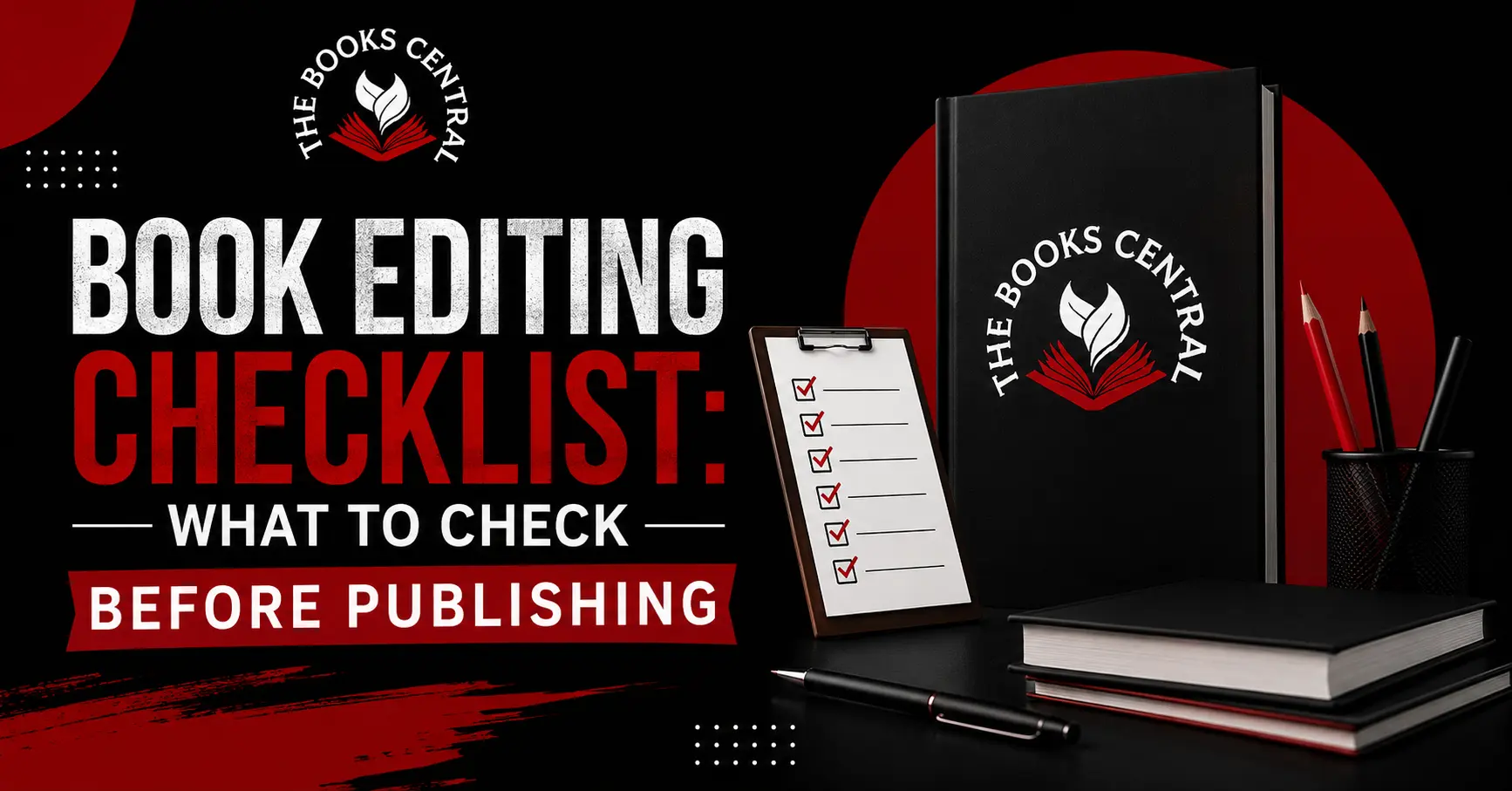
Okay so you typed “The End.” Maybe you did a happy little dance around your living room. Maybe you just stared at the screen for a solid five minutes, not really believing it was over. Either way, nice work, because finishing a draft is genuinely hard. What nobody tells you at this point is that a real book editing checklist is what actually separates “I finished a draft” from “I published something people want to finish reading.” I’m saying this because I’ve watched too many writers go straight from typing to uploading. It rarely goes well.
I get the impulse though. By the end of a manuscript you’re just done with it. You’ve read the same paragraphs so many times your brain starts fixing mistakes on its own, without telling you. That’s not laziness on your part. That’s just what happens to tired eyes after months staring at one document.
Quick tip: Break your editing into separate passes instead of trying to fix everything at once. Story first, sentences second, grammar and spelling last. Your brain works better on one type of problem at a time.
So let’s slow down for a bit. Below is editing broken into stages, big structural stuff first, comma placement way at the bottom of the list. Make some coffee. Or tea, whatever works for you. Let’s get your book ready.
Why a Book Editing Checklist Actually Matters
A lot of writers edit like this: one long read-through, fixing whatever bugs them at the moment. Sounds fine in theory. In practice, you end up rewording a sentence on page 12 while your third act quietly falls apart around page 250. And you won’t even notice until way too late.
A checklist stops that. It forces some order onto what’s normally a pretty chaotic process. Story first. Sentences second. Grammar and spelling dead last. Editors who do this professionally don’t randomly hop between plot logic and comma splices in the same sitting, and there’s a reason for that. Your brain just can’t juggle both well at once. Nobody’s can, really.
Try hunting typos while also questioning whether your protagonist’s decision in chapter fourteen makes any sense, and you’ll do a mediocre job at both things. Split it up instead. Each pass gets your full attention, which sounds obvious once I say it out loud, but somehow everyone forgets it the moment a deadline shows up.
Here’s something people don’t talk about enough, though. Editing your own book is exhausting, emotionally. Around page 150 you’ll probably hit a point where you’re convinced the whole manuscript is garbage. Every writer I know has hit that wall at some point. A checklist breaks that dread into smaller, doable pieces. Finished your developmental pass? That’s worth celebrating, even with line editing still sitting ahead of you.
Start Big, Fix the Story First
Before you touch a single sentence for style or rhythm, step back. Look at the actual skeleton underneath your story: plot, pacing, structure, whether your characters actually grow in ways that track. This is developmental editing. It’s also the stage most people skip, mostly because it might mean cutting a scene they love.
Look Hard at Plot and Pacing
Go through scene by scene and ask yourself something blunt: does this one need to exist? If a chapter doesn’t push the plot forward or reveal something new, it’s probably dead weight, no matter how nicely it’s written. Hard pill to swallow, I know. Cut it anyway. Or figure out how to make it earn its spot.
Pacing issues show up differently depending on where they sit. A slow opening usually means you’re dumping backstory before anyone’s earned a reason to care. A rushed ending usually means you got excited to be done, we’ve all been there, and skipped beats your reader still needed. Both send people toward closing the book, just from different directions.
Keep Your Characters Consistent
Readers notice when something’s off, even if they can’t name exactly what. Your cautious character suddenly starts a fight in chapter nine? Fine, that can work. But only if you built up to it. Otherwise it just feels like a different writer took over mid-book.
Small stuff trips people up constantly. Eye color that shifts halfway through. A sibling mentioned once, then gone forever. Someone left-handed in one scene, right-handed three chapters later. Nobody catches this at midnight while drafting. That’s literally what revision exists for.
Then Zoom In: Line Editing
Once your story actually holds together, drop down to the sentence level. This part is about how the writing sounds, not what it says.
Cut the Wordy Stuff
Bloated phrases sneak into every first draft, without fail. “Due to the fact that” should just be “because.” “At this point in time” is really just “now.” Trim filler words too, just, very, really, unless they’re genuinely doing something in that sentence. Your prose tightens up almost instantly once this clutter’s gone.
Sentence rhythm matters more than most people think. Read a paragraph where every line follows the exact same subject-verb-object shape, and you’ll feel it start to drone. Almost like a metronome. Mix it up. Let one sentence stretch, build some momentum, pile on detail. Then cut the next one short. That contrast is what keeps a reader’s brain actually engaged, even if they couldn’t tell you why.
Rein In the Passive Voice
Passive voice isn’t some grammatical crime, whatever your editing software’s green squiggle wants you to think. But too much of it makes writing feel foggy and far away. “The window was broken by the storm” just sits there. “The storm broke the window” moves. Look for was or were paired with a past participle, and flip it active when that makes the sentence stronger.
Don’t chase a perfect zero on this, though. Sometimes passive genuinely fits, especially when the action matters more than who did it. Trust your ear here over some rule you read once in a blog post somewhere.
Copyediting Isn’t Optional, Sorry
Writers skip copyediting more than any other stage, usually assuming proofreading will catch the same stuff anyway. It won’t. Copyediting deals with grammar, word choice, and consistency, basically the mechanical skeleton underneath your writing, and that’s a totally different job from hunting stray typos.
This pass catches subject-verb agreement problems, mixed-up homophones, their, there, they’re, you know the usual suspects, and formatting that drifted somewhere over the eight or nine months you spent writing this thing. It also flags continuity problems living outside plot logic entirely, timelines that quietly don’t add up being a big one. Your character leaves home at 9am, drives two hours to another city, and somehow makes it back in time for lunch? A copyeditor catches that. You, half asleep writing it at 11pm, almost certainly didn’t.
Consistency calls live here too. Oxford comma or not? Pick one, stick with it across all 80,000-plus words. American spelling or British? Same deal. These feel like tiny, almost silly decisions on their own, but readers absolutely notice when a book flip-flops between color and colour with zero explanation.
Worth remembering: If your budget only covers one professional pass, weigh copyediting against proofreading carefully. They catch different things, and skipping copyediting entirely often leaves avoidable errors behind.
Self-published writers skip this constantly, usually because of money or time, and that’s a real constraint, not some character flaw. But if your budget only covers one professional pass, seriously weigh copyediting against proofreading before deciding.
Proofreading Comes Last, Always
By proofreading, the heavy lifting’s already behind you. Plot works. Prose flows. Grammar mostly holds up. Now you’re just hunting the small stuff, typos, stray punctuation, formatting hiccups that snuck in somewhere along the way.
Read It Out Loud, I Mean It
Yeah, I know how this sounds. Maybe a little embarrassing if someone catches you narrating your own novel to an empty room. But reading aloud forces your brain to slow down just enough to catch things silent reading skips right past. Missing words jump out fast. So do repeated ones. Sentences that seemed totally fine in your head suddenly sound clunky the second they leave your mouth.
Can’t manage the whole thing aloud in one sitting? Fair enough, that’s a lot of hours for anyone. Most word processors have text-to-speech built in now anyway. Hearing a slightly robotic voice read your own book back feels weird at first, but it catches nearly as much, and saves your actual voice for real conversations later.
Check the Formatting One More Time
Scroll through chapter breaks, headers, scene transitions. Printing physical copies? Double check the page numbers line up right. Doing an ebook instead? Click through your table of contents yourself, because broken navigation links annoy readers the second they try using them.
Front matter deserves a glance too, title page, copyright notice, dedication, acknowledgments. These bits feel like an afterthought to a lot of people, but sloppy formatting here makes even a genuinely well-written book look amateurish before anyone reaches chapter one.
You Can’t Catch Everything By Yourself
Here’s the uncomfortable part. No matter how careful you are, you will miss things. You’ve read this manuscript so many times your brain fills gaps automatically now, quietly fixing errors without ever telling you they happened. That’s not a personal failing. It’s just what happens after the tenth or eleventh pass.
Beta readers give you something your own read-through simply can’t: a real first impression from someone who hasn’t memorized every line already. Pick people who actually like your genre, and ask specific questions instead of a vague “so, thoughts?” Where’d they get bored? Where’d confusion creep in? Did the ending land, or feel rushed to them?
Professional editors bring something else to the table, pattern recognition from working through hundreds of manuscripts before yours ever crossed their desk. They’ll spot problems you’re simply too close to see anymore. If money’s genuinely tight, even hiring someone for just a final proofread can save you from typos that would otherwise live in reviews forever.
Even a trusted writing group, or honestly one sharp critique partner, works fine too. Fresh eyes catch what tired eyes miss. That’s just true, every time, no real exceptions.
The Final Stretch Before You Hit Publish
Once you’ve gone through developmental edits, line editing, copyediting, and proofreading, take one more look at everything together, as a whole thing. Make sure formatting actually matches your platform’s requirements, whether that’s Amazon KDP, IngramSpark, or whatever your traditional publisher wants for submission.
Double check your metadata while you’re at it, title, subtitle, author name, series info if that applies. These details affect how readers actually find your book later, and mistakes here are easy to fix now, genuinely painful to fix once you’ve already hit publish.
Then step away for a bit. A day or two of distance from the manuscript helps more than you’d expect. Stuff your exhausted brain glossed over during that last edit somehow jumps right out once you’ve had some space from the page.
Conclusion
Working through a real book editing checklist takes patience, there’s honestly no shortcut around that. But moving through developmental edits, line editing, copyediting, and proofreading in order means catching problems while they’re still manageable, instead of discovering them later in a one-star review. Take your time with each stage. Bring in beta readers or a professional editor if your budget stretches that far. Trust the process, even on days it feels painfully slow. Readers notice the care you put into this. And honestly? You probably will too, the first time someone tells you they just couldn’t put your book down.