



07 Sep 2026
Let me be honest with you right from the start. When I decided to turn my book into an audiobook I had absolutely no idea what I was getting myself into. I thought it would be straightforward, find someone to read it, record it, done. Then I started actually looking into it and the numbers made my stomach drop. The audiobook production cost can range so wildly that two authors publishing the same length book can end up spending completely different amounts, and understanding why that gap exists is honestly the most useful thing I can share with you here.
I spent weeks talking to narrators, producers, and other self published authors before I made a single decision. Some of those conversations saved me a lot of money. Some of them cost me money because I learned things the hard way anyway. Either way I came out the other side with a pretty clear picture of what actually drives costs up, where you can genuinely save without the listener noticing, and where cutting corners will hurt you in ways you cannot undo once the audiobook is out there.
Why Audiobook Production Costs Vary So Much
The first thing that confused me when I started researching this was how dramatically prices differed from one quote to the next. I would reach out to two narrators who both had solid samples and solid reviews and one would quote me three times what the other was asking. For a while I assumed the cheaper one was just worse somehow, but that is not always true at all.
Audiobook production cost is driven by several factors that have nothing to do with quality and everything to do with circumstance. Where a narrator is based affects their rates significantly. Their experience level and whether they have built a following matters. Whether you are hiring them through a marketplace or directly changes what you pay. Whether the studio time is included or separate changes things again. And the length of your book, which seems obvious, is actually more complicated than just counting words.
Most professional narrators charge per finished hour. A finished hour of audio takes roughly four to six hours of actual work to produce when you factor in recording time, editing, quality control and mastering. So when you see a rate of two hundred dollars per finished hour and your book is ten finished hours long, you are looking at two thousand dollars before anything else enters the picture. That number can go up fast depending on who you hire and what is included.
The Main Ways Authors Produce Audiobooks
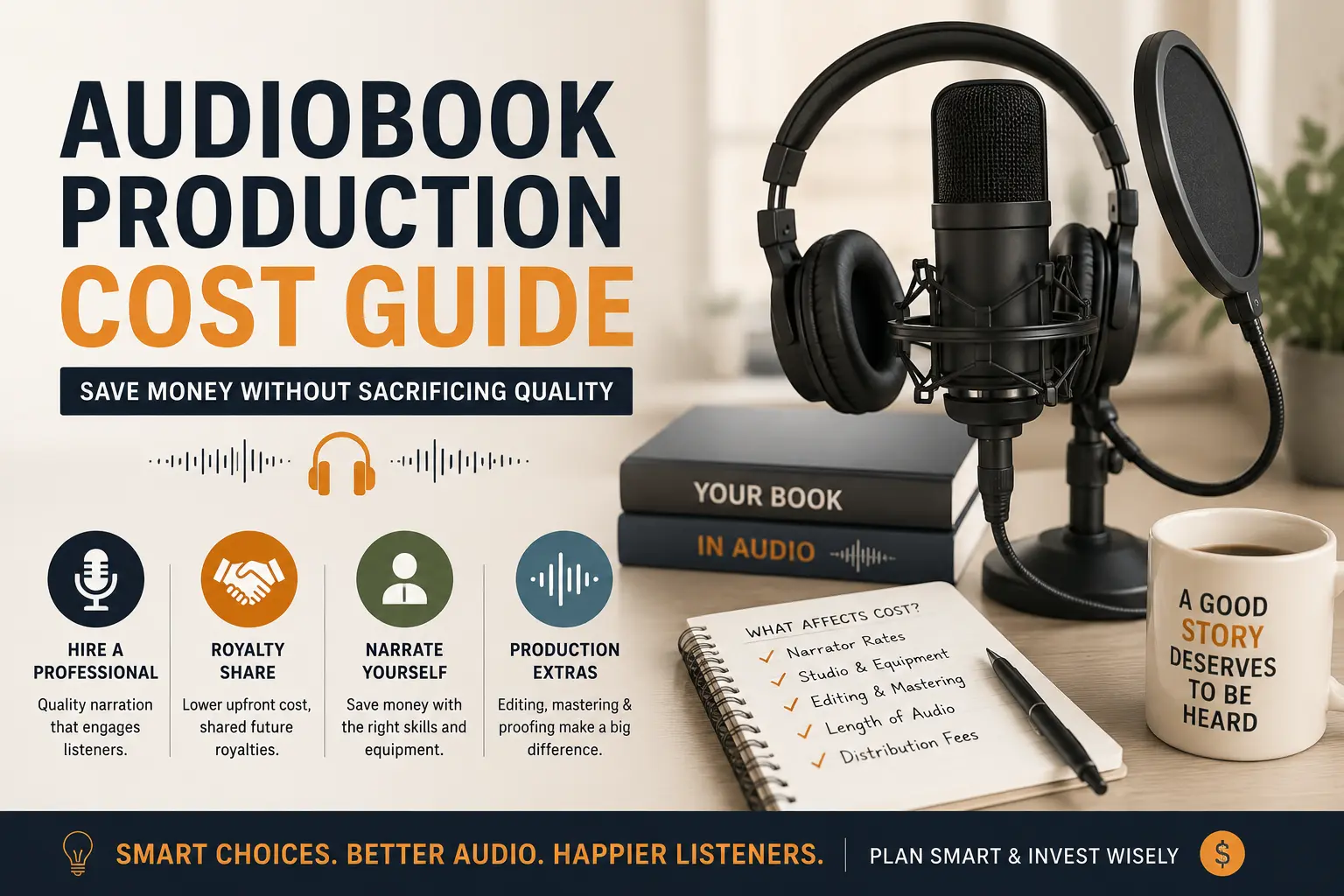
Before you can figure out where to save money you need to understand the different production paths available to you because they carry very different price tags and very different tradeoffs.
Hiring a Professional Narrator
This is the option most authors think of first and for good reason. A professional narrator brings real skill to the work. They understand pacing, character differentiation, breath control, microphone technique, and how to keep a listener engaged over hours of audio. The difference between a professionally narrated audiobook and one that was not is something listeners notice immediately even if they cannot explain what they are hearing.
Rates for professional narrators vary enormously. Newer narrators building their portfolios might charge anywhere from fifty to one hundred and fifty dollars per finished hour. Established narrators with strong track records and recognizable voices charge two hundred to four hundred dollars per finished hour or more. If you want a narrator who already has an audience, someone whose name will help sell your audiobook, you are looking at the higher end of that range.
The thing about hiring professional help is that the audiobook production cost here is predictable. You get a quote, you negotiate, you know what you are spending before the project starts. That predictability has real value when you are budgeting.
Royalty Share Arrangements
ACX, which is Audible’s audiobook production platform, offers a royalty share model where a narrator produces your audiobook in exchange for a percentage of future royalties instead of upfront payment. On paper this sounds like a way to eliminate your upfront audiobook production cost entirely and it genuinely can be if the arrangement works out.
The reality is more complicated. Narrators who agree to royalty share arrangements are making a bet that your book will sell well enough to justify their work. That means they are selective about what they take on. Books with no existing audience, no reviews, and no demonstrated sales history are harder to place through royalty share. If you do find a narrator willing to do it your ongoing royalty percentage will be lower for the life of that contract, which can cost you more in the long run than just paying upfront would have.
Narrating It Yourself
This is the option that makes the most financial sense on paper and the most complicated sense in practice. If you narrate your own book you eliminate the narrator fee entirely and you can get the total audiobook production cost down to the price of equipment and possibly some editing help.
The challenge is that narrating well is genuinely hard. It is not just reading. It is performing, and performing consistently over multiple sessions without your energy dropping, without your pacing changing, without your room sound shifting between recording days. Authors who try this without preparation often produce something that sounds exactly like what it is, someone reading their own book into a microphone in their spare bedroom.
That said I know authors who have done this beautifully. The ones who succeed usually invest in a proper USB condenser microphone, spend time treating their recording space to reduce echo and background noise, and take a genuine course or at least study the craft of audiobook narration before they start recording. It takes time and effort but the money saved can be substantial.
Using a Full Service Production Company
Full service audiobook production companies handle everything from casting a narrator to delivering finished files ready for distribution. This is the highest cost option and typically the one that requires the least involvement from you as the author.
Costs here vary but you are generally looking at a higher per finished hour rate because the company is coordinating multiple people and taking a margin on top of actual production costs. For authors who genuinely do not have time to manage the process and want someone else to own the outcome, this option has its appeal. For authors trying to keep costs down it is usually not where you start.
Where You Can Actually Save Money Without Hurting the Final Product
This is the part I wish someone had laid out for me clearly before I started. There are real places to save and there are places where saving will cost you listeners and reviews.
Work With Newer Narrators Who Have Real Talent
The relationship between narrator experience and narrator quality is not as clean as the rate cards suggest. There are narrators two years into their careers who are genuinely exceptional. There are narrators ten years in who are technically proficient but not particularly engaging. Listening carefully to samples and trusting your ears matters more than chasing a name or a resume.
Newer narrators charge less because they are building their portfolios not because they lack ability. Finding one whose voice genuinely fits your book is worth more than paying a premium for someone whose voice does not quite match the material.
Provide a Polished Manuscript
This one sounds obvious but it is something a lot of authors overlook. Every hour a narrator spends pausing to figure out a confusing sentence, a strange formatting choice, or an inconsistent character name is time that costs you money. Giving your narrator a clean, professionally edited, clearly formatted manuscript reduces friction and can actually reduce the time the project takes, which in some arrangements reduces what you pay.
Skip the Studio, Not the Quality
Many professional narrators now record in their own home studios and the quality they produce is indistinguishable from commercial studio recordings. You do not need to pay for studio time on top of narrator fees. What you do need is a narrator whose home setup actually meets professional standards, so ask about their equipment and request a sample recorded in their actual working space rather than a clip from an old project.
Handle Some of the Post Production Yourself
Editing and mastering audiobook files is a learnable skill. Software like Audacity is free and there are genuinely good tutorials available. If you are narrating your own book and willing to invest some time, handling your own editing can bring the total audiobook production cost down significantly. If you are working with a narrator, ask what is included in their rate. Some include editing and mastering. Some charge separately for it.
There are real places to save money in audiobook production and there are places where cutting costs will show up directly in your listener reviews. Knowing the difference before you start is what separates authors who come out of this process happy from authors who wish they had done things differently.
Things Worth Paying For No Matter What
Professional Mastering
The final audio needs to meet technical specifications set by distributors like Audible and iTunes. Proper mastering ensures the volume levels, noise floor, and file formatting all meet those requirements. Skipping this or doing it poorly results in rejected files and resubmissions, which costs time and sometimes money. It is worth paying for if you cannot do it correctly yourself.
A Second Set of Ears
Before you submit anything, have someone listen to the finished audio who is not you and who was not involved in making it. Fresh ears catch things that everyone directly involved has gone deaf to. Mispronounced names, audio glitches, pacing issues in specific chapters, places where the energy drops noticeably. This does not cost much but it saves you from distributing something with problems you could have caught.
What a Realistic Budget Actually Looks Like
For a book that runs about eight to ten finished hours, which covers a lot of standard nonfiction and fiction titles, here is roughly what different approaches cost.
Narrating yourself with decent home equipment runs somewhere between two hundred and six hundred dollars when you account for a good microphone, basic acoustic treatment, and possibly paying someone to edit and master the files for you.
Hiring a newer professional narrator with a solid home studio puts you somewhere between four hundred and twelve hundred dollars for that same length book depending on their rate and what they include.
Hiring an established professional narrator brings the audiobook production cost up to somewhere between sixteen hundred and four thousand dollars or beyond for the same project.
None of these numbers are fixed. They depend on your specific book, the narrator you find, what services are included, and how much negotiating you do. But having a realistic range in your head before you start having conversations puts you in a much stronger position.
The Honest Bottom Line
The audiobook market is genuinely growing and getting your book into audio format is worth doing. But going in without understanding the audiobook production cost landscape is how authors end up either overpaying significantly or cutting corners in ways that show up in one star reviews about audio quality.
The best thing I did was talk to other authors who had been through the process before I spent a single dollar. The second best thing was listening to a lot of narrator samples before I made any decisions. The third best thing was accepting that some costs are worth paying and some are not, and learning to tell the difference.
Your book deserves a production that does it justice. That does not mean spending the maximum possible. It means spending thoughtfully, knowing what you are paying for and why, and making choices you can stand behind when listeners press play.