





09 Sep 2026
My friend Rachel spent almost two years working on something deeply personal to her. She’d finally decided to write a self help book about anxiety, something she genuinely knows a lot about given what she went through a few years back. She had the knowledge, and she had dozens of stories she could pull from too. What she didn’t have was any real sense of how published authors actually structure these things, and that one gap nearly killed the whole project.
I watched her go through it, on and off, over coffee conversations mostly, and it taught me more than I expected walking in. That’s honestly why I started paying closer attention to what separates a self help book people actually finish reading from one that just sits half done on someone’s laptop for years.
Why Most First Attempts Fall Apart
People usually start with a decent idea and good intentions. Then somewhere around chapter three, things get messy. Fast. The tone drifts between clinical and weirdly personal within the same page sometimes. The advice starts contradicting itself a little, mostly because there was never really an outline to begin with, just a rough idea and a lot of enthusiasm. A lot of people quit right around there. Which is a shame, honestly, because the core idea was usually fine.
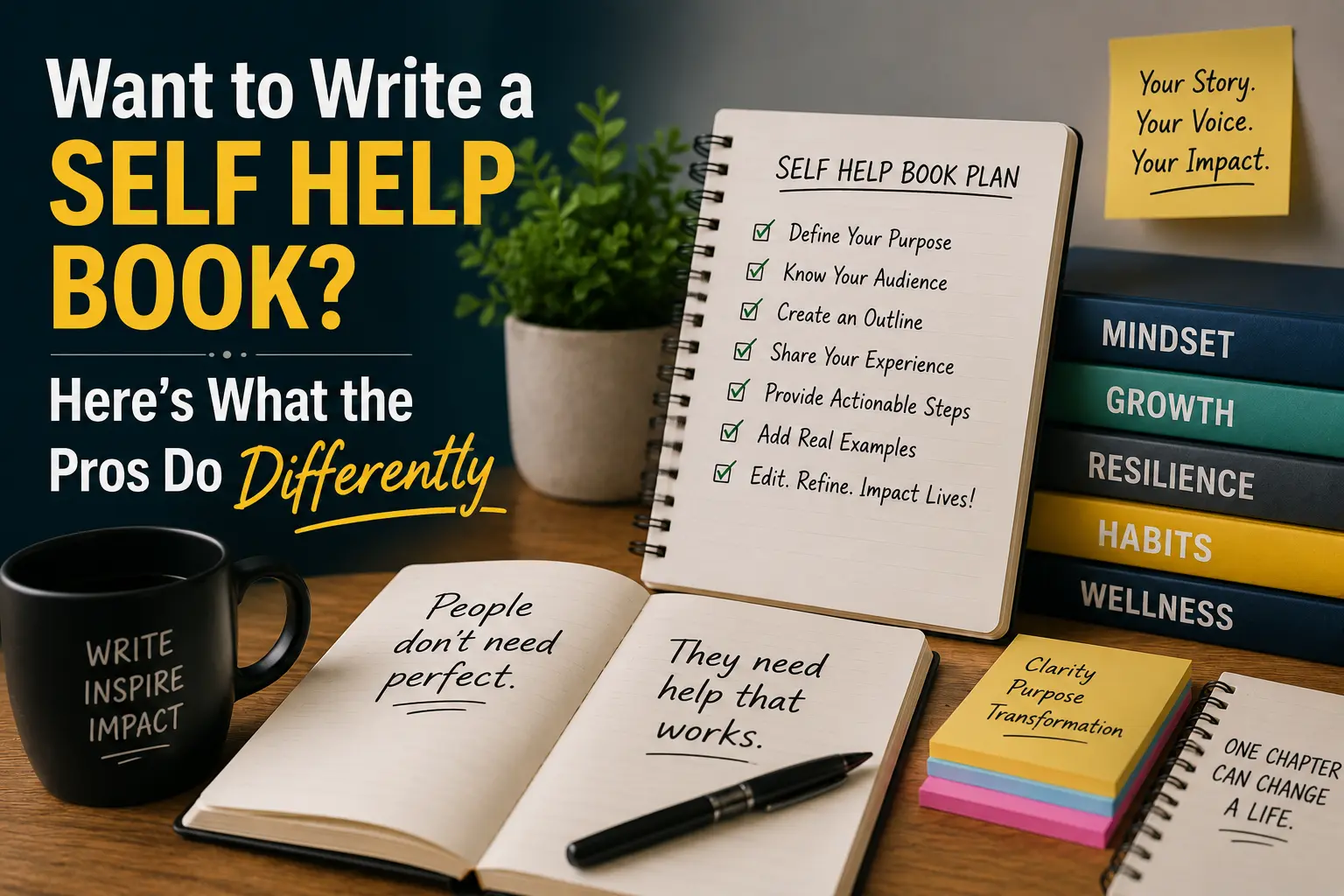
Pros don’t skip this messy stage exactly. They just handle it earlier and more deliberately. Before writing a single chapter, they map out the whole emotional and practical journey they want a reader to go through. Not just “here’s some advice,” but an actual arc. What the problem is, why it happens in the first place, what most people get wrong trying to fix it on their own, and then a real solution broken into pieces someone can actually follow without shutting the book in frustration.
Rachel eventually did this too. A friend of hers who’d already published something pointed her toward it, almost by accident during a random phone call. She scrapped most of her first draft and rebuilt the whole thing around a clearer structure. That second attempt took four months. The first one dragged on past a year and basically went nowhere.
Quick tip: Before you start writing, outline the full emotional and practical arc you want your reader to go through. Authors who write a self help book without this step are far more likely to abandon the project halfway through.
What Professional Authors Actually Do Differently
They Start With the Reader’s Problem, Not Their Own Story
This trips up so many first time authors. Me included, if I’m being honest about an old project I never finished. You want to write a self help book because something worked for you personally, so naturally you want to lead with your own story right away. Makes sense emotionally. It’s usually the wrong move structurally though, at least at the start. People pick up a self help book because they’ve got a problem, not because they’re dying to know your backstory yet.
Pros tend to open with the reader’s actual pain point. Described in a way that makes someone think, yeah, that’s exactly what I’m dealing with right now. Only after that do they bring their own experience in, usually as proof that a solution exists rather than the centerpiece of the whole thing. Your story becomes evidence. Not the whole book.
They Test Ideas Before Committing to a Full Manuscript
This part genuinely surprised me the first time I read about it somewhere. A lot of successful authors don’t just sit down blind and write two hundred pages straight through. They test smaller pieces first. Blog posts, workshop material, sometimes just messy, unstructured conversations with people who actually live with the problem they’re writing about. They notice what resonates and what falls completely flat before locking anything into the actual manuscript.
There’s an author I came across a while back, can’t remember her name now, who tested her whole framework through a handful of free webinars before writing a single word of the book itself. She kept adjusting her language based on what got real questions and genuine engagement, versus what people just politely nodded through without really connecting. By the time she sat down to actually write, she already knew which parts worked.
They Get Brutally Honest Feedback Early, Not Later
Nobody wants to hear that their beloved chapter three doesn’t really work. But professional authors build feedback loops in from the very beginning. Not after the whole manuscript is already sitting there finished. Beta readers, editors, sometimes just a small group of people who closely match the intended audience. This feedback shapes the book while it’s still flexible enough to actually change.
If you write a self help book entirely alone and only show it to anyone once it feels done, you’re setting yourself up for a pretty painful and expensive round of rewrites down the road. Early feedback stings a bit. It’s still a lot cheaper than late feedback, in every sense of that word.
Structuring the Book So It Actually Helps People
This one took me a while to fully understand, if I’m honest. A good self help book isn’t just organized information sitting neatly on a page. It’s designed around the reader’s actual mental state. People reading these books are often stressed, overwhelmed, sometimes a little desperate. If your chapters are dense walls of text with no clear takeaway anywhere, a lot of readers quietly give up somewhere around chapter four and never come back.
Professional authors usually break things into smaller sections. Often ending each chapter with a clear action step or a short summary at the bottom. Some use worksheets or reflection questions scattered throughout. Others lean on brief, real feeling case studies to make a point land without turning the whole chapter into dry theory. The goal isn’t sounding impressive. It’s moving someone from confused to capable, one step at a time.
A Quick Example: Turning Vague Advice Into Something Usable
Say your book covers building better habits. A weak version of that chapter says something like “just stay consistent, keep trying and eventually you’ll succeed.” True enough, technically. Also pretty useless in practice, if we’re being honest with each other. A stronger version walks through an actual framework. Maybe starting with a habit so tiny it feels almost silly, then explaining exactly how to track it, what to do the day you inevitably miss it, and how to scale it up slowly without burning out.
The underlying idea is basically the same in both versions. Both authors probably believe consistency matters, deep down. The real difference is specificity. Readers don’t just want to know what to do. They want to know how, in enough detail that they can actually follow along without guessing half the steps themselves.
The Business Side Nobody Really Talks About
If you genuinely want to write a self help book that reaches actual people, not just your close friends who’ll buy it out of loyalty, you kind of need to think a bit like a publisher. Even if you’re planning to self publish the whole thing on your own. That means understanding your audience specifically enough to write directly to them, instead of some vague, faceless general crowd.
Pros usually know exactly who they’re writing for before they even start typing. Not “people who are stressed,” but something far more specific. Like working parents in their mid thirties juggling career pressure and burnout at the same time, right now, this year. Weirdly enough, that specificity ends up making the book feel more universal, not less, because specific writing just feels more real than generic advice aimed at absolutely everyone at once.
They also tend to think ahead about how the book connects to something bigger. Maybe it leads into a course eventually, or coaching, or some kind of community down the line. This isn’t about being pushy or salesy about it. It’s really about understanding that a book is often the start of a relationship with a reader, not the end of one.
Good to know: The most specific self help books usually perform better than broad, general ones. Writing for “working parents dealing with burnout” beats writing for “people who are stressed” because it feels far more personal to the actual reader.
Common Mistakes That Sink Otherwise Good Books
A few patterns keep showing up, over and over, in books that struggle to land. Overloading every single chapter with too many ideas is a big one. Readers can only absorb so much at once, and cramming five different frameworks into one book usually leaves people more confused than actually helped by the end of it.
Inconsistent tone is another one worth mentioning. Some chapters read like a warm conversation with a close friend. Then the next one suddenly turns into a dry academic lecture out of nowhere, for no clear reason. Readers notice this shift even when they can’t quite explain what feels off about it, and it quietly breaks trust along the way.
And then there’s the trap of writing what sounds impressive instead of what actually helps someone. Jargon heavy language might feel authoritative while you’re typing it out at two in the morning. Honestly though, it usually just creates distance between you and whoever’s reading it. The better self help authors write like they’re talking to one specific person sitting across the table from them, not lecturing some anonymous crowd from a stage.
So, Should You Actually Write One
If you’ve got real lived experience, genuine insight, and something people actually need to hear, then yeah. It’s worth pursuing. Just go in with realistic expectations about how much work is actually involved here. A solid self help book usually needs months of structural planning before the actual writing even starts, plus several rounds of honest, sometimes uncomfortable feedback before it’s ready for real readers to see it.
Rachel finished her book eventually, by the way. It’s not perfect. She’d be the first person to tell you that over coffee. But it’s genuinely helpful, and readers have told her it made a real difference during some pretty hard nights. That’s really the whole point of any of this. Not perfection. Just something genuinely useful, delivered clearly, to someone who needed it.
Final Thoughts
Deciding to write a self help book is exciting at first, no doubt about that. But that excitement alone won’t carry you through the harder, messier parts of the process. What actually gets people across the finish line is structure, honest feedback, and a real focus on the reader’s problem instead of your own need to be heard. The professionals who pull this off well aren’t necessarily better writers than you are, not even close sometimes. They’re just more deliberate about the whole process. More willing to test their ideas early. More focused on being genuinely useful than on sounding impressive.
If you’re serious about this, start small. Outline the emotional journey you want your reader to go through before writing a single chapter. Go talk to real people who actually live with the problem you’re addressing. And remember, the goal isn’t to write a self help book that just sounds good to you personally. It’s to write one that genuinely changes something for the person reading it at two in the morning, tired, searching for real answers.