

21 Apr 2026
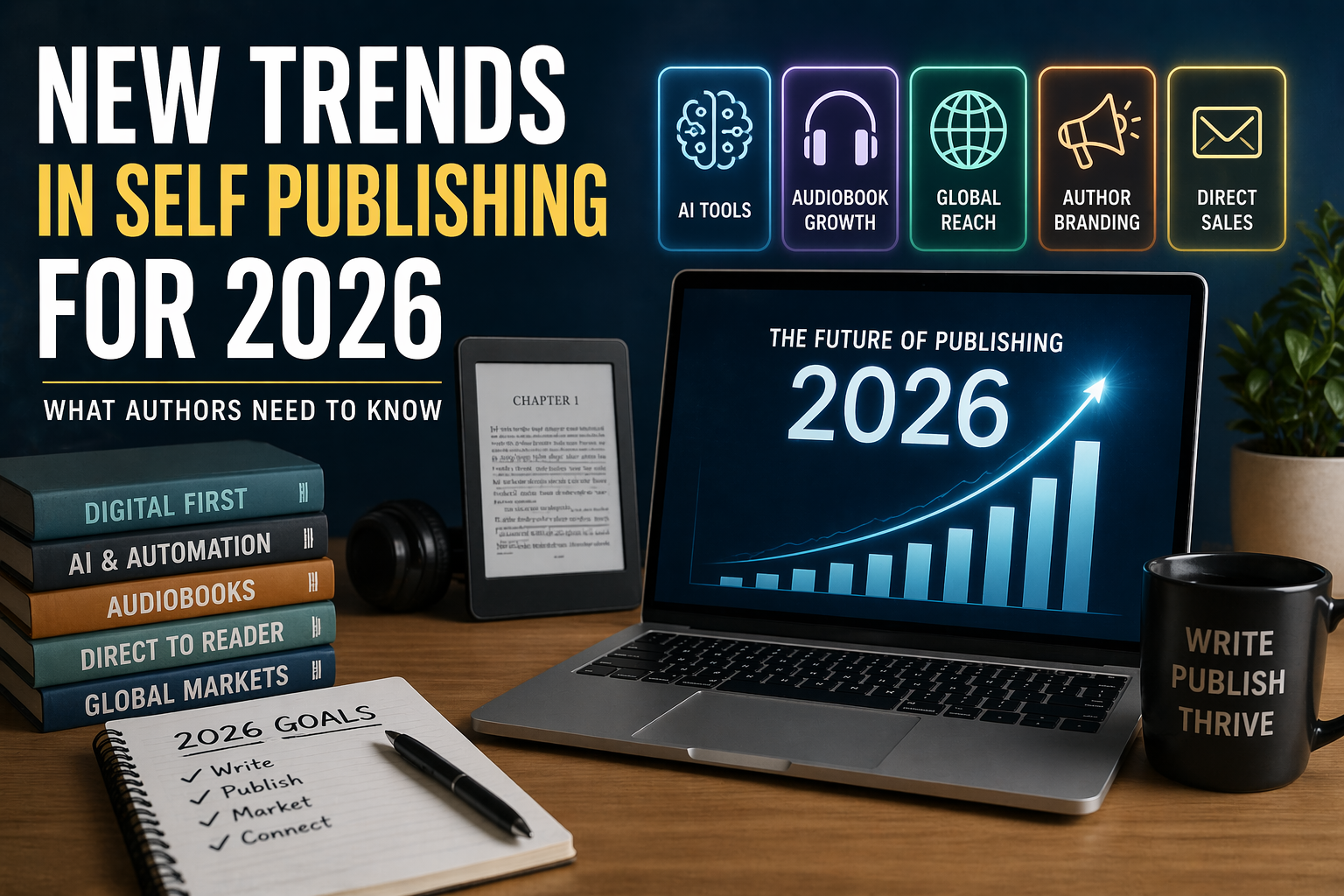
Honestly? If you had told someone in 2015 that indie authors would be outselling traditionally published writers in entire genre categories by 2026, they probably would have laughed. Now it’s just Tuesday.
Something has genuinely shifted in the last couple of years. Not just in terms of tools or platforms, but in how authors think about their careers. Writers who used to dream about landing a Big Five deal are now looking at their royalty statements and asking why they would hand over 85% to a publisher when they can keep most of it themselves. That mindset change is real, and it’s reshaping everything.
I want to be clear though. This isn’t a “traditional publishing is dead” piece. It’s more nuanced than that. What’s changed is that indie authors now have genuine options, real leverage, and access to technology that closes gaps that used to feel impossible to bridge on your own. So whether you’re finishing your first manuscript or you’ve got ten books out already, here’s what’s actually happening in self publishing right now in 2026 and what it means for you.
4.2M+
New self published titles in 2025
42%
Of ebook revenue going to indie authors
68%
Of new authors choosing self publishing first
1. AI Writing and Editing Tools Become Mainstream
Let me be upfront about something before we go further. When people hear “AI and writing” in the same sentence, they immediately picture robots churning out novels with zero human input. That’s not what’s happening. Not even close.
What’s actually happening is that indie authors are weaving AI tools into their daily workflow in ways that are pretty practical and, frankly, pretty smart. Think about what it costs a self published writer to hire a developmental editor, a copyeditor, a proofreader, and a marketing copywriter. We’re talking thousands of dollars per book. Most indie authors can’t swing that, especially early on. So they were always cutting corners somewhere. Now, some of those gaps are filling in.
An AI developmental tool can read through your 90,000 word manuscript and tell you that your main character’s motivation shifts completely around chapter fourteen and never gets resolved. It can flag that two side characters have almost identical voices. It can point out that your pacing slows to a crawl in part two. Is it as good as a brilliant human editor? No. Is it better than no developmental edit at all? Absolutely, and for a lot of authors, that’s the real comparison.
Where things get genuinely useful is in the unglamorous stuff. Writing your own back cover blurb is weirdly hard after you’ve been staring at your manuscript for a year. Drafting five different ad headlines to test feels like a chore. Figuring out what keywords to use in your book description on Amazon requires research most authors don’t have time for. AI handles all of that reasonably well, and it frees writers up to do what they’re actually good at.
Yes, there are real debates in the indie community about disclosure and about whether AI is flattening everyone’s prose into the same beige average. Those are fair concerns worth taking seriously. But the authors who are doing well in 2026 aren’t the ones who rejected every new tool on principle. They’re the ones who figured out where the tools genuinely help and where human judgment still has to lead.
“The authors winning in 2026 are not the ones resisting new tools. They are the ones who know exactly how to use them without losing their voice.”
2. Direct Monetization and Author Storefronts
Here’s a number that should stop you in your tracks. When you sell a paperback through Amazon, you might keep somewhere between 30 and 45 cents of every dollar depending on the price point and the royalty tier. When you sell that same paperback directly through your own website, you keep most of the money after printing costs. Same book. Same reader. Completely different financial outcome.
Authors figured this out, and they started building their own storefronts. Not all of them, and not overnight, but the shift has been noticeable over the past two years. Platforms like Payhip, Shopify, and BookFunnel made it accessible enough that you don’t need to be a tech person to set one up. You put your books there, you promote them to your email list, and you keep a real chunk of what people pay you.
What’s been interesting to watch is how this has changed the relationship between authors and their readers. When someone buys directly from you, you get their email address. You know they exist. You can tell them when your next book comes out. When they buy through Amazon, Amazon knows they exist. You get a royalty payment and nothing else. Over time, that difference compounds into something pretty significant.
The smartest authors in 2026 are treating their direct store like a real business. They offer things you genuinely can’t get anywhere else. Signed bookplates. Special editions with different covers. Early access for loyal readers. Bundle deals that make more financial sense than buying individual titles. Some are even selling merchandise alongside books. Tote bags, candles themed around their fictional worlds, that sort of thing. Readers who love a book want to live in it a little. Give them ways to do that and they’ll spend money happily.
The bigger shift is psychological. Building a storefront forces you to think of yourself as a publisher and a business owner, not just a writer who happens to sell things. That mindset, uncomfortable as it can feel at first, is one of the most valuable things you can develop as an indie author in this market.
3. The Audiobook Boom Reaches Indie Authors
A few years back, if you wanted a professional audiobook, you were looking at a minimum spend of a few thousand dollars for a decent narrator, more if your book was long. For most indie authors, especially those who hadn’t yet built a big backlist or a reliable income, that was simply not on the table. So audiobooks stayed a traditional publishing perk.
That wall came down pretty fast. AI voice synthesis has gotten genuinely good. Not perfect, but good enough that a large portion of listeners either can’t tell the difference or don’t particularly care. Several platforms now let you produce an audio edition for almost nothing upfront, and the quality is no longer the awkward robotic monotone it used to be. Some of these voices have warmth, pacing, even emotional range. It’s strange to say, but it’s true.
For authors who still want a human narrator, the royalty share model has matured a lot. You don’t pay anything upfront. The narrator records your book in exchange for a percentage of future earnings. Some authors feel weird about giving up that share, and that’s valid. But it’s also a way to get a professional audio product into the market with zero out of pocket cost, which for an unproven title on an unproven backlist is often the smarter risk to take.
The data from authors who’ve gone wide with audio is pretty compelling. Books that exist in ebook, paperback and audio simultaneously tend to stay visible on platforms longer. They pull different types of readers. Commuters, gym goers, people who gave up on making time to sit and read but still consume books constantly through headphones. That’s a huge audience indie authors were largely missing before, and it’s now reachable without a major production budget.
4. Serialized Fiction and Subscription Models
There’s something almost old fashioned about serialized fiction. Dickens published in installments. So did Tolstoy. So, in a way, what’s happening on platforms like Royal Road, Ream, and Radish in 2026 is just that model finding its natural home on the internet. But the financial mechanics around it are genuinely new, and they’re working well for a lot of authors.
The basic idea is that instead of writing a full novel, sitting on it for months through editing and formatting and cover design, and then releasing it all at once, you post it chapter by chapter while it’s still being written. Readers follow along in real time. They comment. They speculate. Some of them become deeply invested in the story before it’s even finished. That relationship is something a traditional book launch almost never creates.
The subscription side is where the money comes in. Authors on Ream or Patreon offer readers a monthly membership. For a few dollars a month, subscribers get chapters early, bonus scenes, access to author Q&As, maybe a Discord server where the author actually shows up and talks to people. It sounds small but it adds up fast. An author with 300 paying subscribers at five dollars a month is generating $1,500 per month in predictable income before they sell a single book. That kind of financial floor changes everything about how you feel when you sit down to write.
One thing authors consistently say about serial writing is that it cures writer’s block. It’s hard to get stuck when 200 people are waiting for your next chapter and leaving comments asking what happens next. The accountability is real and apparently very effective. It’s not the right model for every story or every writer, but for the ones it suits, it has changed the experience of building an indie career pretty dramatically.
5. The Translation Revolution
Ask most indie authors about foreign rights and you’ll usually get a shrug. Translation felt like something that happened to other people. The authors with agents, with foreign rights deals, with publishers who had relationships in Germany and Brazil and South Korea. Not a realistic path for someone running a one person operation out of their home office.
That has changed quite a bit. The combination of AI assisted translation and professional human review has brought the cost of producing a translated edition down to a level where it actually makes financial sense to try. Not for every book and not in every language, but for an author who has already proven a book sells well in English, investing in a Spanish or German translation has become a legitimate business decision rather than a pipe dream.
The market opportunity is genuinely large. Spanish speaking readers alone represent hundreds of millions of potential buyers. German readers are voracious consumers of romance, thriller, and fantasy. Brazilian readers have shown strong appetite for indie fiction that never gets a local traditional publishing deal. These markets exist. They’re spending money. Most of their options are local authors and whatever traditional publishers decide to translate, which is a tiny slice of what’s actually being written.
The quality question is still real though. A straight machine translation with no human polish can be rough to read. It often loses the rhythm and voice that made the original work. The authors getting good results are the ones treating translation as a two step process: AI does a fast first draft, then a bilingual editor who reads in both languages as a native speaker cleans it up properly. That process costs real money, but it produces something genuinely readable. Don’t skip the human step. Readers in your target language will notice if you do.
6. Print on Demand Gets Smarter and More Beautiful
There was a time, not that long ago, when you could spot a self published paperback from across the room. The cover had a certain look. The paper felt thin. The spine sometimes cracked on the first read. It wasn’t always fair to judge, but people did, because the quality gap was real.
That gap has closed in a way that would genuinely surprise anyone who hasn’t checked in on the print on demand space recently. The paper options are better. The cover finishes are better. Hardcover print on demand, which used to feel like a novelty that wasn’t quite ready for prime time, has improved to the point where indie hardcovers sitting next to traditionally published ones on a table at a book fair are essentially indistinguishable. That matters a lot for how readers perceive indie books when they encounter them in person.
What’s also changed is where those books can end up. Print on demand distribution networks have quietly expanded their reach into libraries, airport bookstores, and independent bookshops in ways that just weren’t possible before. A few years ago, an indie paperback was basically an Amazon product. Now it can legitimately sit on a shelf in a local bookshop or be available for library order, and that changes the whole story around who indie books are for and who can discover them.
The thing that’s gotten particularly creative is the special edition angle. Authors are using print on demand to produce limited runs with sprayed edges, foil covers, and illustrated interiors that they sell directly to readers at a premium price. These aren’t cheap to produce per unit, but the margins on a twenty five or thirty dollar special edition sold directly through an author store can be surprisingly strong. And readers love them. People want beautiful physical books. Give them something worth putting on a shelf and they’ll pay for it.
7. Community Driven Marketing Replaces Paid Ads
Anyone who ran Amazon ads in 2021 and is still running them today will tell you it’s a different experience. The costs went up. The returns went down. What used to be a reliable engine for getting new readers has become a much harder game that requires constant testing, monitoring, and adjusting just to stay even. A lot of authors looked at their ad spend versus their results and quietly started pulling money out of paid advertising.
Where did that attention go? Into communities. BookTok is the obvious answer, and it’s real. A short video of someone genuinely excited about a book, holding it up, talking about why they loved it, can move thousands of copies in a way that no algorithm driven ad campaign quite replicates. There’s an authenticity to it that readers respond to. It feels like a recommendation from a friend rather than an advertisement, because essentially that’s what it is.
But BookTok is just the flashy version of a broader shift. Indie authors are building Discord servers where their readers hang out. They’re running Goodreads giveaways.
Many are also showing up in niche Facebook groups for their genre, focusing on being genuinely helpful rather than promotional. Others are guesting on reader-focused podcasts. The common thread is showing up as a human being who loves books rather than a brand trying to sell something.
Launch teams have gotten pretty sophisticated too. A coordinated group of 100 readers who all post reviews, share on social media, and talk about a new book in their communities on the same day creates a moment of visibility that’s hard to replicate with any amount of ad budget. Building that team takes time and real investment in reader relationships, but it lasts. The readers who join a launch team tend to stick around for every book after that. That long term loyalty is what actually builds a career.
8. The Rise of Hybrid Publishing Arrangements
The line between traditional and indie publishing is blurrier in 2026 than it has ever been, and I think that’s genuinely good news for authors. It used to be one or the other. You either got a traditional deal or you self published. Now there are arrangements in between that didn’t really exist before, or at least weren’t accessible to most people.
Some authors are licensing their print rights to a small or mid sized traditional publisher with strong physical distribution while keeping their ebook and audio rights to sell independently at higher royalty rates. That split makes a real kind of sense. Traditional publishers are actually better at getting physical books into brick and mortar stores. Indie authors are better at capturing ebook margin. Why not do both?
Others are working with boutique publishers that operate very differently from the Big Five. Higher royalties, more author input on covers and marketing decisions, shorter contract windows, and less of the “take it or leave it” attitude that can make traditional deals feel so all or nothing. These smaller presses are competing for good books and they know they have to offer something worth having.
What’s driving all of this is data. An indie author who has sold 15,000 copies of a book over three years doesn’t walk into a conversation with a publisher wondering if their work is good enough. They know what it does. They know who buys it, where, and at what price. That information completely changes the negotiating dynamic. And honestly, it changes how authors see themselves. When you know your numbers, you stop feeling like someone asking for permission and start making decisions like someone running a business. That shift is maybe the most important thing that’s happened to the indie publishing mindset in the past five years.
So Where Does This Leave You?
If there’s one thing these trends have in common, it’s that none of them are complicated in theory. Sell directly. Build community. Try audio. Explore translation. Use tools that make your work better and faster. The execution is where it gets hard, and where most people get stuck or give up.
What I’d encourage you to do is pick one thing from this list that feels genuinely doable this year and focus on it. Not all eight. One. You might start by building an email list to create a direct sales channel. Another option is getting your best-performing book narrated through a royalty share deal. You could also spend time in Discord communities where your readers hang out, engaging naturally before ever mentioning your own work. Small consistent moves compound over time in this business in a way that feels almost unreasonably rewarding once it starts working.
Self publishing in 2026 is genuinely the best it’s ever been for authors who are willing to treat it seriously. The tools are better, the platforms are more author friendly, and the readers are more open to discovering books from independent creators than any previous generation. You have more going for you than the indie authors who came before you did. Use it well. And come back to thebookscentral.com when you need a guide, a resource, or just someone talking honestly about what’s actually working out there.