





12 Oct 2026
I still remember the coffee at that writers meetup in Lahore. Genuinely terrible. Maybe forty people crammed into a small hall, and during the break I finally worked up the nerve to ask the one question everybody was clearly thinking but too polite to say out loud. The guy standing near the snack table had three books on major bestseller lists by then. So I asked him straight up, what’s the actual secret? He just laughed. Shrugged a bit. Said there isn’t one big secret, not really, but there are patterns. Real ones. The kind that quietly separate bestselling fiction books from the ones that vanish a month after launch and nobody even remembers they existed. That short exchange stuck with me way longer than I expected it to.
I’m not writing this to sell you some magic formula, because frankly those posts irritate me too. What I want to do instead is walk through what actually seems to work, based on books I’ve picked apart over the years and conversations with authors who lived through the whole messy process firsthand.
A Premise You Can Explain in One Breath
Something caught me off guard early on when I started paying real attention to this. Nearly every bestselling fiction book I’ve studied has a premise you can explain to a total stranger in under fifteen seconds. And they get it instantly. No follow up questions needed. A shark terrorizes a beach town. A boy finds out he’s a wizard. A woman fakes her own death to escape a controlling marriage. None of that needs a paragraph of setup, or a chart, or anything.
Writers who struggle to break through often have premises that take three or four sentences just to explain, and even then people give you that polite confused look. Doesn’t mean the story is weak, necessarily. It just means the book gets harder to pitch, harder to market, and harder for readers to describe when they’re recommending it to a friend over chai. Word of mouth still drives a huge chunk of sales, and honestly, people can’t spread enthusiasm for something they can’t sum up in one clean sentence.
My own manuscript’s premise got rewritten something like six times before it clicked. Every pass I stripped more detail out of the pitch, even though all that detail stayed fully intact inside the actual book. The clearer that one line hook became, the easier everything downstream got. Querying agents. Writing back cover copy. Even just explaining the book to my own mother at dinner without her eyes glazing over halfway through.
Openings Aren’t Really Optional Anymore
Readers today, especially the ones sampling books through Kindle previews or standing in a bookstore aisle flipping pages, give you maybe a paragraph before deciding whether to keep going. Wasn’t always like this, from what older authors tell me. Decades back, novels could ease readers in slowly, take their time. That patience is mostly gone now, and I don’t think it’s coming back anytime soon.
Look closely at bestselling fiction books and you’ll notice most open with immediate tension, a distinct voice, or a question the reader desperately needs answered right away. Doesn’t have to be an explosion or a body on page one, though plenty of books go that route. Sometimes it’s just a character saying something odd enough that you can’t help wanting to know more about them. The point, really, is momentum. If your first page feels like throat clearing before the actual story begins, you’re quietly losing readers who never make it to chapter two.
Structure Matters More Than New Authors Assume
I used to think structure was this rigid, almost robotic thing that killed creativity. I was wrong about that, took me embarrassingly long to admit it too. Good structure is actually what lets creativity land properly with a reader, instead of just floating around aimlessly without any real direction.
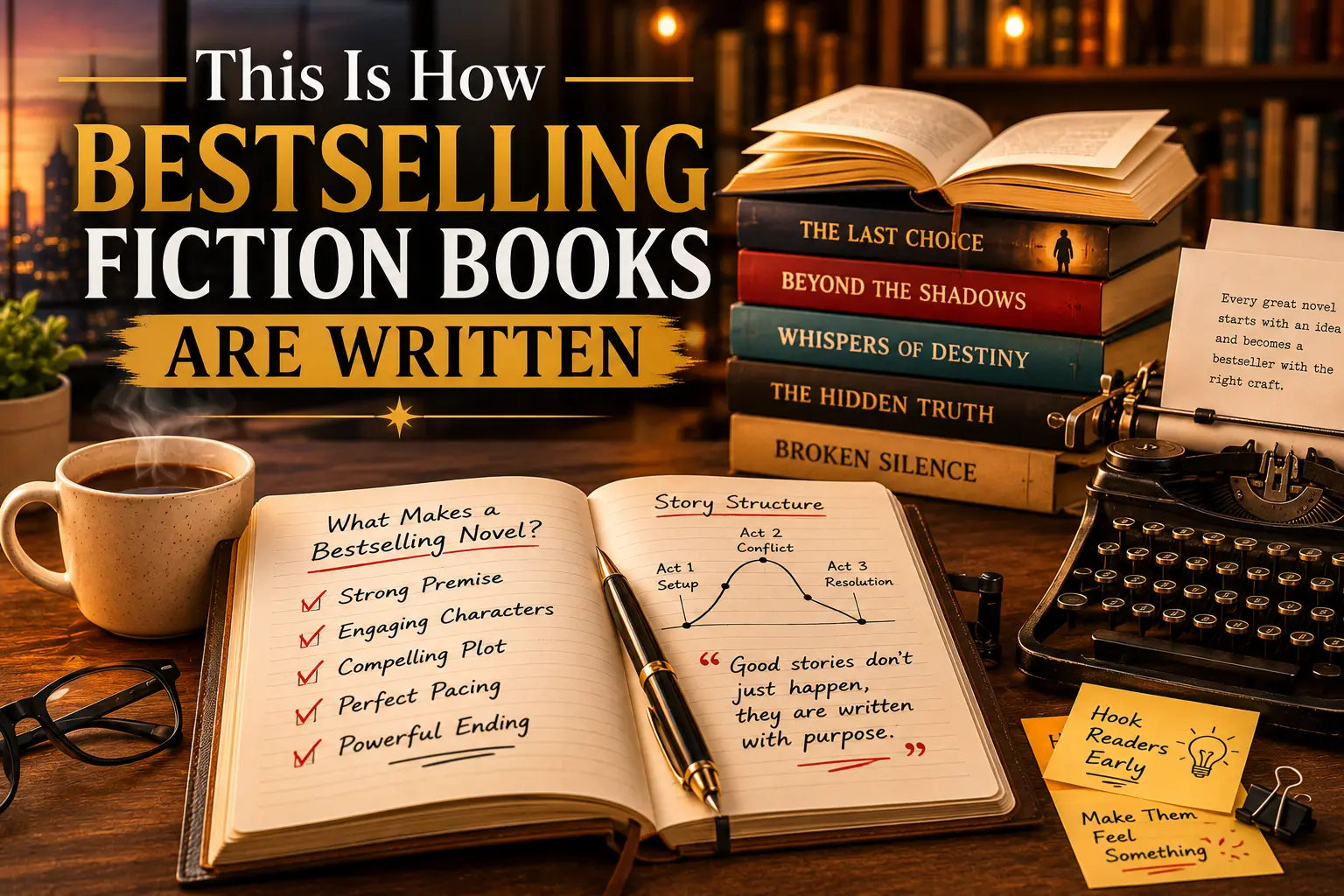
Most commercially successful novels follow some version of a three act shape, even the literary ones that like pretending they’re above such things. There’s a setup, escalating complications, a resolution that feels earned instead of random. Inside that broad shape, authors get plenty of creative freedom. But ditch structure entirely and books start feeling meandering, even to readers who couldn’t explain why something felt off if you asked them directly.
One habit I’ve noticed across successful authors is planting small setups early that pay off much later. Doesn’t need to be some elaborate mystery clue either. Sometimes it’s as simple as mentioning a character’s fear of deep water back in chapter two, then having that exact fear matter during the climax near the end. Readers might not consciously catch the setup the first time through, but they absolutely feel that payoff later. And honestly, that feeling explains a lot of why some books get devoured in one sitting while others sit half read on a nightstand for months, gathering dust.
Pacing Shifts by Genre, Never Fully Disappears
People throw the word pacing around constantly without really explaining what it means in practice. It’s not just short punchy sentences during action scenes, though sure, that helps sometimes. It’s really about controlling how much page time matches the story time passing, adjusting that rhythm based on what a scene actually needs from the reader emotionally.
A quiet character moment might stretch across three whole pages covering one single conversation, deliberately slowing everything down so readers sit inside that emotional weight for a bit. Then a few chapters later, an entire month gets compressed into one paragraph because nothing important happened during that stretch anyway. Writers who struggle with pacing tend to give equal weight to everything on the page. A character’s breakfast gets the same level of detail as a genuinely life threatening confrontation. Readers feel that imbalance even if they couldn’t put a name to it if you asked.
The Editing Process Nobody Talks About Enough
Nobody writes a bestseller on the first draft. Sounds obvious saying it out loud, but plenty of new writers still quietly expect their first attempt to be close to publishable. It almost never is. Not even for authors who’ve done this a dozen times before.
What tends to separate the books that actually break out is a willingness to cut stuff that doesn’t serve the story, even scenes the author genuinely loves and hates losing. I once talked with an author who cut an entire subplot involving a secondary character’s backstory. Something like twenty thousand words, gone, because her beta readers kept saying it dragged the middle section down. Painful decision after months of work, no question. But the finished book came out noticeably tighter because of that one cut.
Professional editing catches things writers are simply too close to see themselves. Repetitive phrasing that sneaks in without you noticing it at all. Character voice that shifts slightly from one chapter to the next. Plot holes that felt perfectly logical while drafting but fall apart the second someone actually scrutinizes them closely. This is exactly why nearly every traditionally published bestseller, and most successful self published titles too, goes through several rounds of developmental editing long before anyone even starts worrying about formatting or cover art.
Character Depth Keeps Readers Coming Back
Plot gets people to pick a book off the shelf. Character is usually what gets people to finish it, recommend it to their book club, and buy whatever that author writes next. This difference matters way more than most people realize when they first sit down to draft a novel.
Characters inside memorable, bestselling fiction books tend to want something specific, hit real obstacles trying to get it, and change somehow by the final page, even if that change is quiet rather than dramatic. Flat characters who exist purely to push plot forward tend to produce books that read fine on a technical level but get forgotten within a week. Readers remember how a character made them feel far more than they remember specific plot twists, even the clever ones.
A trick I picked up at a writing workshop years back involves giving every major character some kind of internal contradiction. Someone brave who’s secretly terrified of failing in public. Someone generous who quietly struggles with jealousy toward people close to them. These little contradictions make characters feel human instead of archetypes just checking boxes, and readers connect with that messiness even when they couldn’t explain exactly why a character feels so real to them.
Wrapping It Up
There’s no single formula guaranteeing success here, and honestly, anyone promising you one is probably overselling something. But after studying enough bestselling fiction books, and talking to authors who’ve actually pulled it off, some clear patterns keep showing up again and again. A premise you can explain in one breath. An opening that builds real momentum. Structure that respects how readers actually pay attention. Editing that isn’t afraid to cut good material. Characters carrying genuine emotional depth underneath the plot. None of this happens by accident, and it definitely doesn’t happen in a single draft. It takes patience, honest feedback from people willing to tell you the truth even when it stings a little, and a real willingness to let go of what isn’t working, no matter how hard that letting go actually turns out to be.