




05 Oct 2026
My grandmother kept every letter she ever got in an old shoebox under her bed. When she passed away two years ago, I inherited that box, along with a half finished manuscript she’d been quietly chipping away at for something like fifteen years. That’s actually how I ended up needing novel writing and editing services in the first place. I decided to finish her book for her. And within about two weeks of trying, I realized I had absolutely no clue what I was doing.
I want to walk through what I picked up during that whole mess. I’m not some expert with a framework to sell you, just someone who fumbled through it the same way most first time authors probably do. If you’re working on your own novel right now, or maybe finishing something that means a lot to you personally, some of this might spare you a bit of the frustration I went through.
Finishing a Manuscript and Writing a Good One Are Not the Same Thing
Nobody really explained this to me clearly before I started, and it’s probably the single biggest mistake new authors make, myself included. I read through my grandmother’s draft, tidied up a handful of sentences, and genuinely believed I was close to done. Maybe a month of work left, tops. That’s what I told my husband anyway.
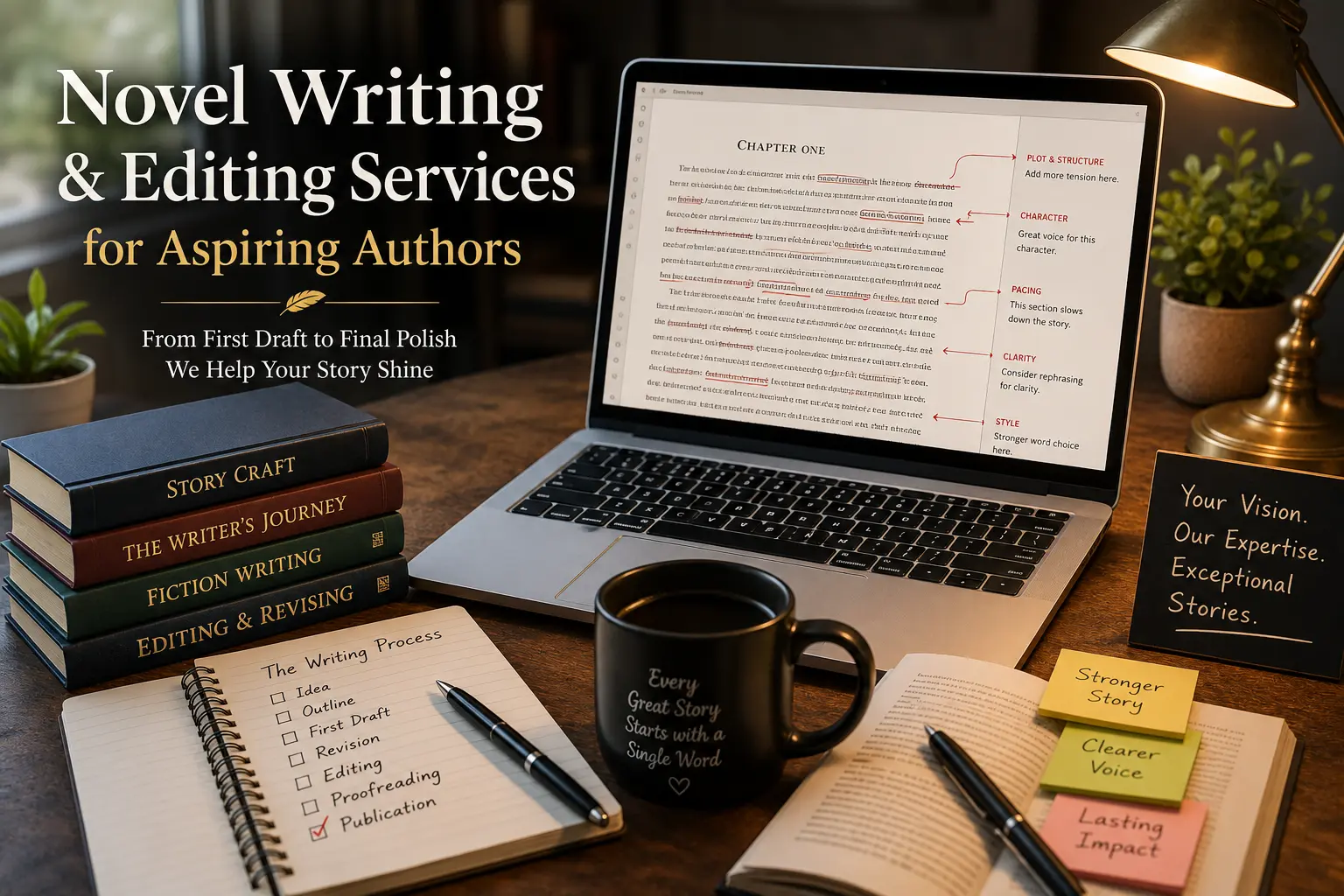
Then I sent it off to an editor for the first time, and the notes that came back covered almost everything except grammar. Pacing dragged badly through the entire middle third. Two of the side characters felt basically interchangeable, like I’d forgotten which one was which halfway through drafting. And the ending arrived something like thirty pages too fast. It was as if the story just ran out of steam right when it needed to be building toward something bigger. None of that had anything to do with sentence level stuff. Honestly, all of it mattered more than the typos I’d spent hours obsessing over.
This, I think, is the real value behind decent novel writing and editing services. They exist to catch exactly the kind of structural blind spots you cannot see in your own work, especially when you’re emotionally tangled up in the material the way I was with my grandmother’s story.
Structural Feedback Stings at First, Then It Actually Helps
I’ll admit the first round of developmental notes genuinely stung. Reading that your ending feels rushed, after you’ve spent weeks convinced it was the emotional high point of the whole book, is not a fun way to spend a Tuesday afternoon. I put the notes in a drawer for close to a week. I couldn’t even look at them without getting a little defensive about it.
Once I finally sat down again with something resembling fresh eyes, though, the editor’s points made total sense. The ending really was rushed. I’d been so focused on wrapping everything up neatly that I’d skipped past beats readers actually needed to feel the resolution land properly. I ended up writing an entire new chapter near the climax. It gave the story room to breathe before those final scenes, and the difference afterward was honestly night and day.
A friend of mine went through something similar with her own book. Her editor pointed out that her protagonist’s biggest decision in the whole story happened almost entirely off page, readers were just told about it after the fact instead of living through it as it happened. She rewrote her entire middle section around that one note. She still brings it up sometimes, calls it the best piece of feedback anyone’s ever given her on her writing.
Line Editing Sharpens Your Voice, It Doesn’t Erase It
Going into line editing, I was genuinely worried an editor would smooth out everything unique about my grandmother’s writing style and replace it with something generic sounding. That fear turned out to be completely unfounded, at least with the editor I ended up sticking with long term.
Line editing is really about rhythm and clarity at the sentence level, nothing more dramatic than that. My editor caught a habit running through the entire manuscript where way too many sentences started with the word she. That created this flat, repetitive feel across whole pages, something I never noticed while reading through it myself. Varying the sentence openings and lengths made the prose feel more alive almost right away. None of it touched the actual voice or personality underneath the writing.
Copyediting came next, catching smaller but still important details, like a character described as thirty four years old in one chapter and thirty seven a few chapters later. Clearly just a math error from early drafting that sat there unnoticed for months. These little inconsistencies pile up quietly, and readers absolutely notice them even when they can’t quite explain why something feels slightly off about a book.
Proofreading Catches Whatever Everyone Else Somehow Missed
By the time the manuscript reached proofreading, I figured it was basically flawless at that point. Three separate rounds of editing had already happened, after all, how much could possibly be left? The proofreader still found things, including one spot where an entire paragraph had been accidentally duplicated during a revision, and somehow nobody had caught it through two prior read throughs.
This stage exists specifically to catch what slips through everywhere else. Every project I’ve touched since has genuinely benefited from treating proofreading as its own separate step instead of folding it into earlier rounds of editing. Small errors left sitting in a finished book quietly chip away at how professional the whole thing feels. A reader picks up on that more than you’d think.
Picking the Right Editor Is Its Own Skill, and I Learned It the Hard Way
I want to be honest here. My first attempt at finding editing help was based almost entirely on whoever replied to my inquiry fastest, and it showed pretty clearly in the quality of feedback I got back. Competent, sure, but generic. The kind of notes that could’ve applied to nearly any manuscript in any genre without much adjustment.
Finding decent novel writing and editing services means looking past just availability and price toward genuine fit with your specific book. My grandmother’s manuscript was a quiet literary family drama, slow burning, character driven. The editor I eventually settled on had years of experience specifically in that space, and she understood pacing expectations for that genre almost instinctively, in a way my first editor just didn’t. Her notes reflected that deeper familiarity from the very first email back.
If you’re searching for an editor yourself, I’d genuinely suggest asking about their experience with your specific genre before committing to anything long term. A sample edit on a single chapter tells you more about whether you’ll work well together than any amount of scrolling through testimonials on a website ever will.
The Working Relationship Matters Almost as Much as the Editing
Something I didn’t expect was how much the actual relationship with an editor would matter throughout this whole process. My first editor communicated purely through tracked changes with barely any explanation attached. That left me guessing at the reasoning behind a lot of her suggestions. My eventual editor took the time to explain her thinking behind the bigger notes. That genuinely helped me understand storytelling principles I could carry forward, not just apply to that one manuscript and forget.
That distinction ended up mattering a lot more than I expected going in. Good novel writing and editing services should leave you a stronger writer by the end. It shouldn’t just hand you back a cleaner file with no real sense of what changed or why. I actually caught myself noticing pacing problems in my own second project before I’d even sent it to anyone, purely because of lessons from that first collaboration with my grandmother’s book.
What I’d Tell Someone Just Starting Out
If I could go back, I’d seek out editing feedback much earlier in the process instead of waiting until I felt the manuscript was completely done. Developmental notes earlier on could’ve saved me from writing, and later cutting, an entire subplot that honestly never worked in the first place.
I’d also remind myself that feedback on the story isn’t some judgment of your worth as a writer. It can feel that way in the moment though, especially with material as personal as finishing someone else’s unfinished book. The best editors aren’t tearing your work apart just to do it. They’re helping you see the manuscript the way a future reader eventually will, with a distance you simply cannot have on your own no matter how many times you reread your own pages.
Final Thoughts
Finishing my grandmother’s manuscript taught me more about writing than years working on my own projects ever managed to. That was largely because of the editing process itself. Real novel writing and editing services turned a rough, emotionally loaded draft into something that actually reads like a finished, structurally sound novel. I don’t think I could’ve gotten there alone, not with how many times I’d already reread those same pages.
If you’re sitting on a manuscript right now, wondering whether it truly needs outside eyes before it’s ready, I can tell you from experience that it almost certainly does. That’s not a failure on your part at all. It’s just part of how good books actually get made. Finding an editor who understands your genre, communicates clearly, and genuinely wants to strengthen your voice instead of replacing it can turn a promising draft into the book you always hoped it would become.