
16 Oct 2026
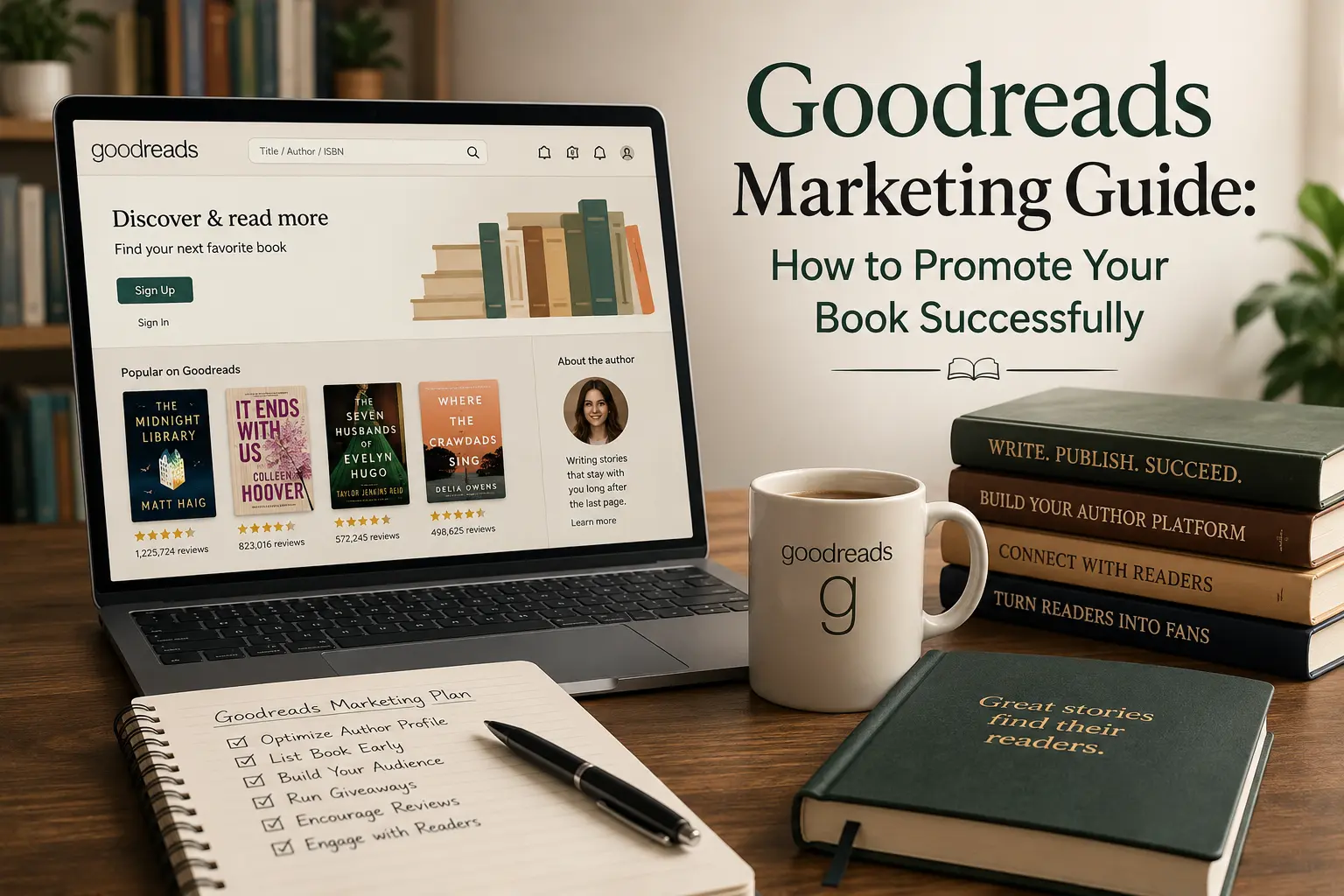
So my Goodreads page used to be embarrassing. Like, genuinely bad. A blurry photo, a bio I wrote in five minutes, and a book with maybe four ratings sitting there collecting dust for over a year. A friend of mine, another indie author, basically told me I needed a real Goodreads marketing guide instead of just winging it, and I sort of laughed it off at first. Then I actually tried her advice and, well, here we are.
I think a lot of authors treat Goodreads like a formality. You publish, you slap up a profile, you move on to the “real” marketing on Instagram or wherever. But that’s backwards. Goodreads has millions of people actively looking for their next read at any given moment. If you’re not on there doing anything, you’re just… not in the running. Simple as that.
Why Goodreads Still Matters in 2026
I know, I know. BookTok this, BookTok that. And sure, TikTok sells books, no argument there. But here’s the difference nobody talks about enough: someone scrolling TikTok is being entertained, and a book just happens to catch their eye. Someone on Goodreads is there on purpose. They opened the app to find something to read next. That’s a completely different mindset, and honestly a much easier person to convert into a buyer.
I actually noticed this in my own habits before I thought about it strategically. Before I buy almost any book now, I check Goodreads first. I look at the shelves people put it under, I read a couple reviews (sometimes the negative ones first, don’t ask me why), and then I decide. That’s not some weird niche behavior. That’s most readers, probably including you.
There’s also just… trust. A stranger leaving three stars and writing “kind of slow in the middle but the ending got me” means more to another reader than any ad ever could. You can’t buy that kind of credibility. It’s earned, one review at a time, which is honestly the whole reason this Goodreads marketing guide exists in the first place.
Setting Up Your Author Profile the Right Way
My original profile? Rough. I threw it together in one sitting and never touched it again for months. Big mistake, because for a lot of readers, that page is the first real impression they get of you as a person, not just as a book cover with your name on it.
Use a decent photo. It doesn’t need to be a $300 headshot session, but please retire the grainy one from four years ago. Then write a bio that sounds like you actually talking, not a stiff “author of two novels who resides in the Midwest” thing. Mention why you write what you write. Say something a little weird or personal if it fits. People remember authors who feel like actual humans, not brands.
Also, link your stuff. Your blog, your newsletter, wherever else you’re active. I cannot tell you how many author pages I’ve clicked through with zero links anywhere. That’s a dead end. You had someone interested and then gave them nowhere to go.
Claiming and Optimizing Your Author Dashboard
Quick thing, if you haven’t claimed your profile through the Author Program yet, go do that right now. It’s free. Once you’re verified you get a dashboard, and it’s actually useful, not just decoration. Review tracking, reader stats, giveaway scheduling.
I avoided this thing for way too long because I assumed it was just clutter. It’s not. You can connect your blog via RSS so posts show up automatically, add events, keep your books organized instead of scattered. Once I finally set it up properly, my whole page stopped looking abandoned and started feeling like something I was actually running.
Building Buzz Before Launch Day
Here’s a mistake I made with my second book and swore I wouldn’t repeat with my third: waiting until release day to do anything on Goodreads. By then the momentum window is basically gone.
List your book early. Months early if you can manage it. This lets people start adding it to their “want to read” shelf, and that little action does more than people give it credit for, it’s a signal that feeds into how the platform shows your book to other readers. I’ve seen books rack up a few hundred of those adds before launch, purely because the author bothered to share the link over and over in the months leading up.
Book bloggers still matter too, even now. Find ones covering your genre, reach out, offer an advance copy. Some say yes. A lot won’t respond at all. Don’t take it personally, most of them are drowning in requests and yours just got lost in the pile. It happens.
Running Giveaways That Actually Convert
Giveaways used to be free on Goodreads. Now there’s a cost, which changed things for a lot of us. Still worth it though, if you actually promote it instead of just letting it sit there.
My first giveaway was kind of a dud, honestly. I set it up and figured people would just find it. They didn’t. Second time, I announced it in my newsletter, posted about it a couple times, and lined it up with a discounted ebook price at the same time. That combo did way more than the giveaway on its own ever could have. The free copies aren’t really the point. It’s the exposure, the shelf adds, and hopefully a handful of honest reviews once the winners actually get around to reading it.
Encouraging Reviews Without Being Pushy
Nobody tells you how nerve wracking that first review is. You just sit there refreshing the page like your stomach’s in knots. But reviews matter a lot here, even the mediocre three star ones, because they show real people are actually reading the thing.
The trick is asking without sounding needy about it. A short line at the end of the book does the job. Something like “if you enjoyed this, a quick review would mean a lot” works better than anything that sounds like a demand. Low pressure wins, every time, in my experience anyway.
You can ask directly too, your newsletter list, your street team if you’ve got one. Just don’t offer anything in exchange for a good review. Goodreads takes that seriously and it’s a fast way to get flagged, which is not a headache you want.
Using Goodreads Ads Strategically
I put off trying ads for a long time. Heard mixed things from other authors, some loved them, some said it was money into a void. Turns out it really depends on how narrow you go.
I finally tried a small budget, targeting readers who’d shelved books similar to mine, same subgenre, similar tropes. Not some broad “everyone who likes fiction” audience. Narrow, specific. That precision made a real difference. A tightly targeted ad with a small budget outperformed anything broader I’d tried before, and it wasn’t even close.
Tracking What Actually Works
Something I wish I’d done sooner: actually track the numbers instead of just vibing my way through it. The dashboard gives you shelf adds, rating trends, review counts over time. Line that up against your sales numbers from the same period and patterns start showing themselves.
I noticed a clear spike in “want to read” adds right after pairing a small giveaway with a newsletter mention. Neither one alone did much. Together, they moved the needle in a way I could actually see in the numbers. Small experiments like that tell you what’s worth repeating instead of guessing forever and hoping for the best.
Engaging With the Goodreads Community
This is the part almost everyone skips, and it’s kind of the whole point of the platform if you ask me. There are groups for pretty much every genre, trope, and reading style imaginable. Join a couple that fit and actually participate. Not just drop your link and disappear, that never works and honestly it’s a little embarrassing when people call it out.
I joined a group in my genre and just talked about other people’s books for weeks before mentioning my own at all. Being a normal reader in the space, basically. When I finally brought up my book, people were actually receptive, because I wasn’t some random account that showed up purely to sell them something.
Reading challenges, commenting on reviews, following other authors whose audience might like your work too, all of it adds up. It’s slower than an ad campaign, sure. But those connections tend to stick around a lot longer.
Common Mistakes to Avoid
Almost every author trips on at least one of these at some point. Arguing with a negative review is probably the biggest one. I’ve wanted to type a defensive comment more times than I’d like to admit. But publicly clapping back at a reviewer basically never ends well, and it can follow you for years online.
Letting your profile go stale after the initial setup is another one. This isn’t a set it and forget it kind of platform. It needs the occasional check in, a new post, keeping your book list current when something new comes out.
And don’t forget your backlist either. Older titles still deserve some attention. Mention them in updates, bring them up when relevant in group discussions, keep your dashboard reflecting your whole catalog instead of just whatever’s newest.
Final Thoughts
There’s no secret trick that makes your numbers explode overnight, and honestly, be a little skeptical of anyone who tells you otherwise. What actually moves things is just showing up, again and again. Tighten your profile, get involved in the community for real, use giveaways and ads with some actual strategy behind them, and don’t underestimate what a genuine connection with readers can do over time.
If you take one thing from this Goodreads marketing guide, let it be this. Treat the platform like the community it actually is, not another box on your marketing checklist. Readers can tell when an author is genuinely present versus just passing through to drop a link and vanish. Show up, be a little generous with your time, and the results tend to follow, even if it takes longer than you’d like.