



12 Oct 2026
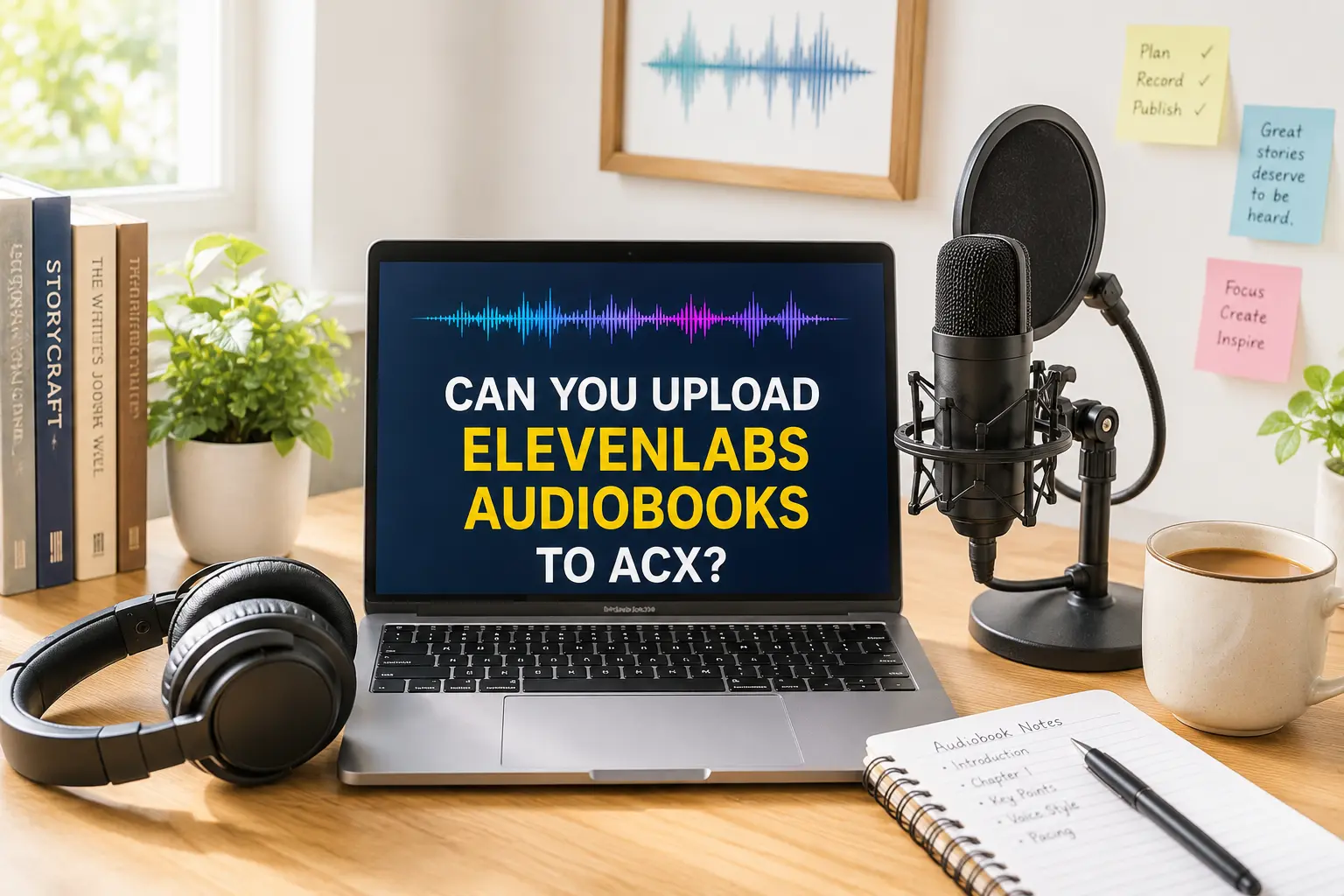
I get asked this a lot lately. So let me just say it upfront. The question of whether you can upload ElevenLabs audiobooks to ACX comes up constantly in author groups. Honestly, the answer is messier than a simple yes or no. AI voice tools have gotten so good, so fast. A lot of writers are now wondering why they should pay a narrator thousands of dollars when software can sound almost as good for a fraction of the price.
I spent a while digging into this. Partly it was for my own curiosity. Partly it was because a few author friends kept asking me the same thing over dinner or in DMs. So here’s what I actually found. Here’s what the platform rules say right now. And here’s what I think your realistic options look like if you’re hoping to get an AI narrated book onto Audible.
What ACX Actually Says About AI Narration
Okay, let’s get the less exciting part out of the way first. ACX, short for Audiobook Creation Exchange, is the system Amazon and Audible use to bring audiobooks into their store. For a long time, ACX required every single narration to be performed by an actual human being. Not a suggestion, not a guideline buried somewhere in fine print. A real requirement. Submissions that sounded even a little synthetic got kicked back.
That’s been shifting, but not in the wide open way a lot of people were hoping for. Audible has started testing AI narration through its own official channels, and that’s a completely different thing than someone independently uploading ElevenLabs audiobooks to ACX through the regular submission process. The difference matters more than people realize. Audible’s approved AI programs run through specific internal partnerships, not through a random creator dropping AI generated files into the standard ACX pipeline.
So if the plan is generating a whole book with ElevenLabs and uploading it the exact same way you’d upload human narration, you’re probably going to hit a wall. The review process has gotten sharper at picking up on synthetic speech, and the people checking submissions are trained to notice when narration sounds a bit too smooth, too even, or slightly off in its rhythm.
Why the Rules Exist in the First Place
I think it’s worth understanding why ACX even cares this much, instead of just shrugging it off as bureaucratic nonsense. An audiobook isn’t just words being read out loud. It’s a performance. A skilled narrator shifts their voice for different characters, knows exactly where to pause, and adds emotional texture that even the best AI still can’t nail consistently across ten or twelve hours of content.
There’s also a trust thing going on here. Audible has spent years building a reputation for a certain quality of listening experience. If synthetic audiobooks just flooded in without any real oversight, quality would become a total gamble for listeners. That erodes the whole reason people keep paying for their subscription. So when people push back against the rules around uploading ElevenLabs audiobooks to ACX, I get the frustration. But the reasoning behind it isn’t totally baseless either.
Is There Any Legitimate Way to Use ElevenLabs for Your Audiobook?
Here’s where it gets more interesting though, because it’s not a flat no across the board. ElevenLabs is genuinely impressive. I’ve listened to samples that startled me with how close they got to a real human voice, especially for nonfiction without a lot of back and forth dialogue. So the tool itself isn’t really the villain here. It’s more about where and how you try to use it.
If your main goal is specifically getting ElevenLabs audiobooks onto ACX through the usual self publishing route, your best shot right now is treating the AI audio as a first draft, not the finished product. Some narrators and small production teams use ElevenLabs to knock out a rough version, then bring in an actual human to fix problem sections, adjust pacing, and clean things up. It’s a hybrid approach, and it can genuinely cut down on studio costs while still checking the human narration box ACX wants.
Another route some authors take is just skipping ACX altogether for the AI narrated version. You don’t have to distribute exclusively through Audible, even though it feels that way sometimes. Other platforms are more relaxed about AI generated audio, and some writers just host these versions on their own site or go through smaller independent distributors. It’s not the same reach as Audible obviously, nowhere close, but at least you’re not fighting the platform’s restrictions the whole time.
What Happens if You Try to Sneak It Through Anyway
I want to be straight with you here because I know people wonder about this quietly even if they don’t say it out loud. What actually happens if someone just uploads ElevenLabs audiobooks to ACX and doesn’t mention that AI was involved at all?
From conversations I’ve had in narrator forums and some creator threads I’ve followed, the risk is real. ACX reviewers have flagged synthetic audio before, sometimes just because something about the pacing or tone felt slightly unnatural to a human listener. When that happens, the file gets rejected, and depending on how strict enforcement is at the time, repeated attempts could mess with your standing on the platform. That’s a scary risk if Amazon and Audible make up a real chunk of your income as an author.
And it’s not only about getting caught either. Even really solid AI narration can start to feel flat somewhere around hour six or seven of listening. Human narrators bring little inconsistencies and variations that keep people engaged for an entire book. If your story has multiple characters or a lot of emotional weight, an unedited AI voice track might not hold up the way you’re hoping, rules aside.
Practical Steps if You Want to Explore ElevenLabs for Audiobook Production
Alright, let’s actually talk about what to do, because I know most people aren’t here just for a policy rundown.
First off, if getting on Audible is your main priority, keep watching for Audible’s own official AI narration programs instead of trying to force a workaround through regular ACX. They’ve been slowly opening up limited access to approved AI tools for certain qualifying authors. It’s a totally separate path from independently uploading ElevenLabs audiobooks to ACX, and since it’s Audible’s own system, compliance is already baked in.
Second, if you like what ElevenLabs produces and want it in your workflow anyway, try the hybrid method I mentioned earlier. Generate a rough narration, then bring in an audio engineer or voice actor to smooth out the rough patches and add that human touch ACX still wants for regular submissions. It costs less than hiring someone to narrate the whole book from scratch, but you end up with something that actually meets platform expectations.
Third, look into distribution beyond Audible entirely. Google Play Books, for instance, has shown more openness to AI narrated content in certain cases. Building some presence there while ACX and Audible figure out their long term policies isn’t a bad move at all, especially since everything in this space is shifting fast and next year’s rules might look nothing like today’s.
A Quick Example From Someone Who Tried It
I talked to an indie nonfiction author who generated her entire audiobook with ElevenLabs and submitted it under her own narration credit. It got flagged during review, and she was asked directly about the narration source. She ended up re recording a few problem chapters in her own voice and blending them with cleaned up ElevenLabs sections so everything sounded consistent. The second submission passed. Her takeaway, and I think this sums it up well, was that the tool is great as part of the process, but treating it as a full replacement for human narration on ACX is where people get tripped up.
That story matches basically everything else I’ve heard from people in this space. The technology is impressive, the temptation to save money is completely understandable, and the platform rules just haven’t fully caught up to where AI voice tech is right now.
Conclusion
So can you upload ElevenLabs audiobooks to ACX today? Straight out of the software, expecting smooth approval? Realistically, no. ACX still requires standard human narration. That hasn’t changed.
Right now, the smarter path involves a few options. You could use ElevenLabs as part of a hybrid workflow with real human involvement. You could also watch for Audible’s own AI narration programs instead. Or you could distribute your AI narrated book through platforms that are simply more relaxed about synthetic voice content.
ElevenLabs is only going to keep improving. The policies around AI narration are still shifting too. Nothing feels fully settled yet. If you’re an author trying to figure out your next move, here’s my honest suggestion. Stay on top of updates directly from ACX and Audible. Seriously weigh whether a hybrid approach fits your goals. It could save you money without putting your publishing account at risk.
The rules around uploading ElevenLabs audiobooks to ACX will probably keep evolving. But for now, patience is your friend. A little human involvement in the final product remains your safest bet.