



16 Oct 2026
Why This Decision Feels So Overwhelming
The moment you start googling how to get a book written, suddenly everyone’s got an opinion. Writers on forums will tell you, with total confidence, that only self written work counts as “real” authorship. Sure, okay. Meanwhile business owners who just want their expertise turned into a book couldn’t care less who typed the words. Both sides kind of have a point, which is annoying, but it’s also why this debate never actually dies.
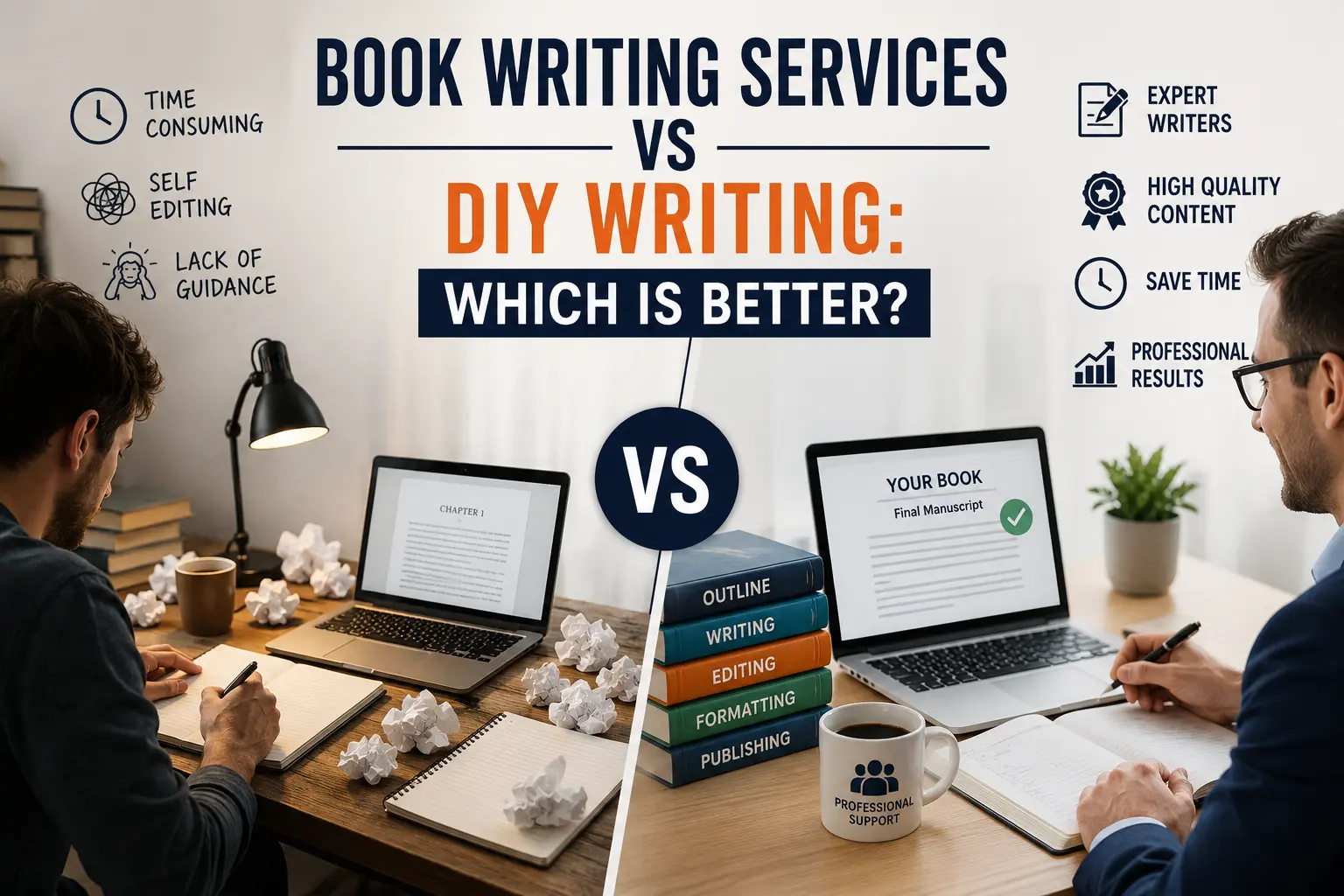
Here’s the thing though. This whole book writing services vs DIY writing argument isn’t really about talent at all. It’s about time. It’s about what you’re actually trying to get out of the process. Some people genuinely love wrestling with a blank page every morning, coffee in hand, no rush. I’ve met writers like this, they’re a little insufferable honestly but I mean that with love. Others find that same blank page terrifying and would rather spend their energy on their business, their kids, their actual life, while someone else does the heavy lifting.
I remember starting my first book thinking, three months, easy. It took almost two years. Two. And I already had a decent writing habit going in. Life just happens. Deadlines slip, motivation disappears right when you need it most, and none of that makes you a failure. It just means books are hard. Anyone who tells you otherwise is probably selling something.
What DIY Writing Actually Involves
Let’s get into specifics, because I think people underestimate what this actually looks like day to day. DIY writing means you’re responsible for outlining, drafting, revising, and usually editing your own manuscript, start to finish, no shortcuts. You’re doing research. Fact checking. Trying to figure out how to structure chapters so people don’t lose interest three pages in.
If you’ve never written anything long before, the learning curve is rough. Fiction writers have to nail pacing and dialogue and character arcs all at once. Nonfiction writers have to take messy, complicated ideas and organize them so they flow instead of confusing everybody halfway through. Both take real stamina. Writing seventy thousand words is nothing like a blog post, not even close, I learned that the hard way.
There’s something genuinely satisfying about finishing something you wrote entirely yourself. The voice is unmistakably yours, every weird sentence and awkward phrase included. For a lot of writers that ownership matters more than convenience ever could.
What Book Writing Services Actually Offer
On the other hand, professional book writing services bring something totally different to the table. Ghostwriters, editors, publishing consultants, people whose whole job is taking your rough ideas or notes and shaping them into something finished and polished.
A decent service won’t just type up your thoughts robotically. They’ll actually sit down and interview you, figure out your voice, your goals, even your little quirks, and then write something that sounds like you even though you never touched the keyboard. That’s huge if you’re busy or if you know your subject inside and out but writing just isn’t your thing.
A business coach I worked with years back had built her entire career around one specific coaching framework. She knew the material better than anyone. But every time she tried writing it down herself it came out stiff, like a textbook nobody asked for. Once a writing service got involved, her actual personality finally showed up on the page. Readers connected with it in a way her early drafts never came close to.
This is where the book writing services vs DIY writing thing gets genuinely interesting to me. It’s not really about who writes prettier sentences. It’s about who can take your ideas and make them land, and that’s its own skill entirely.
The Cost and Time Trade Off
Let’s talk money for a second because people avoid this part. DIY writing costs you time, not cash, at least on the surface. You spend evenings, weekends, maybe a year or two chipping away at it slowly. No upfront bill. But there’s a real cost hiding in there, that time could’ve gone toward your business, or honestly just resting.
Book writing services cost actual money, and the range is pretty wide depending on your book’s length, how complicated the subject is, who you hire. Some packages include editing and formatting and even publishing help. Others just cover the writing itself, nothing more.
What surprises people most, at least from what I’ve seen, is how much time you save. Something that could take eighteen months solo might wrap up in three to six months with an experienced team, mostly because they’re doing this full time and already have systems in place that you’d otherwise spend months figuring out yourself.
Weighing Book Writing Services vs DIY Writing Based on Your Goals
Most people get stuck here because they try to answer this in a vacuum, without really thinking about what they actually want. So let’s break it down by situation, because your answer changes depending on the goal.
If personal fulfillment is the whole point, meaning you want the experience of writing almost as much as the finished book, then DIY is your move, full stop. Nothing replaces typing “the end” after months of grinding through it. No ghostwriter can hand you that feeling because it only comes from doing the work yourself.
But if you’re after authority in your field, or leads, or just want to be a known name in your industry, the math shifts. In that case the finished product usually matters more than how you got there. A well done, professional book opens doors, speaking gigs, media, new clients. In that context a service that actually understands publishing and positioning might get you there faster and with way less stress.
Fiction writers are a bit different. A lot of novelists genuinely want every word to be theirs, which makes sense given how personal storytelling is. Still, plenty of them hire developmental editors or story coaches anyway. Worth considering if you’re stuck in the middle.
A Middle Ground Many People Overlook
Nobody told me this early enough, so I’ll tell you. This isn’t always either or. Loads of authors blend both. Write a messy draft yourself, then bring in a professional editor to clean it up, fix the weak spots, tighten things that drag.
This hybrid approach lets you keep your own voice while still getting real professional help where you actually need it. It genuinely offers the best of both worlds, the joy of writing combined with a manuscript that reads like it was professionally handled.
If you’re torn on book writing services vs DIY writing, seriously consider this middle path before committing to one extreme.
Questions to Ask Before Making Your Choice
Before locking anything in, ask yourself some honest questions. How much time do you actually have over the next six to twelve months, realistically, not the hopeful version? Do you enjoy writing itself, or do you just want the finished book as fast as possible? What’s your budget, and does that match up with what a published book could actually bring you?
Be honest about your skill level too, no shame in it. Writing seventy thousand coherent words just isn’t everyone’s thing, and that’s fine. Same way you’d hire an accountant for taxes or a contractor for a renovation, hiring a writer just means knowing where your strengths are. And where they aren’t.
That said, if you’ve always wanted to call yourself a writer and you’ve actually got the time, don’t let anyone talk you out of doing it yourself. Plenty of self taught authors out there wrote incredible books entirely alone, usually after years of practice and a bunch of failed attempts nobody talks about.
Final Thoughts on Book Writing Services vs DIY Writing
At the end of the day there’s no universal answer. Book writing services vs DIY writing comes down to your goals, your time, your budget, and how much you personally value the process itself. Some people thrive on the grind, treasuring those late nights wrestling a stubborn chapter into shape. Others just want their message out there and are perfectly happy letting professionals handle the mechanics.
Whichever path you take, what actually matters is ending up with a book you’re proud of, one that reflects your ideas and connects with the people you’re trying to reach. Take some time, think honestly about what you need right now, and trust that either way, you’re still moving your book forward.