




16 Oct 2026
Why Understanding the Timeline Matters So Much
Most first time authors picture publishing like a light switch. Finish the manuscript, flip it on, book’s out in the world. Nice idea. Doesn’t work that way at all. There’s editing, formatting, cover design, and a whole lot of waiting on people who are, fair enough, juggling other authors and other deadlines that have nothing to do with you specifically.
Knowing roughly what a book publishing timeline looks like saves you from refreshing your inbox every twenty minutes hoping for news that just isn’t coming yet. I’ve seen writers get genuinely deflated, some close to quitting altogether, purely because nobody told them this takes months, not days. Avoidable, all of it, once you know what’s actually going on behind the scenes.
There’s a practical side too, and it’s easy to overlook. Maybe you’re planning a launch party. Maybe a small marketing push around a specific date matters to you. Either way, you need a real sense of timing, because guessing wrong means missed dates and stress you really didn’t need on your plate.
The Difference Between Traditional and Self Publishing Timelines
Quick note before we go on. Traditional and self publishing are not the same animal at all, timeline wise. Traditional publishing, meaning an actual publishing house picks up your book, moves slow. Painfully slow sometimes. Contract signed to book on shelf, you’re looking at twelve to eighteen months typically, sometimes longer depending on what else that publisher has going that year.
Self publishing is quicker. Once the manuscript’s edited and formatted, you could technically be live in a matter of weeks. Still, quick isn’t automatically good. Rush a stage just to hit some arbitrary release date and it tends to bite you later, usually right when the reviews start rolling in.
Stage One, Finishing Your Manuscript
Obvious sounding stage, I know. But there’s more to it than typing “the end” and walking away. Your draft needs at least one self edit pass first. Catch the plot holes yourself. The pacing issues. Those scenes that just don’t sit right no matter how you try to justify them. Skip that step and rush to a paid editor, and you’re basically paying someone good money to point out things you could’ve fixed on your own.
My advice, for what it’s worth? Walk away from the finished draft for two weeks minimum before rereading. Just don’t touch it. Distance gives you fresh eyes, and you’ll catch things you were simply too close to notice while still knee deep in writing it. Feels like wasted time, sitting on a finished book doing nothing. It isn’t. That pause saves real time later in the book publishing timeline, because your manuscript hits the editing stage already in better shape.
Beta Readers and Why They Matter More Than You Think
Before any professional editor sees your work, get it in front of a few beta readers. Not your mom. Not your best friend who thinks everything you do is perfect. Real readers who’ll tell you honestly what landed and what completely missed. Beta readers notice things you can’t, simply because you already know what a scene means, even when the actual words on the page don’t say it clearly.
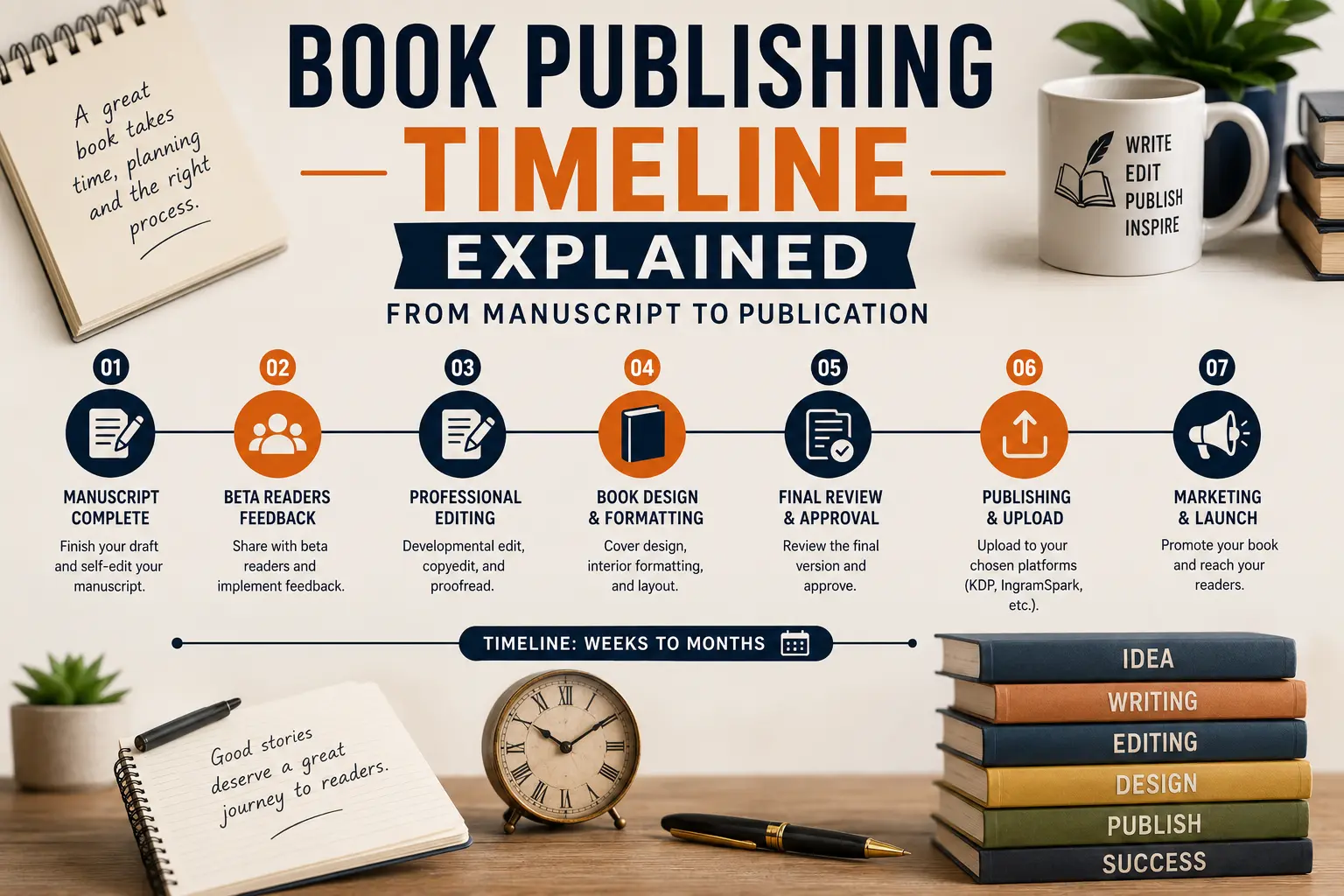
This part usually runs two to six weeks, give or take, depending how many readers you’ve got and how quickly they respond. Tempting to skip, especially once you’re itching to move forward already. But skip it, and you often find the big problems way later, at a point where fixing them costs a lot more than it would’ve here.
Stage Two, Professional Editing
Self editing done, beta feedback in hand, now comes professional editing. Honestly? Probably the single most important stage in this whole book publishing timeline. And it’s not just one pass either. Skip a layer here and it shows in the finished product, whether readers can name exactly what’s wrong or just feel that something’s a little off.
Developmental editing first. Big picture stuff. Plot, character arcs, pacing across the entire book. Four to eight weeks alone, depending on length and how many revision rounds follow after. Then copyediting, tightening grammar, sentence structure, keeping things consistent throughout. Then proofreading right at the end, hunting down whatever typos survived everything else.
Add it all up and you’re looking at two to four months for editing, start to finish. Could be longer if your developmental notes come back heavy. Sounds like forever, I get it, especially when you just want the thing finished. But rushing this stage is probably the single biggest mistake new authors make, and it shows, no matter how good the bones of your story actually are.
Working With Freelance Editors Versus Publishing House Editors
Go the self publishing route and you’re hiring a freelancer directly, which means more control over scheduling since, well, you’re the client here. Traditional publishing’s different. Your editor’s got other authors on their desk too, so your manuscript waits its turn in a queue, and your timeline depends a lot on how slammed they are that season.
Neither way is better, not really. But knowing which situation you’re in helps you set expectations early instead of wondering, three weeks in, why absolutely nothing’s happened.
Stage Three, Formatting, Cover Design, and Final Preparations
Editing wrapped up, now your manuscript needs formatting, print, digital, sometimes both. Chapter headings that actually match, spacing that makes sense, page numbers, making sure it all displays right if you’re doing an ebook. Two to four weeks typically, longer if there are images involved or anything beyond plain text.
Cover design’s happening around now too, and please, do not rush this part. Your cover’s the first thing anyone sees, before they’ve read one single word you actually wrote, and a rushed, amateur looking cover can quietly kill sales no matter how strong the writing is underneath. Give it three to four weeks at least, and build in time for revisions, because you will want changes once you see that first draft. Everyone does.
ISBNs, Copyright, and the Paperwork Nobody Talks About
Somewhere in this stretch you’ve also got admin work waiting. ISBN, copyright registration, setting your book up on whatever platforms you’re selling through. None of it takes long by itself, days to a couple weeks tops, but it’s exactly the kind of thing people forget until the last second, and then suddenly you’re delayed right before launch for no good reason.
Stage Four, Launch and Beyond
And then, launch. The moment you’ve been grinding toward this whole time. Self publish and this can happen within days of finishing formatting and cover work. Traditional publishers plan months ahead instead, leaving room for advance reviews, marketing pushes, getting your book in front of the right people before the actual release date shows up.
Here’s what catches people off guard constantly. Launch isn’t the finish line. It just feels like it should be. Really it’s the start of a whole new phase, marketing, reviews, promotion that keeps going long after publication day. Building any real momentum takes planning, and that planning ideally starts weeks, sometimes months, before the date on the calendar.
Realistic Expectations for Your Own Book Publishing Timeline
So, all together, what’s a realistic book publishing timeline actually look like? Self publishing, manuscript to available book, three to six months when things go reasonably well. Traditional publishing, a lot longer, twelve to eighteen months from signed contract to shelf, sometimes more depending how full that publisher’s pipeline already is.
None of this is meant to discourage you, not even a little. It’s meant to help you go in with your eyes open instead of getting blindsided by delays that are, genuinely, just part of how this works. Every single stage here exists for a reason, and rushing through any of them tends to create problems that take even longer to fix later.
Final Thoughts on the Book Publishing Timeline
Publishing takes longer than almost everyone expects walking in. That’s normal. Not a red flag, not a sign you’re doing something wrong. Understanding the real book publishing timeline, manuscript through editing, formatting, cover design, and finally launch, means you can plan around reality instead of running into the same frustration so many first time authors hit. Traditional or self published, patience actually pays off here, more than people believe until they’ve lived through it once themselves. Rush a stage and it tends to surface eventually in the finished book, and that’s not the outcome anyone’s after after all that work. Give each stage the room it needs. The wait is honestly part of what makes the final book something worth being proud of.