



04 May 2026
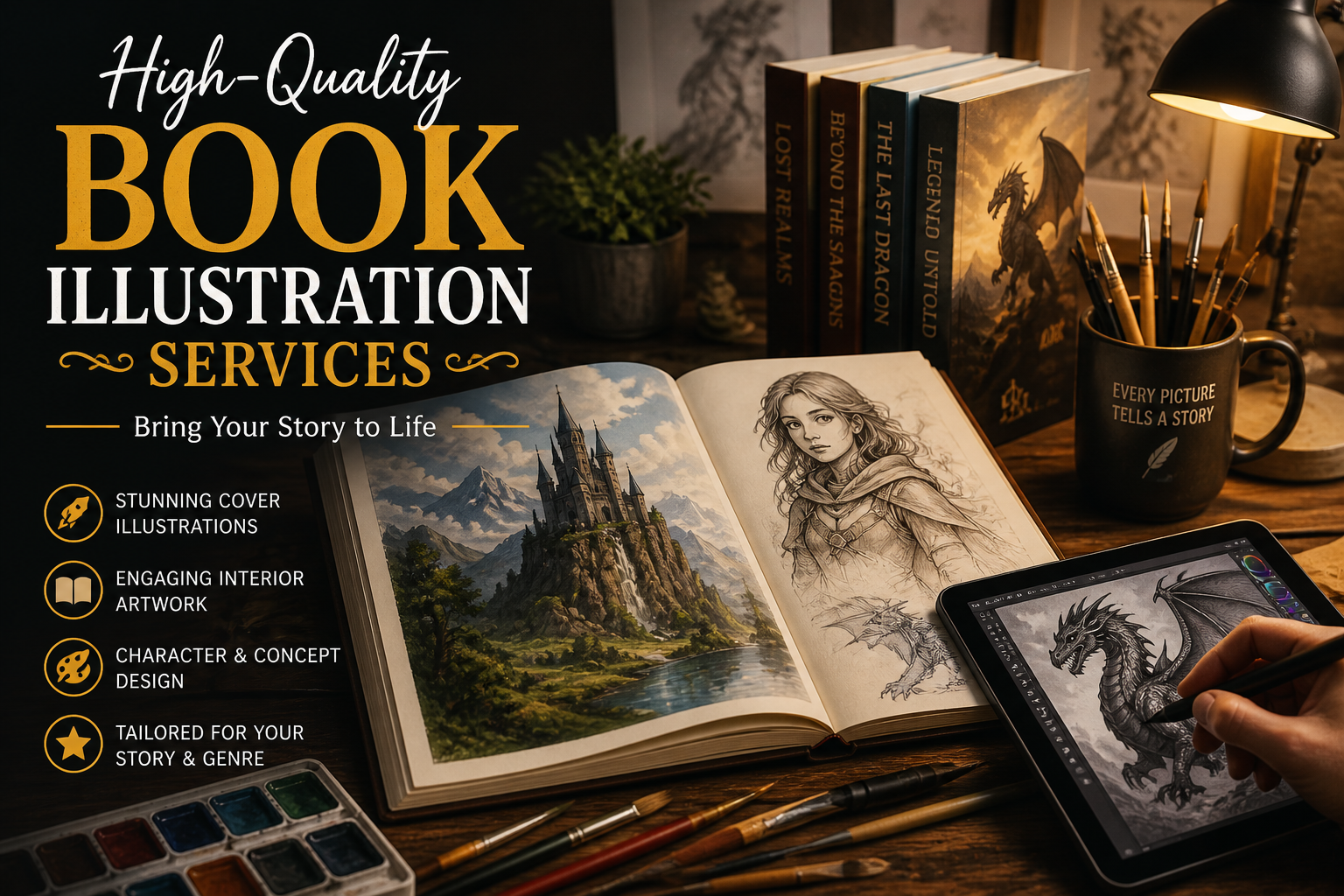
Most authors spend months, sometimes years, getting their words exactly right. They rewrite the same paragraph until it finally says what they actually meant. Sleep gets sacrificed over chapter endings. And dialogue is constantly second-guessed until it feels right. And then when the book is nearly done, they treat the visual side of things like an afterthought, something to sort out quickly before publication. That gap between the care put into writing and the care put into visuals is one of the most common and costly mistakes authors make today. Finding good book illustration services is not a checkbox on your publishing to-do list. It is a creative decision that shapes how readers experience your book before they read a single word.
The writing matters enormously, obviously. Nobody is arguing otherwise. But the writing only gets its chance after something visual has already done the work of making a stranger curious enough to stop scrolling. That handoff, from visual impression to actual reading, is where a lot of books quietly fail. Not because the writing is bad but because nothing about the book’s appearance invited anyone in.
Nobody Talks About This Part Honestly
There is a version of publishing advice that treats illustration as something you figure out at the end, after the real work is done. Find someone on a freelance platform, pick something affordable, get it done. That advice is everywhere and it has quietly damaged a lot of books that deserved better.
Here is what actually happens when an author invests properly in visual work. The book looks like it belongs in the same conversation as traditionally published titles. Readers browsing a crowded digital marketplace do not consciously think about production quality but they feel it. Something in how a cover is composed, how the colors work together, how the typography sits against the artwork, all of that creates a split-second impression of credibility. And credibility, unfair as it sounds, determines whether someone clicks through or keeps scrolling.
Worth Remembering
I have seen genuinely good books get ignored because the cover looked like it was put together in an afternoon. I have also seen books with modest premises find real audiences because everything about how they presented themselves visually communicated that someone cared. That caring is what professional book illustration services actually sell, not just technical skill but the evidence that this book was taken seriously by the people who made it.
The Children’s Book Assumption Is Holding Authors Back
Ask most people what kind of books have illustrations and they will say children’s books without hesitating. That association is so deeply embedded that authors working in other genres genuinely do not consider what visual work could do for their projects.
Think about fantasy writers who include detailed world maps. Those maps do something specific and powerful for readers. They make the world feel real before the story has even started. Readers get something to return to when geography becomes important to the plot. That sense of scope is something even very good prose sometimes struggles to establish on its own. That is illustration doing serious narrative work.
Think about poets who pay attention to how a page looks, where white space sits, whether a small illustration alongside a particular poem changes how it lands emotionally. Or cookbook authors who use illustration rather than photography to create a specific warmth and handmade quality that their readers connect with. Or educators writing non-fiction guides who need complex ideas broken down visually because no amount of well-written explanation replaces a clear, accurate diagram when someone is trying to actually learn something.
“
Illustration is not decoration added onto writing that already works. In these cases it is doing work that writing alone genuinely cannot do. That is a meaningful distinction and it is why professional book illustration services matter across far more genres than most authors initially assume.
What You Are Actually Paying For
People sometimes balk at illustration costs because they are thinking about the time it takes to produce one image. What they are not accounting for is everything that surrounds that image.
When you work with a proper illustration service, you are getting someone who understands how artwork needs to function differently depending on where it appears. A cover image has completely different requirements than an interior spread. It has to work at thumbnail size on a phone screen, which means compositional choices that would look beautiful at full scale might become muddy and unreadable when shrunk down. An illustrator who does not think about that is not doing the full job.
🎨
Cover Illustration
Works at thumbnail and full print scale. Communicates genre, mood, and credibility within seconds.
📖
Interior Artwork
Full-page spreads, spot illustrations, chapter headers, and sequential storytelling panels.
🧑🎨
Character Design
Consistent visual identity across series volumes that builds lasting reader attachment.
📐
Technical Illustration
Non-fiction diagrams where clarity and accuracy matter above everything else.
Character design for anyone writing a series is worth particular attention. Readers form visual attachments to characters whether or not an author ever provides explicit physical descriptions. When there is commissioned artwork, that attachment becomes concrete. Professional character work establishes a visual identity that holds up over time.
Picking a Style When You Are Not a Visual Person
Most authors are not visual artists and asking them to specify an illustration style in technical terms is a bit like asking someone who enjoys restaurants to describe the exact knife technique they want the chef to use. The knowledge just is not there in that form, and that is fine.
What authors do have is a very clear sense of how their book should feel. That emotional register is actually more useful than technical vocabulary when it comes to guiding illustration decisions.
A book that should feel intimate and slightly melancholy calls for something completely different than a book that should feel expansive and adventurous. A story set in a world that is whimsical but also a little strange needs artwork that carries both of those qualities simultaneously, which is genuinely difficult to do and requires an illustrator who has thought carefully about tone.
Practical Tip
When you sit down with an illustration service and they ask you about style, the most useful thing you can bring is not a list of technical preferences. It is a clear description of the emotional experience you want readers to have, a few reference points of artwork that feels adjacent to what you are imagining, and honesty about what feels wrong when you see it even if you cannot immediately explain why. A service that is actually good at their job will take that input and do the translation work themselves.
How the Whole Thing Actually Works
Knowing what to expect from a professional illustration project from start to finish makes the process significantly less stressful, especially if it is your first time commissioning original artwork.
- 1
The Creative Brief
You describe your book, audience, scenes to illustrate, style references, timeline, and budget. The more specific you are here, the better every stage that follows will go. - 2
Rough Sketches
Intentionally loose and unpolished. Their only job is to confirm that composition, proportions, and overall direction are correct before detailed rendering begins. - 3
Refined Development
Line work, color development, texture, and detail depending on the medium. This is where the illustration really starts to look like itself. - 4
Final Delivery
High-resolution print-ready files and digital versions, delivered with clear usage rights documentation that establishes your ownership of the commissioned work.
Final files get delivered in formats that work for both print and digital publishing. Any professional service should also provide clear documentation of what rights you hold over the commissioned work. That documentation matters more than authors sometimes realize, particularly if you ever plan to use the artwork in merchandise, adaptations, or other contexts beyond the original book.
Things That Should Make You Hesitate
The illustration market has grown a lot in recent years and not every service operating in it is worth your trust or your money. Some of what passes for professional illustration work online is produced in ways that should give authors pause.
Red Flags to Watch For
A service that cannot show you a real portfolio of completed work is not ready for your project. Established illustrators have a track record and they are not shy about showing it. If samples are limited, generic, or suspiciously difficult to access, that reluctance tells you something important before you have spent a single dollar.
There is also a growing issue with services presenting AI-generated imagery as original commissioned artwork. This matters for a few reasons. Practically speaking, the legal status of AI-generated images is genuinely unsettled in ways that could create problems for authors using them in published work. And from a pure quality standpoint, AI imagery tends to have a sameness to it that experienced readers and reviewers are increasingly good at recognizing. Asking directly about tools and process is completely reasonable and a legitimate service will answer without getting defensive.
Pricing that seems dramatically lower than market rates for the scope of work being described is worth scrutinizing rather than celebrating. Good illustration takes real time. When the numbers do not add up, something is being compromised somewhere and it is usually the thing you are actually paying for.
Pay attention to how a service communicates from the very first message you send them. Slow responses, vague answers, or a general sense that your questions are an inconvenience are patterns that tend to intensify once the project is underway, not improve.
Being Realistic About What Things Cost
Authors get nervous talking about money in the context of a book that has not yet generated any, and that nervousness sometimes leads to underinvesting in ways that cost more in the long run.
The Reframe That Actually Helps
Quality illustration raises the retail price a book can credibly charge. It generates cover images that perform well in online retail algorithms. At the same time, it creates visual content that readers share on social media, which becomes marketing you did not have to pay for separately. More importantly, it signals to readers in a crowded marketplace that this book was made by someone who takes their work seriously. These are not soft benefits. They translate into real sales performance over the life of a book.
A cover illustration from a strong professional can range widely in cost depending on complexity and the artist’s experience level. A fully illustrated children’s book from a reputable studio represents a more substantial investment. Technical and educational illustration projects vary based on scope and detail requirements. Many services offer payment plans or phased project structures for authors working within tighter budgets, and it is always worth asking about those options during early conversations rather than assuming they are not available.