





01 Oct 2026
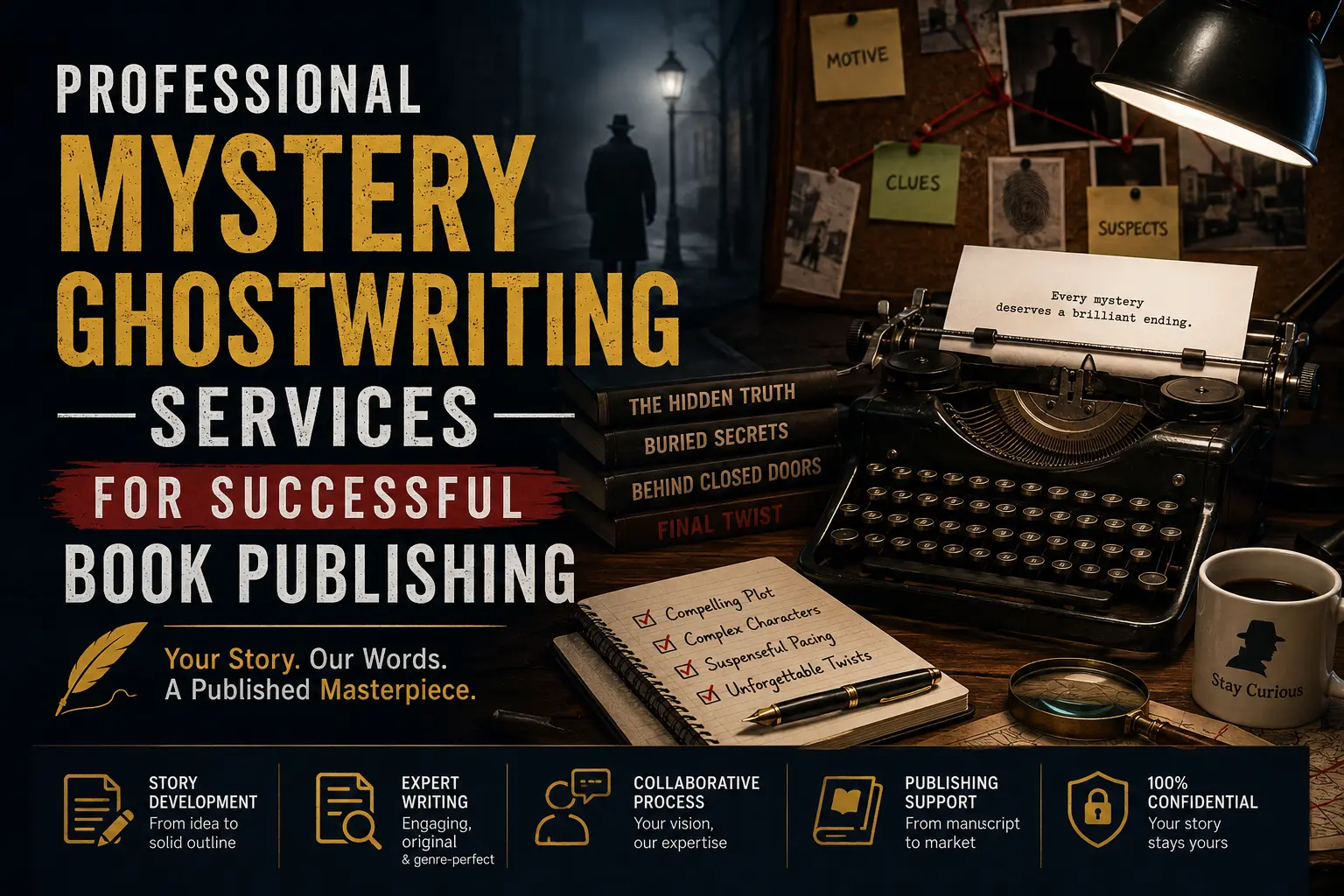
A friend of mine, a real one, not the polite kind, told me my mystery novel was “solid but unreadable.” That stung for about a week. But she wasn’t wrong. I had a genuinely decent twist buried under three hundred pages where, somehow, every single character sounded like me on a Tuesday afternoon. That comment is basically what sent me down the rabbit hole of mystery ghostwriting services, and it changed how I approached the entire project.
If your plot is solid but the actual writing keeps stalling, stay with me. This isn’t a sales pitch. It’s just what actually happened when I tried this route myself.
Mystery Is Way Harder to Write Than People Assume
Everyone thinks mystery is an easy genre. A few clues, some suspects, a twist near the end, how complicated can that be? I thought the same thing until I sat down and actually tried it.
Pacing will wreck you in this genre. Give too much away early and people stop caring. Hold back too long and the ending feels like a cheap trick. I rewrote the same three chapters something like six times. Still wasn’t happy with them, if I’m being honest.
This is usually the point where a writer either gives up or starts looking for outside help. I chose the second thing, though it took me longer than I’d like to admit to stop feeling weird about it. There was this voice in my head saying that needing help meant the story stopped being mine.
Getting Over the Weird Guilt of Asking for Help
Nobody really talks about this part. Plenty of published authors, some pretty well known ones, work with ghostwriters or heavy collaborators at some point in their careers. That’s just not something anyone puts on the back cover.
Once I got past the ego thing, working with a ghostwriter stopped feeling like a loss of control. It felt more like finally having someone who understood structure the same way I understood character and setting. My job shifted. Less wrestling with sentences, more making sure the whole thing still felt like me underneath.
What These Services Actually Look Like Day to Day
Here’s what surprised me. I figured hiring someone meant handing over my idea and getting a finished manuscript back weeks later with zero input from me. That’s really not how decent mystery ghostwriting services operate. At least not the ones actually worth paying.
Most start with long interviews. They want your characters, your setting, your tone, and especially the ending. In mystery, the ending kind of controls everything else, so a good writer needs that piece early instead of guessing at it halfway through.
Then comes an outline. Then chapter drafts. Then rounds of feedback, back and forth, more than I expected honestly. You’re not disappearing after some initial pitch call. You’re actually in it together, just with someone whose actual skill is turning your vision into prose you didn’t have time (or maybe the chops) to produce alone.
I still remember getting my first batch of chapters back and being a little stunned at how much my own voice came through, even though technically I hadn’t written a single sentence of it. That’s when it clicked for me. Good ghostwriting doesn’t erase your voice. It turns the volume up on it.
One Small Question That Changed Everything
My original draft had a detective who felt flat, just flat on the page no matter what I did. I knew what she needed to do plot wise, but couldn’t make her feel like an actual person. During our first call, my ghostwriter asked something simple. What does she do when she’s alone and nobody’s watching?
I genuinely didn’t have an answer. That one question rewired how I wrote her afterward, even in scenes I ended up drafting myself. Sometimes the real value isn’t the pages someone hands you back. It’s the question that sits in your head for a week.
Finding the Right Person for Your Specific Book
Not every ghostwriter fits mystery, and that matters more than people give it credit for. Someone who’s brilliant at romance pacing might completely misread how clue placement actually works in a whodunit. Different muscle entirely.
Ask for samples specifically in mystery or thriller. If they can’t show you relevant work, pay attention to that. I almost hired someone early on purely because their portfolio site looked slick. Didn’t check their genre experience first. One phone call saved me, turned out they mostly wrote self help books, about as far from red herrings as you can get.
Pricing for mystery ghostwriting services swings a lot depending on experience and how much you actually need written versus just polished. Some charge per word. Some per project. Some do a retainer for longer books. Get at least three quotes before committing to anyone, just so you know what’s actually reasonable out there.
Questions I Learned to Ask the Hard Way
How many mystery novels have they ghostwritten, published or not? Can they walk you through their outlining process without getting vague on you? What happens if the direction feels wrong halfway through the project?
I also learned to ask about confidentiality upfront. If you’re planning to publish under your own name, which most people using these services do, get that in writing before anything starts.
One thing I wish I’d asked sooner, honestly. How do they handle plot holes they spot in your original idea? A good ghostwriter will flag that stuff instead of quietly writing around it and hoping you never notice.
Working Through It, Chapter by Chapter
This isn’t a single handoff. It’s ongoing. Messier than I expected, if I’m being honest with you.
We started with a full outline, mapping every clue, every red herring, exactly when each piece of information would land for the reader. That step alone took almost three weeks. Way longer than I planned for. But it saved us from major rewrites down the line, so I don’t regret the time.
Then came actual chapters. I’d get three to five at a time and send back notes. Sometimes small stuff, tweaking dialogue so it sounded more like my detective and less like a stranger. Sometimes bigger stuff, like realizing a suspect’s motive contradicted something we’d already set up two chapters earlier.
It reminded me a lot of working with a genuinely good editor, except this person was also generating new material based on my notes instead of just tearing apart what already existed.
The Part That Actually Caught Me Off Guard
I expected to feel disconnected from the final book. I didn’t. If anything, the whole process forced me to understand my own story better than I did going in. Explaining my characters’ motivations over and over, out loud, to someone trying to write them honestly, made me realize things about my own plot I’d never actually thought through properly.
There’s a strange kind of clarity that shows up when you have to justify your creative choices to another person. Uncomfortable, sure. But it makes the story stronger, no way around that.
Let’s Talk Money, Because That’s What Stops Most People
Full ghostwriting for a novel length mystery can run anywhere from a few thousand dollars with newer writers to well over twenty thousand with experienced pros who’ve got a real track record. That’s a huge range, and yeah, it’s a little scary to look at.
What helped me was splitting the project into phases instead of paying everything up front. Outline first. Then a sample chapter, just to check the voice actually matched what I wanted. Then the rest of the manuscript in batches after that.
This also protects you a bit, honestly. If things aren’t clicking after the outline or sample chapter, you haven’t blown the whole budget finding that out the hard way.
Timeline wise, plan for something like four to nine months for a full mystery novel, depending on length and how quickly feedback moves back and forth. If anyone promises a polished, finished manuscript in two weeks, that’s probably corners being cut somewhere. In a genre this dependent on careful plotting, that’s a real risk.
Mistakes I Watched People Make (and Made Myself)
Rushing the interview process because you’re excited to finally get moving. Slow down. This relationship matters more than people expect walking in.
Not giving enough detail about your ending early on. In mystery specifically, the ghostwriter needs to know where things land so the earlier chapters can actually set that up right.
Assuming the final product won’t sound like you anymore. It will, as long as you actually stay involved instead of vanishing after the first meeting like some people do.
Skipping a written agreement about ownership and confidentiality. This one’s standard practice, and any legitimate mystery ghostwriting services provider will expect that question and answer it without hesitating.
Final Thoughts
Working with mystery ghostwriting services changed the direction of my book. It also changed, in a weird way, how I think about writing altogether. There’s no shame in needing a collaborator who understands structure and pacing in ways that felt impossible for me to work out alone in my own head.
If you’ve got a story worth telling but the writing itself keeps stalling out, this route is worth exploring. Ask the uncomfortable questions. Do your homework. Find someone whose actual experience matches your genre, not just their website copy. The right mystery ghostwriting services won’t take your voice away from you. They’ll help you finally get it onto the page the way you always pictured it, back when it was still just an idea sitting in your head.