



12 Oct 2026
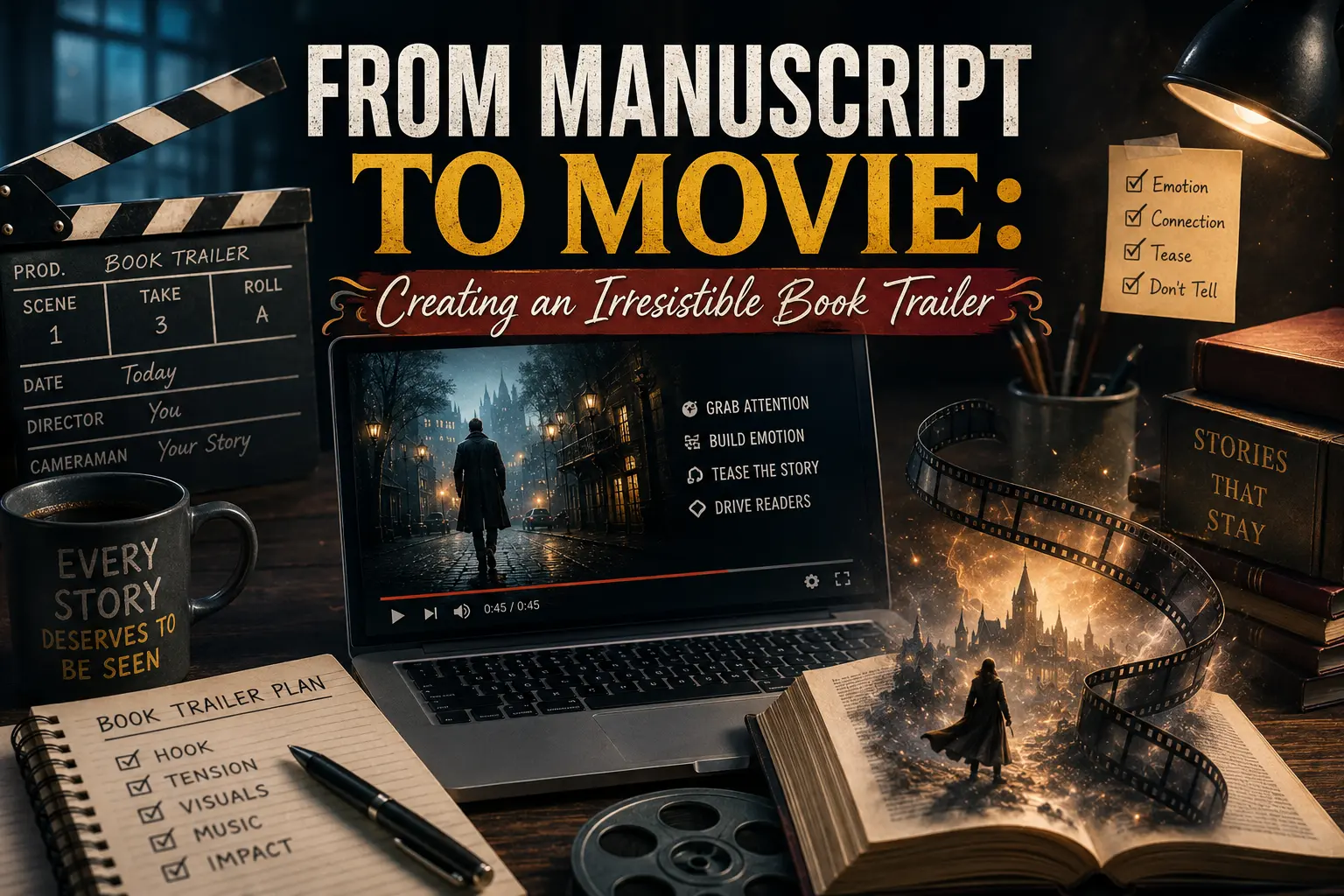
So when I finished my first novel I honestly thought that was it, the hard part was done. Then a woman in my writers’ group, Deb, asked if I had a trailer for it yet, and I just kind of blinked at her. A trailer? For a book? I didn’t even know that was a normal thing people did until she said it like it was obvious. Turns out I needed to create a book trailer too, and nobody had mentioned this to me at any point in the two years I spent writing the actual thing.
I did what anyone would do, I fell into a YouTube hole for about a week watching other authors’ trailers at midnight when I should’ve been sleeping. Some were rough, like genuinely uncomfortable to sit through. A couple made me kind of jealous, in a good way. And somewhere in there I started noticing what actually worked versus what was just someone throwing money at Fiverr and hoping. So this is me telling you what I figured out, mistakes and all, because there were a lot of mistakes.
Why Bother Making One At All
Let’s just be upfront about something. A trailer isn’t going to make your book blow up overnight. I need to say that clearly because I’ve watched too many authors treat it like some secret weapon that’ll fix everything. It won’t. What it does do is give someone a reason to stop for thirty seconds instead of scrolling past your book like it’s nothing, which is actually a bigger deal than people give it credit for.
Think about how you find books now. Not shelves, right? It’s a TikTok that autoplayed, a Reel your cousin sent you, something in a group chat at a weird hour. Video just hits different in those spots. It stops thumbs. A blurb doesn’t do that, not really. Once you create a book trailer, you’re giving your story an actual shot at competing in a feed full of everything else fighting for the same three seconds of attention.
There’s this emotional thing too that I didn’t expect. A blurb makes people imagine. A trailer shows them a flash of it, even a blurry, half second flash, and that does something a paragraph can’t quite manage. I don’t fully understand why but it just works.
I know this because after mine went up, two total strangers messaged me saying basically “okay what happens next, I need to know.” My blurb had been sitting there for like eight months doing absolutely nothing close to that.
Emotion Wins Over Production Value, Basically Always
This part actually surprised me. I figured I’d need a camera crew or at least someone who owned a real camera. I had neither. What I learned, kind of the hard way, is that feeling beats polish nearly every single time.
Think about trailers you actually remember. I’d bet it’s not the effects. It’s a line. A sound. A shot that made your stomach drop for a second. That’s the stuff that stays with someone after they’ve already scrolled past a hundred other things that day.
When I made mine for my thriller, I skipped actors completely, partly because I couldn’t afford any and partly because I didn’t know any actors. I grabbed some moody stock clips, a low unsettling track, and two lines straight out of the book that hinted at danger without spoiling a thing. Cost me maybe twelve dollars total. Got shared more than anything else I’d posted about the book, which honestly annoyed me a little given how little effort it took compared to everything else.
What I Actually Did, Start to Finish
I’ll just walk through it plainly instead of giving you some neat checklist, because the real process was messier than that.
First I reread my own manuscript hunting for tension, not plot. Just moments that made my chest feel tight when I wrote them originally. Ended up with around fifteen candidates, used maybe four.
Then the script, and I got stuck here for probably four days. I kept writing it like jacket copy, explaining what happens. That’s wrong. A trailer should tease, not explain. What I landed on read more like scattered lines of a poem than an actual paragraph, honestly.
Visuals came next. No money for original footage, so Pexels, Pixabay, and Storyblocks became my best friends. I searched for mood, not literal scenes. Rain on a window ended up working better for my mystery novel than any attempt at recreating an actual moment from the plot would have.
Sound mattered more than I ever expected going in. I used Epidemic Sound and Artlist, tense and low for the thriller, quieter and sadder for a different book I made a trailer for later that year.
Text overlays came last and I kept them short, maybe six lines across the whole forty five seconds. Enough to read, not enough to feel like homework.
Editing itself, I used Canva at first because it’s stupidly easy, then moved to DaVinci Resolve once I’d made two or three of these and wanted more control over how things looked.
Tools That Won’t Cost You Rent Money
Being vague here helps nobody so let me just name things.
Canva has video editing built right in and it’s about as beginner friendly as it gets. Drag footage in, add text, layer some music, done. If this is your first time trying to create a book trailer, start here honestly.
CapCut is free too and feels more native to TikTok and Reels specifically, with transitions that don’t look as cheap as you’d expect for something free.
DaVinci Resolve is also free and kind of absurdly powerful once you learn it, though the learning curve is steep enough that I’d wait until your second or third trailer before touching it.
Pexels and Pixabay cover visuals. Epidemic Sound and Artlist need a subscription for music but save you from copyright strikes on YouTube later, which trust me is a headache you don’t want.
Where I Nearly Messed It Up
Plenty of mistakes here, and I think they’re more useful to you than pretending my first attempt was flawless, because it wasn’t even close.
Biggest one, way too long. First cut ran almost two minutes and rewatching it now feels painful, it just drags. Attention online is short, brutally so, and thirty to sixty seconds performs so much better than anything longer. Cut mine to fifty seconds and the difference showed up almost immediately in how people reacted.
Second, I gave away too much plot. Wanted people to understand everything so I basically summarized three chapters in the script. Not intriguing, just exhausting to watch. Stripped it back to mood and one lingering question, and suddenly people wanted more instead of feeling like they’d already read the ending.
Third, I forgot captions entirely at first. So many people watch on mute, especially on their phones during lunch or whatever. Without captions my careful text overlays weren’t doing enough for silent viewers and I lost people before I even noticed.
And the first three seconds matter way more than I expected. If that opening doesn’t grab someone right away, they’re gone before your story gets any real chance. I redid mine three separate times before something actually stopped the scroll.
Show It To Someone Before It Goes Live
Before publishing mine, I sent it to a few trusted readers and two writer friends. Easy step to skip when you’re excited and just want it out there, but it mattered. One friend, Marcus, pointed out the middle dragged, something I was way too close to the project to catch myself. Another mentioned the music felt wrong in the final scene, which I hadn’t noticed until she said it out loud.
Outside eyes catch things you’ve gone blind to. Doesn’t need to be formal. Two or three honest opinions can save you from putting something out that just doesn’t land the way you hoped it would.
Final Thoughts
Learning to create a book trailer taught me more about my own book than I expected. Boiling a whole novel down to a handful of images and lines forces you to actually understand what the story is about underneath all the plot mechanics. It stopped feeling like marketing homework and started feeling like its own weird little creative project.
If you’ve got a finished manuscript sitting there wondering if this is worth doing, my answer is yes. You don’t need money, fancy equipment, or a film degree. You need a clear sense of the feeling you want to leave people with, a couple of free tools, and patience to cut and redo things until they feel right. Let the first one be imperfect. Mine was rough, genuinely rough, but it taught me something that made the next one better. So when you sit down to create a book trailer for your own story, trust what you already know as a writer. You already know how to build tension on the page. Now you’re just doing it in forty five seconds instead of three hundred.