



01 Oct 2026
I still remember the exact moment I decided to actually do something with the story that had been sitting in my notes app for three years. It was a Tuesday, I was procrastinating on actual work, and I typed “children’s book creation services” into Google with zero idea what I was about to fall into. Two years later, here I am writing this guide, mostly for the version of me that had no clue where to start.
If you’re staring at a half finished manuscript or a folder of sketches wondering what comes next, keep reading. I’m not a publishing expert with fancy credentials. I’m just someone who made a bunch of mistakes so you hopefully won’t have to, and who spent way too many late nights figuring this stuff out the hard way.
What Actually Falls Under “Children’s Book Creation Services”
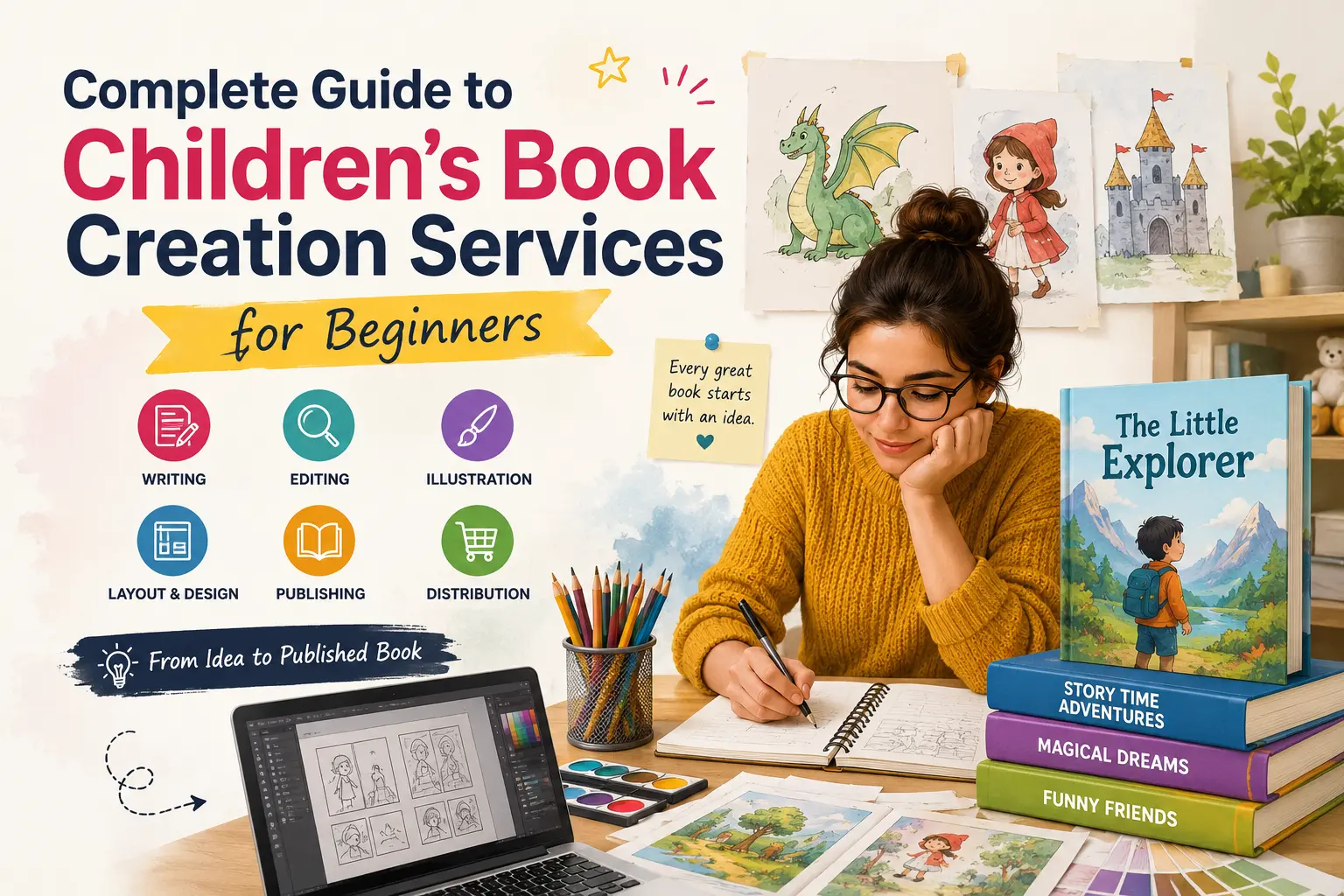
This term gets used pretty loosely, which honestly confused me at first. In practice, it covers anything between “I have an idea” and “there’s a printed book in my hands.” Writing help. Editing. Illustration. Layout. Sometimes distribution too. Some companies even throw in marketing support, though I’d treat that as a bonus rather than something to expect.
Here’s what I didn’t understand going in: almost nobody does all of it well. I assumed I’d find one company, hand them my idea, and walk away with a finished product. That’s not really how it works, or at least it wasn’t for me.
I had a full manuscript but couldn’t draw a stick figure to save my life. So my search was really about illustrators and layout people, not writers. My friend Priya, on the other hand, had beautiful watercolor illustrations already done but her story kept meandering and losing the plot halfway through. She needed a developmental editor way more than art help. Two very different starting points, two completely different searches.
It also took me a while to realize that some services are built for hobbyists making one book for their grandkids, while others are set up for authors trying to build an actual catalog over time. Knowing which category you fall into changes who you should even be talking to.
Why This Stage Feels Like Too Much
There are hundreds of options. Freelancers on Fiverr charging fifty bucks a page, boutique studios asking for five figures, everything in between. I spent one entire weekend just scrolling through portfolios at midnight, half asleep, saving links I’d never look at again.
What actually helped was embarrassingly simple. I wrote down, on paper, what I already had and what I was missing. That’s it. Once I saw it in black and white, half the noise disappeared. I stopped looking at full service publishers because I already had a manuscript I liked. I stopped looking at editors because my story didn’t need major surgery. Suddenly a list of two hundred options became a list of about fifteen.
I’d genuinely recommend doing this before you open a single browser tab. It sounds too basic to matter, but it saves you from decision fatigue before it even starts.
The Different Kinds of Help You’ll Run Into
Not every service does the same thing, and lumping them together will waste your time.
Writing and editing support. Ghostwriters, developmental editors, line editors. If your idea is strong but the execution feels off, start here before spending money on anything else. A good developmental editor will tell you honestly if your pacing drags or your ending falls flat, which stings but is way cheaper to fix on paper than after illustrations are done.
Illustration. This can mean one freelance artist or a whole team. Style matters more than people expect. Someone whose portfolio is full of moody watercolor scenes probably isn’t your person if your book needs bright, silly, cartoon energy. I learned to literally print out pages from books similar in tone to mine and hold them next to an illustrator’s samples before reaching out.
Layout and formatting. Nobody talks about this enough and it’s genuinely a skill. Getting text and images to sit right on a page for a five year old’s attention span is harder than it sounds. I’ve seen gorgeous illustrations ruined by clunky page layout, text crammed awkwardly into corners because nobody thought about how the eye moves across a spread.
Publishing and distribution. Some services push you toward self publishing through Amazon KDP or IngramSpark. Others try to get you an agent. Figure out which path you actually want before picking a service, because it changes everything about who you hire. Self publishing paths tend to be faster and cheaper upfront, but traditional routes offer more built in credibility, at least in theory.
That Time I Picked the Wrong Company
Quick confession. Early on I hired a place that promised to handle “everything” for one flat price. Sounded like a dream. Then I saw the illustration samples and realized their style was way too mature and edgy for a picture book aimed at preschoolers. I ended up paying extra to redo half the artwork, and the whole process dragged out an extra six weeks because of it.
Lesson learned the expensive way: always ask for samples aimed at your specific age group. Not their general portfolio. A studio can be incredible at young adult book covers and still completely miss the mark on a board book for toddlers. Age appropriate style is not a small detail, it’s basically the whole game.
How I Learned to Actually Evaluate These Services
This is the part where you either save yourself a headache or walk right into one.
Read reviews, but read them properly. Don’t just glance at the star count. I look for comments about communication and deadlines specifically, because that’s where things usually fall apart. A glowing five star review with no details tells you less than a four star review where someone explains exactly what went sideways.
Ask about revisions before you pay anything. How many rounds are included? What happens if you want changes beyond that? Get the answer in writing, not just a verbal “oh don’t worry about it.” I once had a verbal promise of “unlimited revisions” quietly turn into two rounds once the contract showed up, and by then I’d already paid a deposit.
And be honest with yourself about timelines. If someone promises a fully illustrated thirty two page book in two weeks, that’s not efficiency, that’s a warning sign. Good illustration work, especially anything hand drawn or painted, just takes time. Rushed art tends to look rushed, and kids notice more than we give them credit for.
Questions I Wish Someone Had Told Me to Ask
Who owns the final artwork and text once everything’s done? This matters a lot if you ever want to make merchandise or turn it into a series. Some contracts quietly keep certain rights with the illustrator, which is fine as long as you know upfront.
What file formats do you actually get at the end? You want print ready files, not something that looks great on a screen and pixelated on paper. I nearly ran into this problem myself when a first draft of files came back low resolution and unusable for print.
Is there a cancellation policy if the working relationship just isn’t clicking? Things don’t always work out, and knowing your exit options in advance saves a lot of stress later.
None of these questions are rude to ask. Any legitimate provider offering children’s book creation services should answer them without flinching, and honestly, if they seem annoyed by the questions, that tells you something too.
Let’s Talk Money, Because Nobody Else Will
Costs are all over the place. A single freelancer might charge a few hundred dollars total. A full service studio handling writing, art, layout, and publishing guidance can run into the thousands, easily.
What worked for me was splitting my budget into categories instead of one big number. Writing, illustration, editing, formatting, each got its own line. That way when money got tight, I knew exactly where I had room to adjust, instead of just panicking about one scary total number.
Something I genuinely didn’t expect: cheap doesn’t always mean risky, and expensive doesn’t always mean better. I’ve seen a freelancer charging next to nothing produce work that made me cry a little, because they were building their portfolio and pouring everything into it. I’ve also seen a pricey agency hand my project to whoever was free that week and it showed in the final pages. Do the research regardless of the price tag in front of you.
Where I Actually Found People I Trusted
Freelance platforms work fine if you’re careful and check for experience specifically in children’s books, not just general art skills. A portfolio full of tattoo designs, however talented, doesn’t tell you much about whether someone can draw an expressive rabbit for a bedtime story.
Agencies give you more structure, which some people need and are happy to pay for. If you want someone holding your hand through the whole process, this route feels safer, even if it costs more.
Honestly though, the best find I had was a small Facebook group for indie children’s authors. That’s where I met the illustrator I still work with today. Sometimes the corporate options aren’t actually the safest bet, and a smaller community can point you toward people who genuinely love this niche rather than treating it as just another gig.
Mistakes I See Beginners Make Constantly
Rushing to pick an illustrator because you’re excited. Slow down. Style match matters more than speed, and a rushed decision here is the one you’ll regret most.
Skipping a written contract because “it’s just a small freelance job.” Verbal agreements get misremembered, always, no matter how nice the person seems.
Treating editing as optional. A gorgeous book with a shaky story still won’t land with kids or the parents buying it, and parents notice weak storytelling faster than you’d think.
Never asking what happens after publication, like whether there’s help with reprints or marketing materials down the line. A lot of beginners assume the relationship ends at delivery, and then feel stuck when they need small tweaks later.
Every single one of these is avoidable if you do your homework before signing anything, which is really the whole reason this guide exists.
Final Thoughts
Making a children’s book is one of the most satisfying creative projects out there, but it takes more patience than people expect going in. Understanding what children’s book creation services actually offer, asking the right questions early, and budgeting with your eyes open will spare you a lot of the frustration I dealt with.
Take your time. Trust the moments when something feels off, even if you can’t quite explain why. And don’t be shy about asking detailed, slightly annoying questions before any money changes hands. Your story deserves people who care about both the art and the practical mess of actually finishing a book, and with the right children’s book creation services in your corner, that idea sitting in your notes app really can become something a kid holds in their hands one day.